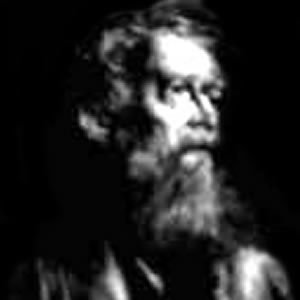
HEBREW: Yechezkel
ARAMAIC: Hezeqiel
ARABIC: Dhul-Kifl
AGE: 52 Years
BIRTH: 622 BC
DEATH: 570 BC
GENDER: Male
BORN IN: West Bank / Israel, Jerusalem
LIVED IN: Iraq, Chebar River
DIED IN: Iraq, Al-Kifl (Ezekiel's Tomb)
SCRIPTURE: Book of Ezekiel
54,512 views
Last view: 32 secs ago
Born around 622 BC into a priestly family in Jerusalem, his life changed drastically when he was captured and deported to Babylon in 597 BC during the reign of King Nebuchadnezzar. God called him to be a prophet five years later, commissioning him to act as a "watchman" for the people. Ezekiel is famous for his highly symbolic, apocalyptic visions, including seeing the glory of God riding on a divine chariot, the dramatic destruction of Jerusalem, and the famous vision of a valley of dry bones coming back to life, symbolizing the future restoration of Israel. He spent his life preaching repentance, personal accountability, and hope to a broken community. Ezekiel lived to at least 52 years old and passed away around 570 BC in Babylon.
| INTRODUCTION |
| 1. Prophet Ezekiel in Judaism, Christianity, and Islam |
| 2. Family Tree of Ezekiel and His Relations to Abrahamic Prophets |
| HISTORICAL CONTEXT |
| 3. Describe the World and Society Ezekiel Came Into |
| 4. Why Did God Send Ezekiel? |
| KEY LIFE EVENTS |
| 5. Chronological Timeline of Ezekiel's Life and Ministry |
| 6. Did Ezekiel Perform Miracles? 5 miracles |
| GEOGRAPHY & EVIDENCE |
| 7. On Google Maps: Birth, Life, and Death Locations of Ezekiel 5 locations |
| 8. Photograpic Evidence for Ezekiel 164 photos / 3 albums |
| SCRIPTURE & NEWS |
| 9. Is Ezekiel Mentioned in Current News Today? 3 news |
| 10. Frequently Asked Questions About Ezekiel 8 faqs |
| EXPLORE FURTHER |
| 11. Revealed Scripture That Mention Ezekiel 12 verse |
| 12. YouTube Videos to Learn More About Ezekiel 17 videos |
Prophet Ezekiel in Judaism, Christianity, and Islam
Judaism
Ezekiel is highly revered as a major Hebrew prophet whose book is part of the Nevi'im (Prophets) canon. He ministered during the Babylonian exile, offering messages of both judgment for Jerusalem's transgressions and hope for the eventual restoration of the Jewish people to the Land of Israel.
Christianity
Ezekiel is recognized as a major prophet who foretold the destruction of Jerusalem and the spiritual renewal of Israel. His visions particularly the valley of dry bones and the detailed descriptions of the new temple are often interpreted by Christians as prefiguring the resurrection and the New Covenant.
Islam
Ezekiel is acknowledged as a noble prophet of Allah. Islamic tradition also links him to the historical and miraculous accounts of the resurrection of thousands of men, as referenced in the Quran.
Family Tree of Ezekiel and His Relations to Abrahamic Prophets
Describe the World and Society Ezekiel Came Into
The Environment
The dusty, oppressive refugee camps along the Kebar River in Babylon, following the violent siege and destruction of Jerusalem.The Society
A displaced, fractured population of Jewish war refugees living under the watchful eye of a highly sophisticated, totalitarian, and deeply polytheistic Babylonian Empire.The Social Climate
Marked by intense grief, spiritual disorientation, political hopelessness, and stubborn skepticism, as the exiled community struggled to understand why God had allowed their holy city and temple to be destroyed.Why Did God Send Ezekiel?
1. To confront a rebellious nation and demand accountability
God explicitly appointed Ezekiel as a spiritual "watchman", sending him to confront the stubborn exiles of Israel for breaking their covenant through corruption and idol worship.2. To act as a living sign through dramatic parables
Ezekiel was commanded to perform unusual symbolic street theater acts such as laying on his side for over a year and packing exile bags to visually communicate impending judgment.3. To explain the theological cause behind the Babylonian exile
God used Ezekiel to teach the captives that their displacement and the tragic destruction of Jerusalem were the direct consequences of their collective sins, not God's abandonment.4. To demonstrate God's power to resurrect the dead
Ezekiel was shown a famous prophetic vision of a valley of dry bones coming back to life, serving as an absolute historical marker of God's life-giving authority.5. To promise a future heart transformation and spiritual rebirth
God sent Ezekiel to deliver the ultimate hope of the New Covenant, promising that He would remove his people's hearts of stone, replace them with flesh, and instill His Holy Spirit.6. To prophesy the final restoration of God's temple and kingdom
Ezekiel was sent to deliver a blueprint of a magnificent future temple and a restored homeland, reassuring the despairing exiles that God's presence would return to dwell among them.Chronological Timeline of Ezekiel's Life and Ministry
Did Ezekiel Perform Miracles?
- Experiencing the massive divine vision of the four-faced living creatures and the swirling wheels
- Being physically lifted up by his hair by a divine hand and transported spiritually between earth and heaven
- Prophesying to a valley filled with dry bones, causing them to rattlingly reassemble and grow flesh
- Commanding the wind to breathe life into the reassembled bodies, creating a vast living army
- Experiencing an extensive, detailed architectural vision of a future holy temple shown by a brass-like man
On Google Maps: Birth, Life, and Death Locations of Ezekiel | 5 locations
Lived In :Jerusalem, West Bank, Palestine / Al-Kifl and the Kebar River region, Iraq
Travelled To :Judaean desert pasturelands, West Bank, Palestine / Babylonian plains and refugee settlements, Iraq
Died In :Al-Kifl, Iraq (Buried at the traditional Tomb of Ezekiel)
Photographic Evidence for Ezekiel | 164 photos
-
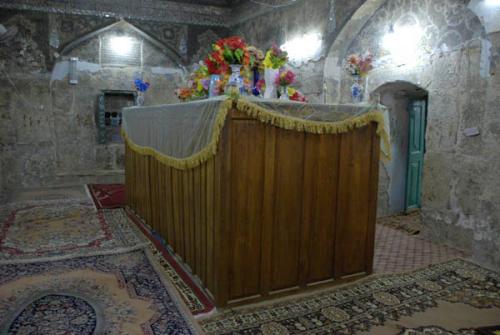 1. Prophet Ezekiel: Ezekiel's grave in Iraq. The image features the inner wooden cenotaph inside Ezekiel's Tomb [...] ON MAP
 -
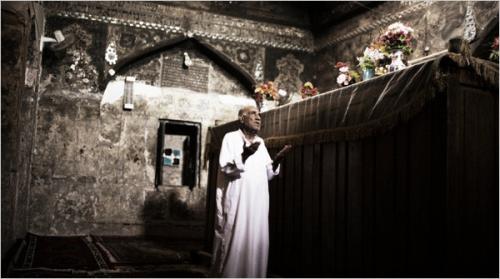 2. Prophet Ezekiel: Ezekiel's grave in Iraq. The image shows another interior perspective of the inner sanctuary at [...] ON MAP
 -
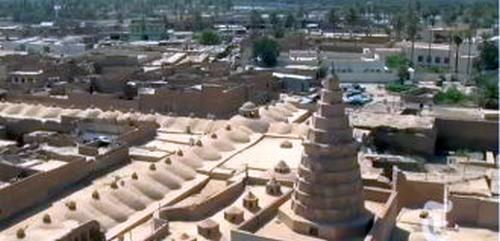 3. Prophet Ezekiel: Outer view of Ezekiel's burial tomb in Iraq. The image provides a wide aerial view of the town of [...] ON MAP
 -
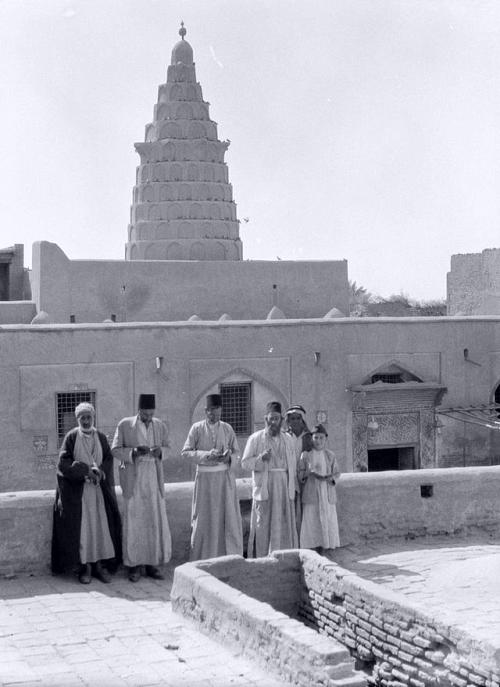 4. Prophet Ezekiel: Ezekial's Tomb located at Al Kifl, Iraq. The area was inhabited by Iraqi jews who appear in the [...] ON MAP
 -
 Photo: Edmund Gall | CC BY-SA 2.05. Prophet Ezekiel: Jerusalem (Kingdom of Judah): Ezekiel was born into a prestigious [...] ON MAP
 -
 Photo: Pharling | CC BY-SA 4.06. Prophet Ezekiel: Kebar Canal / Tel Abib (Near Nippur, Iraq): Ezekiel travelled here as [...] ON MAP
 -
 Photo: Matson Collection | Public domain8. Prophet Ezekiel: Ezekiel's Tomb (Al-Kifl, Iraq): Ezekiel died in exile, and his [...] ON MAP

Photo Album for Ezekiel (3)
| Album 1. Miniatures of Ezekiel | 12 photos |
| Album 2. Mount of Olives Historic Gallery: Jesus Teaching Sites | 113 photos |
| Album 3. Ezekiel's Tomb in Al-Kifl, Iraq | 31 photos |
Is Ezekiel Mentioned in Current News Today? | 3 news
Frequently Asked Questions About Ezekiel | 8 faqs
| Links to more content on Ezekiel and other Prophets |
| Articles on Ezekiel and other Prophets |
Revealed Scripture That Mention Ezekiel | 12 texts
Little is known about the story of Ezekiel, his name in Arabic means 'God will strengthen' or literally 'to fasten upon'. Ezekiel is recognized as a prophet in Islamic tradition. Although not mentioned in the Quran by the name, all Muslim scholars, both classical and modern have included Ezekiel in lists of the prophets of Islam.
Almighty Allah said: "Did you (O Muhammad) not think of those who went forth from their homes in thousands, fearing death? Allah said to them, "Die." And then He restored them to life. Truly, Allah is full of Bounty to mankind, but most men think not. (Ch 2:243 Quran).
Mohammad Ibn Ishaaq stated of Wahb Ibn Munbah said that when Allah took Kalih Ibn Yofra (Jephtha) after Joshua, Ezekiel Ibn Buzi succeeded him as the prophet to the Israelites. The people had fled from Palestine for fear of the plague and settled on a plateau. Allah said to them: "Die you all," and they all perished. A few centuries passed, and then Ezekiel, passing by, stopped over them, wondering. There came a voice: "Do you want Allah to resurrect them while you watch?" He said: "Yes." Then he was commanded to call those bones to join one to the other and to be covered with flesh. So he called them by the power of Allah, and the people arose and glorified Allah in the voice of one man.
According to Ibn Abbas, this place was called "Damardan." Its people were inflicted with plague, so they fled, while a group of them who remained in the village perished.
The Angel of Death called to the survivors: "Die you all," and they perished. After a long time a prophet called Ezekiel passed by them and stood wondering over them, twisting his jaws and fingers. Allah revealed to him: "Do you want Me to show you how I bring them back to life? He said: "Yes." His idea was to marvel at the power of Allah over them. A voice said to him: "Call: 'O you bones, Allah commands you to gather up.'" The bones began to fly one to the other until they became skeletons. Then Allah revealed to him to say; "Call: 'O you bones, Allah commands you to put on flesh and blood and the clothes in which they had died.'" And a voice said: "Allah commands you to call the bodies to rise." And they rose. When they returned to life they said: "Blessed are You, O Lord, and all praises is Yours." Ibn 'Abbas reported that the dead who were resurrected were four thousand, while Ibn Salih said they were nine thousand.
Regarding plague, Abu Ubaidah Ibn Al-Jarrah related that 'Umar Ibn Al-Khattab was on his way to Syria and had reached Sarg when the leader of the Muslim army, Abu Ubaidah Ibn Al-Jarrah, and his companions met him and told him of a pestilence that had broken out in Syria. 'Umar remember the Prophet's saying: "If it (plague) be in a country where you are staying, do not go out fleeing it, and if you hear it is in a country, do not enter it." Umar praised Allah and then went off.
Muhammad Ibn Ishaaq stated that we do not know how long Ezekiel stayed among the Israelites before Allah took him away. After him, the Israelites deviated from the right way of life, as they usually did, and deserted Allah's covenant with them. They worshipped many idols, among them Ba'al, so Allah sent to them the Elijah.
Some scholars identify 'Dhul-Kifl' in Islam with Ezekiel
Little is know about the story of Dhul-Kifl and his prophethood is debated.
Allah the Almighty declared: "Remember Ishmael and Enoch and Dhul Kifl, all were from among those who observe patience." (Ch 21:85-86)
Immediately following Job’s story in the Quran, Almighty Allah also directed: "Remember Our slaves, Abraham, Isaac, and Jacob (all) owners of strength (in worshipping Us) and also of religious understanding. Verily, We did choose them by granting them (a good thing ) the remembrance of the home (in the Hereafter and they used to make the people remember it and also they used to invite the people to obey Allah and to do good deeds for the Hereafter). And they are in Our Sight, verily of the chosen and the best! Remember Ishmael, Elisha, and Dhul Kifl all are among the best." (Ch 38:45-48)
It is obvious from his being mentioned and praised in the Glorious Quran along with those other prophets that Dhul – Kifl was also a prophet.
However, some of the Quranic commentators assumed that he was not a prophet but that he was righteous and strictly just.
Ibn Jarir narrated that he was not a prophet but he was a righteous man. He supported his people to suffice their needs and administered justice among them. That is why he was called Dhul – Kifl. (Dhul – Kifl literally means "possessor of, or giving, a double requital or portion").
YouTube Videos to Learn More About Ezekiel | 17 videos

458
1493856000
1791928371
Bible Project: Ezekiel
000444
1
86
1786016320
1791950797
Ezekiel - Valley of Dry Bones & The River of Life | PixArk Studios
002537
2

63
1785716526
1791993769
Ezekiel - Valley of Dry Bones | JudahSketch Animation
000854
3
902
1514850621
1791994761
Ezekiel and Jethro in the Quran - Shabir Ally
000526
4

42
1785773998
1792005497
Ezekiel in the Valley of Dry Bones | Red Lamb Stories
000644
5
738
1523010476
1792008985
Ezekiel The Prophet - Christadelphian
002821
6
71
1789940041
1792028352
Ezekiel: Valley of Dry Bones - Movie (2026) | Unraveling Scriptures
005054
7
157
1782956161
1791965735
Isaiah, Jeremiah, Ezekiel | The Bible (2026) | Bible In Nutshell
000030
8
558
1482796800
1791967614
Job and Ezekiel (Lives of the Prophets) - Hasan Ali
003832
9
267
1452384000
1791918417
Moses, Ezra, Ezekiel, Joshua, David - Mufti Menk 1/2
002975
10

342
1570473539
1791339112
Prophet Ezekiel
000177
11
436
1570474082
1791713492
Prophet Joshua & Ezekiel
000932
12

621
1529160603
1791940925
Prophet Joshua and Prophet Ezekiel - IslamicCinema
000508
13
220
1421798400
1791224496
Solomon, Elijah, Elisha, Ezekiel, Zechariah and John - 2/2
004097
14
357
1452384000
1792006138
Solomon, Elijah, Elisha, Ezekiel, Zechariah and John 1/2 - Mufti Menk
004097
15
537
1570127026
1791900240
Stories of Prophets: Job, Ezekiel, Hunthala & Jonah - Shady Al-Suleiman
002602
16
768
1549300233
1791967370
The Prophets: Ezekiel, Obadiah & Habakkuk - Bible Project
000318
17