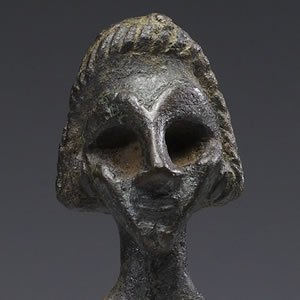
From its use among people, it came to be applied to gods. Scholars previously associated the theonym with solar cults and with a variety of unrelated patron deities, but inscriptions have shown that the name Baal was particularly associated with the storm and fertility god Hadad and his local manifestations.
Known by epithets like 'rider of the clouds' and 'Victorious Baal', he was associated with rain, lightning, wind, fertility, and kingship, and was often depicted in opposition to sea and death deities like Yammu and Mot. Worship of Baal spread throughout the Levant, Egypt, and the Mediterranean.
The Hebrew Bible includes use of the term in reference to various Levantine deities, often with application towards Hadad, who was decried as a false god. In the Hebrew Bible, Baal appears frequently as a foreign or rival deity, with prophets like Elijah opposing his cult, while in early Israelite contexts, the title may have sometimes referred to Yahweh.
Depiction as a false god was taken over into Christianity and Islam, sometimes under the form Beelzebub in demonology.
Video on BAAL (8)
VIDEO OPTIONS: Latest Uploads Watching Now Popular Least Views 22:39
22:39
1126
1510830469
1785583252
Pagan Origins of Judaism: Evidence for Israelite Gods, El, Asherah, Adonai, Baal, Elohim and Yahweh
001359
1
 4:46
4:46
606
1526597879
1785620124
El, Baal and Asherah: Israelite Gods of Ancient Jews - Christine Hayes
000286
2
 33:48
33:48
639
1588976018
1785719383
Mount Carmel: Elijah confronts 850 false Prophets of Baal and Asherah - HolyLandSite
002028
3
 20:02
20:02
900
1758649795
1785533731
The Gods of Israel (El, Baal, Yahweh, Asherah) | Stephans History
001202
4
 29:57
29:57
161
1776114684
1785665037
Who Was Baal and Yahweh to Elijah? | ReligionForBreakfast
001797
5
 20:37
20:37
198
1776121575
1785628607
Gods of Canaan: El, Asherah, Baal and the Israelites | Unraveling Scriptures
001237
6
 22:01
22:01
122
1783333653
1785539377
Elijah & God vs Baal - Who Will Answer by Fire? | Bible Chronicles
001321
7
 17:1
17:1
7
1785771685
1785803663
Elijah and the Prophets of Baal | Red Lamb Stories
001021
8