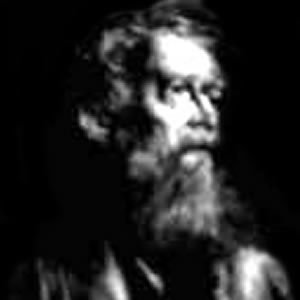
HEBREW: Daniyel
ARAMAIC: Daniyyel
ARABIC: Daniyal
AGE: 82 Years
BIRTH: 620 BC
DEATH: 538 BC
GENDER: Male
BORN IN: Israel / West Bank, Jerusalem
LIVED IN: Iraq / Iran
DIED IN: Iran, Susa or Iraq, Kirkuk
SCRIPTURE: Book of Daniel
30,596 views
Last view: 46 mins ago
| INTRODUCTION |
| 1. Who Was Prophet Daniel? |
| 2. Who Is Prophet Daniel in Judaism, Christianity, and Islam? |
| 3. Family Tree of Prophet Daniel and His Relations to Abrahamic Prophets |
| HISTORICAL CONTEXT |
| 4. What Was the World Like for Prophet Daniel? |
| 5. Why Did God Send Prophet Daniel? |
| KEY LIFE EVENTS |
| 6. Chronological Timeline of Prophet Daniel's Life and Ministry |
| 7. What Miracles Did Prophet Daniel Perform? |
| GEOGRAPHY & EVIDENCE |
| 8. On Google Maps: Birth, Life, and Death Locations of Prophet Daniel 4 locations |
| 9. Photograpic Evidence for Prophet Daniel 214 photos |
| SCRIPTURE & NEWS |
| 10. Is Prophet Daniel Mentioned in Current News Today? 2 news |
| 11. Frequently Asked Questions About Prophet Daniel 7 faqs |
| EXPLORE FURTHER |
| 12. Which Revealed Scriptural Texts Mention Prophet Daniel? 97 verse |
| 13. YouTube Videos to Learn More About Prophet Daniel 20 videos |
Who Was Prophet Daniel?
Daniel was a righteous prophet, visionary, and high-ranking statesman who lived during the Babylonian captivity of the Jewish people.
Born around 623 BC into a noble family in the Kingdom of Judah, he was captured as a teenager in 605 BC when King Nebuchadnezzar invaded Jerusalem. Taken to Babylon, Daniel was trained in the royal court, where he refused to compromise his faith or dietary laws. God blessed him with extraordinary wisdom and the unique ability to interpret complex dreams and visions, allowing him to serve as a top adviser to both Babylonian and Persian emperors. He is most famous for surviving a night inside a den of hungry lions after refusing to stop praying to God, and for recording apocalyptic visions about future world empires and the coming Messiah. Daniel lived to at least 85 years old and died around 538 BC in Susa (modern-day Iran).Who Is Prophet Daniel in Judaism, Christianity, and Islam?
Judaism
Not classified as a writing prophet in the Hebrew Bible (as his book is placed in the "Writings" or Ketuvim). However, he is revered as a model of piety, wisdom, and steadfast adherence to God's law during the Babylonian exile.
Christianity
Honored as one of the major prophets, whose book contains crucial apocalyptic prophecies and visions.
Islam
Widely regarded by Muslims as a prophet and righteous man. While not mentioned by name in the Quran, his accounts (such as surviving the lions' den) are well-known and respected in Islamic literature.
Family Tree of Prophet Daniel and His Relations to Abrahamic Prophets
What Was the World Like for Prophet Daniel?
The Environment
The hyper-urbanized, architecturally magnificent imperial capitals of Babylon and Susa.The Society
A sophisticated, totalitarian, and hyper-educated pagan empire built on imperial conquest, advanced astronomy, and state-enforced polytheism.The Social Climate
Extremely hazardous for religious minorities, defined by forced cultural assimilation, treacherous royal court intrigues, and deadly state persecution against those refusing to worship the emperor or idols.Why Did God Send Prophet Daniel?
| 1. To interpret royal dreams and visions |
| God endowed Daniel with supernatural wisdom to interpret the troubling dreams of foreign kings, establishing that true wisdom belongs to the Creator. |
DANIEL 2:28 |
| 2. To reveal the timeline of future world empires |
| Daniel was sent to map out the succession of major world civilizations, proving that the Most High rules over the kingdoms of men. |
DANIEL 2:44 |
| 3. To predict the exact timing of the Messiah |
| God used Daniel to deliver precise chronological prophecies regarding the specific historical timeline for the arrival and sacrificial ministry of the coming Messiah. |
DANIEL 9:25 |
| 4. To model uncompromised faith in exile |
| Daniel was sent to Babylon to show that believers can maintain dietary purity, strict prayer habits, and absolute devotion to God even under intense foreign pressure. |
DANIEL 1:8 |
| 5. To demonstrate divine protection over believers |
| Through his miraculous survival in the lions' den, Daniel proved to pagan rulers that the God of Israel rescues, delivers, and works signs in heaven and earth. |
DANIEL 6:22 |
| 6. To serve as a high-ranking righteous statesman |
| God placed Daniel in the highest tiers of government under multiple foreign empires to directly influence kings, advocate for justice, and guide his community during captivity. |
DANIEL 6:3 |
| 7. To intercede for the restoration of Jerusalem |
| Daniel was sent to calculate the end of the 70-year Babylonian exile and offer deep, repentant prayers on behalf of his nation to trigger their return to the Promised Land. |
DANIEL 9:3 |
Chronological Timeline of Prophet Daniel's Life and Ministry
In the Babylonian Empire the Jews lived in their own settlements. They were allowed to keep their own religion and customs. Some Jews rose to high positions in Babylon. One such was Daniel.
What Miracles Did Prophet Daniel Perform?
- Supernaturally recalling and interpreting King Nebuchadnezzar's forgotten dream of the statue
- Interpreting King Nebuchadnezzar's dream of the massive chopped tree
- Deciphering the mysterious, supernatural disembodied handwriting on the wall during Belshazzar's feast
- Surviving completely unharmed after spending an entire night inside a sealed den of starved lions
- Receiving massive, detailed prophetic visions of future empires and the end of days from angels
On Google Maps: Birth, Life, and Death Locations of Prophet Daniel | 4 locations
Lived In :Babylon, Iraq / Susa, Iran
Travelled To :Mesopotamian plains, Iraq / Ahvaz region, Iran
Died In :Susa, Iran / Babylon, Iraq (Alternative historical tradition)
Photographic Evidence for Prophet Daniel | 214 photos
-
 Photo: Davidbena | CC BY-SA 4.01. Prophet Daniel: Jerusalem (Judea / Levant): Daniel was born into a noble Judean [...] ON MAP
 -
 Photo: Ziegler175 | CC BY-SA 4.04. Prophet Daniel: Tomb of Daniel (Susa, Iran): Daniel died at an advanced age in Persia [...] ON MAP

Is Prophet Daniel Mentioned in Current News Today? | 2 news
| Re-reading Daniel in Apocalyptic Times | Jewish Review - 01 Jan 2026 |
| The apocalyptic myth that helps explain evangelical support for Trump - Prophecy of Daniel | Washington Post - 26 Nov 2019 |
Frequently Asked Questions About Prophet Daniel | 7 faqs
| Links to more content on Daniel and other Prophets |
| Articles on Daniel and other Prophets |
Which Revealed Scriptural Texts Mention Prophet Daniel? | 97 texts
The story of prophet Daniel narrates that Daniel was carried off to Babylon after Nebuchadnezzar's attack on Jerusalem. It goes on to state that there he was thrown into the den of the lions, but was later rescued. In one such account, Daniel is aided by Jeremiah, who comes to Babylon to help Daniel in the lions' den.
Ibn Abi Al-Dunya narrated the following, based on a chain of citations. Nabuchadnezzar captured the two lions and threw them into a pit. He then brought Daniel and threw him at them; yet they did not pounce at him; rather, he remained as Allah wished. When then he desired food and drink, Allah revealed to Jeremiah, who was in Sham (Palestine/Syria): "Prepare food and drink for Daniel." He said: "O Lord I am in Jerusalem while Daniel is in Babylon (Iraq)." Allah revealed to him: "Do what I have commanded you to do, and I shall send you one who will carry you and what you have prepared." Jeremiah did so and Allah sent him something that would carry him until he arrived at the brink of the pit.
Then Daniel asked: "Who is this?" He answered: "I am Jeremiah." He asked: "What brought you?" He answered: "Your Lord sent me to you." He said: "And so my Lord has remembered me?" He said: "Yes." Daniel said: "Praise be to Allah Who never forgets those who appeal to Him! And Praise be to Him Who compensates good with good, rewards patience with safety, dispels harm after distress, assures us when we are overwhelmed, and is our hope when skill fails us."
Yunus Ibn Bakeer reported that Muhammad Ibn Ishaaq reported that Abu Khalid Ibn Dinar reported that Abul Aa'lia said: "When Tastar was invaded, we found, in the treasure house of Al-Harmazan, a bed on which lay a dead man, with a holy script at his bedside. We took the scripture to Umar Ibn Al Khattab. He called Ka-b and he translated it into Arabic, and I was the first Arab to read it. I read it as I read the Quran." Here, I (Khalid Ibn Dinar) said to Abul Aa'lia: "What was in it?" He said: "Life history, annals, songs, speech, and what is to come." I asked: "And what did you do with the man?" He said: "We dug in the river bank thirteen separate graves. At nightfall we buried him and leveled all the graves in order to mislead people for they would tamper with him." I asked: "And what did they want from him?" He said: "When the sky was cloudless for them, they went out with his bed, and it rained." I asked: "Who did you think the man was?" He said; "A man called Daniel." I asked: "And for how long had he been dead when you found him?" He said: "Three hundred years." I asked: "Did not anything change on him?" He said: "No, except for the hairs of his face (beard, and mustache); the skin of the prophets is not harmed by the earth, nor devoured by hyenas."
The chain of citation from Abul Aa'lia is good, but if the date of the dead man's death was really three hundred years, then he was not a prophet but a saintly an, because there was no prophet between Jesus, and Muhammad , according to the hadith in Bukhari. The span between them (the dead man and Muhammad ) was variously reported as four hundred, six hundred, and six hundred twenty years. It could be that he had died eight hundred years earlier, which would be near to Daniel's time, if his being Daniel is correct. However, he could still have been somebody else, either a prophet or a saint. Yet the truth is more likely he was Daniel, because he had been taken by the King of Persia and remained imprisoned as already mentioned. It was narrated with a correct citation that his nose as one span (nine inches) long. Anas Ibn Malik, with a good citation, said that his nose was an arm's stretch long (two feet), on which basis he is thought to be an ancient prophet from before this period. Almighty Allah knows best.
Ibn Abu Dunya reported from Abu Bilal that Abu Musa found with Daniel a holy script and a container in which were dirhams, his ring and ointment. He wrote to Umar, who replied: "Send the scripture to us, send some of the ointment, tell the Muslims who are with you to use it, share the dirhams among them, and leave the ring for you.
Abu Bakr Ibn Abu Dunya related without citation that when Abu Musa was told that he was Daniel, he stayed with him, embraced him, and kissed him. Then he wrote to Umar that he found with him nearly ten thousand Dhirhams. It used to be that people came to borrow from it, and if they did not return it, they became sick. Umar ordered his burial in a grave to be kept secret and the money to be sent to the treasury, with the box and the ring a gift to him (Abu Musa).
It is related of Abu Musa that he told four of the captives to dam the river and dig a grave in the middle, where he buried him. Then he beheaded the four captives in order for the secret to be kept from all except himself.
Ibn Abu Dunya also reported, by a chain of citations, that a ring was seen on the hand of Ibn Abu Barda Ibn Abu Musa. The gem was carved with two lions with a man between them, whom they were licking. Abu Barda said: "This is the ring of that man whom the people of this town say is Daniel. Abu Musa took it the day he was buried. The learned people of the town told Abu Musa that soothsayers and astrologers told the king in Daniel's time that a boy would be born who would destroy him and his kingdom. So the king swore to kill all the baby boys, except that they threw Daniel in the lions' den, and the lion and lioness began to lick him and did not harm him. His mother came and took him. Abu Musa said: "And so Daniel carved his image and the image of the two lions into the gem of his ring, for him not to forget Allah's blessing upon him in this.'" This has a good citation.
YouTube Videos to Learn More About Prophet Daniel | 20 videos

326
1493856000
1789617632
Bible Project: Daniel
000534
1

193
1585175874
1789496533
Daniel - Bible Cartoon
001594
2

209
1523010476
1789440259
Daniel - Christadelphian
002802
3
212
1771426685
1789623675
Daniel - The Movie that Shocked the World (2026) | Unraveling Scriptures
003717
4

95
1782955789
1789591396
Daniel and the Lions Den | The Bible (2026) | Bible In Nutshell
000070
5
321
1516838265
1789621389
Daniel in Lion's Den - Kids Stories
000713
6

29
1785716389
1789543088
Daniel in the Lion's Den | JudahSketch Animation
000853
7

364
1750940567
1789582440
Daniel in the Lions Den | Bible In Nutshell
000171
8

118
1783029386
1789593401
Daniel in the Lions Den | Bible Movies (2026) | Bible In Nutshell
000150
9
38
1785892517
1789560585
Daniel in the Lions Den | Epic Bible Animation
001177
10

34
1785773971
1789589184
Daniel in the Lions Den | Red Lamb Stories
000901
11

24
1785773888
1789516890
Daniel in the Lions Den: 'I Prayed to the Last Minute' | Red Lamb Stories
000779
12
551
1589894839
1789645828
Daniel's travels around Israel - HolyLandSite
001192
13

508
1483401600
1789670775
In Daniel 7:13, is Jesus 'The Son of Man'? - Tovia Singer
002587
14

484
1517023416
1789653092
Lessons from Prophet Daniel: Take the Dare
003496
15
512
1513217364
1789628626
Prophet Daniel: The Great Themes - BeyondTV
003102
16

33
1785716405
1789597037
Story of Daniel | JudahSketch Animation
003006
17

39
1785773888
1789651016
Story of Daniel, Hannah & Hezekiah | Red Lamb Stories
001467
18

25
1786019160
1789658241
The Book of Daniel | PixArk Studios
002387
19
50
1784207065
1789653087
Why Trump's Speech may fulfill Daniel's Prophecy on Final Empire
003489
20