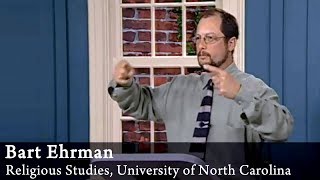
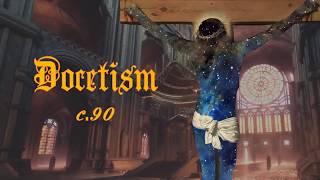
John's Gospel poses a theological dilemma for Bible scholars who question its historical reliability.
Mark, Matthew and Luke ('synoptic' gospels) present a substantially different account and chronology of Jesus' life, than John. Much of the Jesus' narrative in John is simply missing from the synoptics.Content unique to John's Gospel, and not covered in the synoptics:
- I Am statements
- Jesus' crucifixion date
- The Nicodemus encounter
- Samaritan woman
- The royal official
- The invalid at the pool of Bethesda
- Man born blind
- The Lazarus family
Below are Bible scholars and academics who based on their writings, hold to a non-traditional view on John's gospel, or the Bible in general.
1
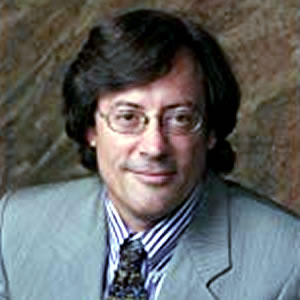
Louis A. Ruprecht, This Tragic Gospel: How John Corrupted the Heart of Christianity (San Francisco: Wiley, 2008)
2
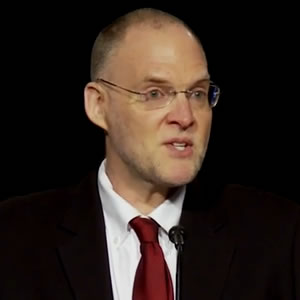
While good historians would not fabricate historical events, they could enhance their narratives for literary, moralistic and political purposes, or alter or add explanatory details.
Craig S. Keener, The Gospel of John: A Commentary (Peabody: Hendrickson, 2003), pp.18-22
3
Richard Bauckham on Samuel Byrskog:
Richard Bauckham explains that ancient historians were convinced that true history could only be written while events were still within living memory, based on the oral reports of eyewitnesses, preferably including themselves.
Ancient historiography ideally required eyewitness testimony, that is, oral testimony was preferable to written sources. Besides, the ideal eyewitness was not a dispassionate observer, but an active participant in the events, who was able to understand and interpret the significance of what he had witnessed, i.e., the eyewitness was able to provide an insider perspective.
Richard Bauckham, Jesus and the Eyewitnesses: The Gospels as Eyewitness Testimony (Grand Rapids: Eerdmans, 2006), pp.8-11
4

- historians make choices about what to include and exclude, and
- past events were ordered in a causal sequence to draw on the significance of the past
Joel B. Green, "Historicisms and Historiography", in Joel B. Green, Jeannine K. Brown and Nicholas Perrin (eds.), Dictionary of Jesus and the Gospels (2nd edn; Downers Grove: IVP Academic, 2013), p.385
5

Bart D. Ehman, A Brief Introduction to the New Testament
The Gospels are not reliable historical sources because the Gospel writers were "not interested in providing the brute facts of history for impartial observers" but in promoting faith in Jesus.
Bart Ehrman, The New Testament: A Historical Introduction to the Early Christian Writings (5th edn; Oxford: Oxford University Press, 2011), p.243
6
Burridge makes the point that the author of John is fully entitled to put 'words into Jesus' mouth' so long as they reflect the sentiment and feeling.
Some modern studies assume that if there is 'fiction' in the gospels, then they are inauthentic or unreliable. However, closer attention to literary criticism shows that no one wrote a classical biography to provide a documented historical text as we might capture something with a tape recorder, but rather in an attempt to get 'inside' the person.
Thus, John's stress on 'truth' is not about documented fact but the higher truth of who Jesus is, which is why he writes in a biographical format. For him, Jesus is 'the way, the truth and the life', so his Jesus says these words.
To ask whether Jesus actually ever spoke these words is to miss the point completely. This is neither a lie nor a fiction; it is simply a way of bringing out the truth about the subject which the author wishes to tell the audience.
Richard Burridge, What Are the Gospels?: A Comparison with Graeco-Roman Biography (2004, Cambridge University Press)
Dean of King's College, London. Leading expert on the Gospels
Dean of King's College, London. Leading expert on the Gospels
7
Dale Martin, New Testament History and Literature, pp.79-80
The New Testament is simply not a reliable source for the history of Jesus or early Christianity when taken at face value.
Dale Martin, New Testament History and Literature (New Haven: Yale University Press, 2012), p.180
8
Daniel B. Wallace
9
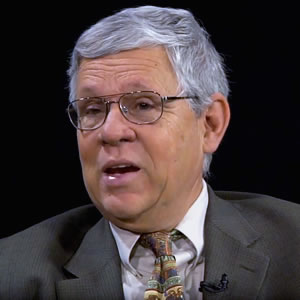
I will not be dealing with material such as the "I AM" discourses in the fourth Gospel [John's Gospel] because it is difficult to argue on the basis of the historical-critical method that they go back to a "Sitz im Leben Jesu" (setting in life).
Even when we can get back to such a "Sitz im Leben Jesu" from Mark or Q, what can be recovered is often only the substance of what Jesus said or did, although sometimes we are able to recover his very words.
Ben Witherington III, The Christology of Jesus, Chapter 1: Methodological and Historical Considerations, p.30
American Evangelical New Testament scholar. Professor of New Testament Interpretation at Asbury Theological Seminary in Kentucky. Ordained minister in the United Methodist Church
American Evangelical New Testament scholar. Professor of New Testament Interpretation at Asbury Theological Seminary in Kentucky. Ordained minister in the United Methodist Church
10
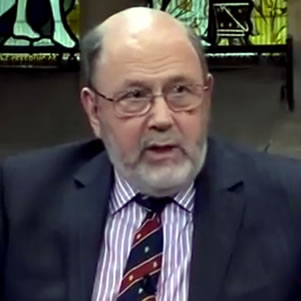
N.T. Wright, How God Became King: The Forgotten Story of the Gospels
11

Furthermore, most would agree that, in general terms, the synoptic picture is more likely to reflect the realities of Jesus' own time, and the Johannine account represents an (at times) extensive rewriting of the Jesus tradition by a later Christian, profoundly influenced by his own ideas and circumstances.
Thus in reading all the Gospels, we have to be aware of the fact that we are reading accounts of Jesus' life as mediated by later Christians, and hence we may learn much, if not more, about the latter as about Jesus himself in studying the Gospel texts.
Christopher M Tuckett, Christology and the New Testament: Jesus and His Earliest Followers, (Edinburgh University Press 2001) pp.105-106
When we turn from the synoptic Gospels [Matthew, Mark and Luke] to the Fourth Gospel [John], we move in some respects into a different world.
The differences between John and the synoptics have long been recognised, reference often being made in this context to the famous statement of Clement of Alexandria (early 3rd century) that, whereas the other Gospel writers gave the 'bodily' facts about Jesus, 'John wrote a spiritual Gospel' (cited by Eusebius, HE. 6.14.7).
Although the differences between John and the synoptics can perhaps be exaggerated, there can be no denying that at many levels John presents a radically different presentation of the life and ministry of Jesus.
In general terms, the synoptic Jesus says very little explicitly about himself: his preaching is about God, the kingdom of God, the nature of God's demands, etc. John thus presents Jesus explicitly in far more exalted terms than anything we find in the synoptic Gospels.
In terms simply of historical reliability or 'authenticity', it seems impossible to maintain that both John and the synoptics can be presenting us with equally 'authentic' accounts of Jesus' own life.
If there is a choice, it is almost certainly to be made in favour of the synoptic picture, at least in broadly general terms.
Christopher Tuckett, Christology and the New Testament pp.151-152
Professor of New Testament Studies. University of Oxford.
Professor of New Testament Studies. University of Oxford.
12
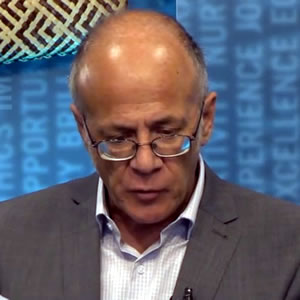
Richard Bauckham, "Historiographical Characteristics of the Gospel of John", NTS 53 (2007): pp.17-36
In all four Gospels we have the history of Jesus only in the form of testimony, the testimony of involved participants who responded in faith to the disclosure of God in these events. In testimony fact and interpretation are inextricable; in this testimony empirical sight and spiritual perception are inseparable.
All scholars, whatever their views of the redactional work of the Synoptic Evangelists and of the historical reliability of the Gospel of John, agree [John's Gospel] presents a much more thoroughly and extensively interpreted version of the story of Jesus.
Richard Bauckham, Jesus and the Eyewitnesses: The Gospels as Eyewitness Testimony, 2006, Wm. B. Eerdmans Publishing Co., pp.410-411
13

The early Christian communities clearly had no problem in accepting that within the gospel traditions there would be a subtle combination of factual and fictional elements.
Had they not done so, they would certainly not have tolerated the existence of four gospels which, for all their similarities, are sufficiently different from one another as to defy all attempts at producing one harmonized, factual version of the life and teachings of Jesus from them.
While all four gospels contain factual fictive elements, the fourth gospel appears to have a greater preponderance of the latter [i.e. fiction].
John Drane, Introducing the New Testament, Lion Publishing Plc. Revised Edition. 1999 pp.210-211
John Drane, a prominent conservative evangelical scholar. Student of F. F. Bruce
John Drane, a prominent conservative evangelical scholar. Student of F. F. Bruce
14

Maurice Casey, Is John's Gospel True? (London: Routledge, 1996)
15

James D. G. Dunn, Christology in the Making: A New Testament Inquiry into the Origins of the Doctrine of the Incarnation p.32
16
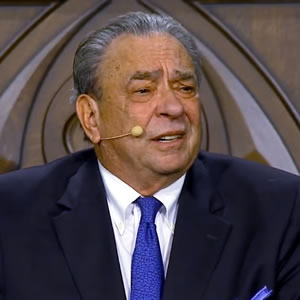
R.C. Sproul, Who Is Jesus?
The Bible is clear enough for any Christian to understand its basic meaning; nevertheless, the Word of God in every generation becomes distorted and misunderstood. These distortions happen not because there is something wrong with the clarity of the Word of God but because there is something wrong with us.
R.C. Sproul, Matthew
Theologian. Author. Ordained pastor in Presbyterian Church
Theologian. Author. Ordained pastor in Presbyterian Church
17
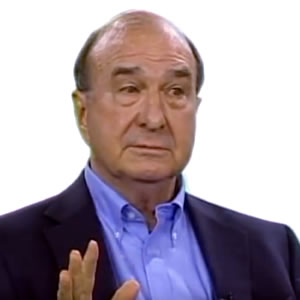
Consequently, for the last 150 or so years, scholars have had to choose.
They have almost unanimously, and I think entirely correctly, concluded that the teachings of the historical Jesus is to be sought in the synoptic gospels [Mark, Matthew, Luke] and that John represents an 'advanced theological development', in which meditations on the person and work of Christ are presented in the first person, as if Jesus said them.
E.P. Sanders, The Historical Figure Of Jesus, 1993, Penguin Books, pp.70-71
18
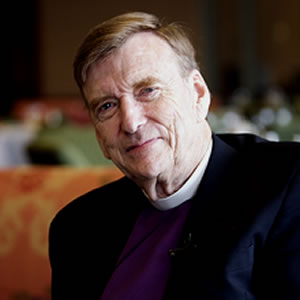
John Shelby Spong, Biblical Literalism: A Gentile Heresy: A Journey into a New Christianity Through the Doorway of Matthew's Gospel
The Gospels are 1st century narrations based on 1st century interpretations. Therefore they are a 1st century filtering of the experience of Jesus. They have never been other than that.
One must never identify the text with the revelation or the messenger with the message. That has been the major error in our 2000 years of Christian history.
It is an insight that today is still feared and resisted. But let it be clearly stated, the Gospels are not in any literal sense holy, they are not accurate, and they are not to be confused with reality.
John Shelby Spong, Why Christianity Must Change or Die: A Bishop Speaks to Believers In Exile
Retired bishop of Episcopal Church. Theologian. Author
Retired bishop of Episcopal Church. Theologian. Author
19
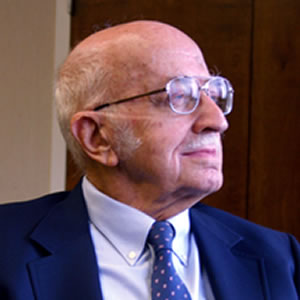
James Louis Martyn, History and Theology in the Fourth Gospel (3rd edn.; Louisville: Westminster John Knox, 2003 [orig. 1968])
Richard Bauckham on Louis Martyn:
Many scholars assume the Jesus traditions passed through a long process of anonymous oral tradition in the early Christian communities and reached the Evangelists only at a late stage in this process.
Further, Martyn proposed the Evangelists augmented [increased] the traditions so they reflect the 'setting in life' of the communities they lived in.
Richard Bauckham (ed.), The Gospels for All Christians: Rethinking the Gospel Audiences (Grand Rapids: Eerdmans, 1998)
20
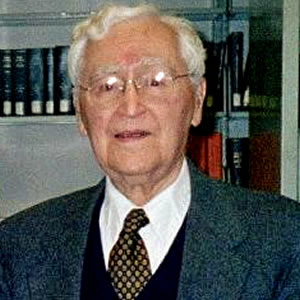
These lists were "judgments purposely delivered in order to delineate the limits of the canon." Even so, there's a lot we don't know.
"Opinions differ as to which part of the NT was first in attaining general recognition as authoritative in the Church . . . [but it] seems to be that the Gospel was recognized first, then Pauline Epistles."
Many in the church had much of the NT and considered it authoritative from ~170 AD [or 140 years after Jesus' crucifixion]. "By the close of the second century ... we can see the outline of what may be described as the nucleus of the New Testament . . . by the end of the third century and beginning of the fourth century, the great majority of the 27 books that still later came to be widely regarded as the canonical NT were almost universally acknowledged to be authoritative."
Later (in 367 AD) [or 337 years after Jesus' crucifixion], Athanasius was first to list the exact 27 books of our NT.
Bruce M. Metzger. The Canon of the New Testament: Its Origin, Development, and Significance. Clarendon Paperbacks (2017)
21
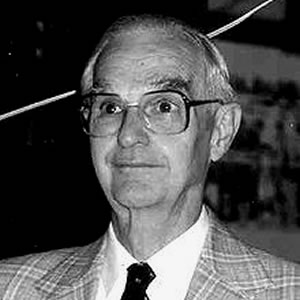
Against this, the widespread conviction at the present time that John is completely independent of the Synoptics.
I do not see how any theory that John knew the Synoptics can be made to stand up [i.e. John did not know of the Synoptics, and is independent].
Leon Morris. The Gospel according to John, Wm. B. Eerdmans Publishing Co. (1995) p.30
New Testament scholar
New Testament scholar
One must always regard with healthy respect the objection that says, "If Jesus was as he is depicted in Matthew and Mark and Luke, he cannot have been as he is depicted in John. The two [depictions] are incompatible."
Leon Morris. The Gospel according to John, Wm. B. Eerdmans Publishing Co. (1995) p.38
New Testament scholar
New Testament scholar
22
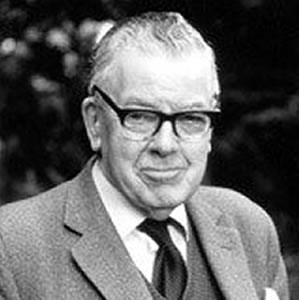
F. F. Bruce, Frederick Fyvie Bruce (1994). The Gospel of John: Introduction, Exposition, Notes, p.105, Wm. B. Eerdmans Publishing
I think Paul would roll over in his grave if he knew we were turning his letters into torah.
F. F. Bruce
23
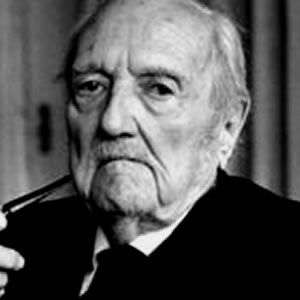
Richard Bauckham on Rudolf Bultmann:
On John's Gospel, Rudolf Bultmann advocates the "informal, uncontrolled tradition", the prevalent model, legacy of traditional form criticism which states:
A long period of oral transmission in the churches intervened between whatever the eyewitnesses said and the Jesus traditions as they reached the Evangelists.
No doubt the eyewitnesses started the process of oral tradition, but it passed through many re-tellings, re-formulations, and expansions before the Evangelists [Mark, Matthew, Luke, John] themselves did their own editorial work on it.
Bauckham, Jesus and the Eyewitnesses, p.240
24
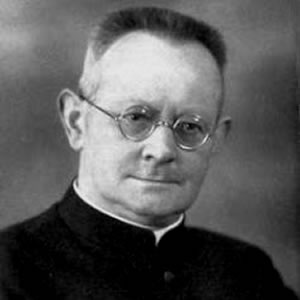
Alfred Wikenhauser. New Testament Introduction, New York (1958), p.301
German Catholic Theologian. Professor of New Testament, University of Freiburg
German Catholic Theologian. Professor of New Testament, University of Freiburg
CREDIT
Paul Williams, Jesus as Western Scholars See Him, 2013
https://bloggingtheology2.com/2018/12/01/at-a-glance-chronological-and-thematic-summary-of-the-4-gospels-from-a-muslim-perspective/
http://www.affinity.org.uk/foundations-issues/issue-67-article-1-the-historical-reliability-of-the-gospel-of-john
https://www.goodreads.com/author/quotes/1250965.R_C_Sproul
https://www.goodreads.com/author/quotes/45659.John_Shelby_Spong
https://www.goodreads.com/author/quotes/38932.N_T_Wright
https://apologetics315.com/2013/06/daniel-b-wallace-interview-transcript/
http://notesfromthefallen.blogspot.com/2017/03/the-canon-of-new-testament-bruce-metzger.html
| 20829 views · 1 hr ago | Author: Guest • Updated: 19 Jun 2019 |
ALL ARTICLES ARE INTENDED FOR GENERAL EDUCATIONAL PURPOSES ONLY. ALL INFORMATION IS BELIEVED TO BE CORRECT, ACCURATE AND TRUTHFUL. YOU ARE ADVISED TO DO YOUR OWN RESEARCH. ARTICLES ARE LIVE DOCUMENTS AND MAY BE UPDATED WITH NEW CONTENT AT ANY TIME. WHERE AVAILABLE, SOURCES AND REFERENCES ARE CREDITED. IF YOU SPOT ANY ERRORS, OMISSIONS OR GIVE FEEDBACK KINDLY CONTACT US WITH DETAILS
166-scholars-john-gospel
0 Videos with 'John+gospel'
News on 'Gospel'
Search Results for 5 news items
Displayed in Date Order (most recent first)
Exploring the Gap Between When the Gospels Were Written and the Oldest Copies We Have
| Patheos
23 Aug 2016 |
1629 views ·
4 days ago
1,700-year-old manuscript from 'Gospel of John' discovered on eBay for $99
| RT News
23 Nov 2015 |
1953 views ·
5 days ago
Questions for Christians waving Rainbow flags
| Gospel Coalition
01 Jul 2015 |
1847 views ·
19 hrs ago
'Lost gospel' claims Jesus and Mary Magdalene were married and had children
| Telegraph
12 Nov 2014 |
1958 views ·
1 day ago
Articles
All Articles (154)
10 Commandments - Bible vs Quran
33494 views
· 1 hr ago
10 Commandments - Christian vs Muslim
24886 views
· 1 hr ago
10 Red Heifers (Cows)
26527 views
· 1 hr ago
5 reasons Abraham sacrificed Ishmael
22988 views
· 10 hrs ago
Abrahamic Religions
27876 views
· 1 hr ago
Angels - 41 Angels from the Abrahamic Religions
30345 views
· 8 hrs ago
Are you a Muslim?
52369 views
· 2 hrs ago
Arius vs Bishop Athanasius
26701 views
· 1 hr ago
Bible - 12% of New Testament copied from Old Testament
14949 views
· 1 hr ago
Bible - 18 Ego Eimi (I AM) statements, like John 8:58
26768 views
· 1 hr ago
Bible - 27 Verses on Yahweh, Elohim(s) and The Gods
28792 views
· 4 hrs ago
Bible - 400 NT Jesus Prophecies copied from OT
18545 views
· 1 hr ago
Bible - 75 Verses on drinking Wine & Alcohol
26831 views
· 1 hr ago
Bible - Exodus 3:14 Translations
22217 views
· 1 hr ago
Bible - King James (KJV) & 37 'Disputed' Verses
19663 views
· 11 hrs ago
Bible - Lost Books of the Bible
20060 views
· 24 mins ago
Bible - Mark 16:9-20 Text Analysis
20844 views
· 1 hr ago
Bible - Matthew 28:19: Greek vs Hebrew
28870 views
· 59 mins ago
Bible - Pagan Texts in the Bible
20111 views
· 8 hrs ago
Bible - Revelation, A Forgery
21277 views
· 11 hrs ago
Bible - Scholars on John's Gospel
20829 views
· 1 hr ago
Bible - The Synoptic Problem
20524 views
· 1 hr ago
Bible - Violence & Killings
17885 views
· 1 hr ago
Bible Authors: Who Wrote It?
21289 views
· 1 hr ago
Bible Errors - 672 Variants
19606 views
· 47 mins ago
Bible History - KJV vs NIV
21220 views
· 59 mins ago
Bible NT - 55% of New Testament Papyrus contain under 3% of Biblical Text
19053 views
· 10 hrs ago
Bible NT - Codex Sinaiticus exposes 312 year gap since Jesus crucifixion
19629 views
· 1 hr ago
Bible NT Canons - Church Fathers, Councils & Apocrypha
18124 views
· 47 mins ago
Bible OT - Dead Sea Scrolls expose a 1303 year gap since Moses life
18185 views
· 3 hrs ago
Bible OT Canons - Church Fathers, Councils & Apocrypha
18320 views
· 10 hrs ago
Bible Verses - KJV vs NIV
21698 views
· 1 hr ago
Blasphemy Laws in 35 Christian Countries
18990 views
· 10 hrs ago
Book Burnings in Roman, Catholic and Protestant society
23282 views
· 5 hrs ago
Catholic vs Protestant - Bible
19328 views
· 10 hrs ago
Catholic vs Protestant - Christianity
20964 views
· 1 hr ago
Child Abuse & Grooming Gangs (UK)
16538 views
· 9 hrs ago
Child Abuse, Sexual Crimes & Prison Figures (UK)
22052 views
· 1 hr ago
Child Marriage - Muhammad married 9-year old Aisha
29865 views
· 1 hr ago
Christian Heresies
19487 views
· 8 hrs ago
Christian: 28 Heretical Sects
21449 views
· 59 mins ago
Christian: 32 Church Denominations
17036 views
· 9 hrs ago
Christianity: Founded by Paul on Road to Damascus, Syria
18151 views
· 1 hr ago
Church Councils
19138 views
· 1 hr ago
Church Fathers - Quotes from 18 Men of God
20569 views
· 7 hrs ago
Church Fathers on Jesus Divinity
20435 views
· 1 hr ago
Codex Sinaiticus & Vaticanus - Corruption in the KJV Bible books
26435 views
· 11 hrs ago
Codex Sinaiticus & Vaticanus - Corruption in the KJV Bible verses
24145 views
· 3 hrs ago
Constantine and Christianity
23781 views
· 1 hr ago
Constantine, Nicaea and History
20470 views
· 6 hrs ago
Council of Nicaea 325 AD
21501 views
· 59 mins ago
COVID deaths vs Other Causes
15129 views
· 1 hr ago
COVID: 7 Medical Studies on why Face Masks fail
15345 views
· 9 hrs ago
COVID: Lockdowns & Contact Tracing in 78 Countries
18393 views
· 10 hrs ago
COVID: Monthly UK deaths compared over 5 Years (2015-20)
14539 views
· 1 hr ago
COVID: Weekly UK deaths compared over 5-Years (2015-20)
14277 views
· 10 hrs ago
Did Jesus pray to God or Allah?
28911 views
· 1 hr ago
God (Allah) - His Names & Attributes
22373 views
· 1 hr ago
God vs Allah
21356 views
· 10 hrs ago
God, Evidence For
16822 views
· 9 hrs ago
Gods & Roman Emperors
17555 views
· 1 hr ago
Gods - 6 Dying & Rising Mythical Gods
23973 views
· 1 hr ago
Gods - 60 Pagan deities in the Bible
38291 views
· 52 mins ago
How do Muslims pray?
23515 views
· 6 hrs ago
Ishmael and Isaac in Bible and Quran
26754 views
· 1 hr ago
Islam: Biggest Threat to Europe?
16432 views
· 10 hrs ago
Islamic Countries. Who are they?
17797 views
· 1 hr ago
Jesus - 91% chance he was a fictitous Mythical-Hero (Raglan Scale)
18631 views
· 9 hrs ago
Jesus - 17 'Crucified' Savior Gods
17725 views
· 1 hr ago
Jesus - Crucifixion in the Gospels
19946 views
· 1 hr ago
Jesus - Crucifixion Timing
18852 views
· 1 hr ago
Jesus - God of 99 Faces
24631 views
· 1 hr ago
Jesus - God with No Face
17617 views
· 1 hr ago
Jesus - Resurrection in the Gospels
19022 views
· 1 hr ago
Jesus - Resurrection Theories
18634 views
· 1 hr ago
Jesus - Sons of God
21787 views
· 1 hr ago
Jesus and the 12 Disciples
24515 views
· 11 hrs ago
Jesus in the Quran
20458 views
· 1 hr ago
Jesus on the Cross or Tree?
21111 views
· 11 hrs ago
Jesus the God
22661 views
· 10 hrs ago
Jesus the Jewish Prophet
21052 views
· 11 hrs ago
Jesus the Muslim
19656 views
· 6 hrs ago
Jesus the Son of God
17249 views
· 1 hr ago
Jesus the Sun-God over 12 Zodiac Star Gods
36575 views
· 2 hrs ago
Jesus vs Isaac - The Sacrifice
23365 views
· 24 mins ago
Jesus vs Jonah & Whale
20850 views
· 1 hr ago
Jesus vs Krishna
27052 views
· 1 hr ago
Jesus vs Paul
22445 views
· 1 hr ago
Jesus vs Romulus - 50 Reasons both are Mythical Gods
23213 views
· 1 hr ago
Jesus vs Zeus
42467 views
· 27 mins ago
Jesus was 30, 40 or 50 years old?
23921 views
· 10 hrs ago
Jesus, 12 Disciples and Paul Interview
20325 views
· 11 hrs ago
Jesus, from Iesous and Yeshua
23029 views
· 10 hrs ago
Jesus, Serapis & 7 Pagan Gods
39635 views
· 2 hrs ago
Jewish Laws & Rituals
18251 views
· 1 hr ago
Judaism - Maimonides 13 Principles of Jewish Belief
20099 views
· 8 hrs ago
Mark, Matthew, Luke and John
24217 views
· 1 hr ago
Messiah - His Aims & Objectives
18116 views
· 46 mins ago
Messiah - Jesus?
18080 views
· 1 hr ago
Monotheism vs Polytheism
18361 views
· 1 hr ago
Muhammad - Most Influential Man in History
20435 views
· 59 mins ago
Muhammad in Bible: He is is altogether lovely - Song 5:16
28103 views
· 10 hrs ago
Muhammad in Bible: Kedar rejoice and Sela sing - Isaiah 41/42
32481 views
· 1 hr ago
Muhammad in Bible: Prophet like unto Moses - Deuteronomy 18:18
31988 views
· 11 hrs ago
Muhammad in Bible: Select Verses
22887 views
· 18 secs ago
New Age - Alice Bailey's 10 Point Charter
30616 views
· 51 mins ago
Nicene Creed - Council of Nicaea 325 AD
21231 views
· 1 hr ago
Nicene Creed - Foundation of Christianity
18150 views
· 6 hrs ago
Noahide Laws
21014 views
· 1 hr ago
Palestine and Creation of Israel in 1948
24693 views
· 40 mins ago
Paul - 50% of his Writings are Inauthentic Forgeries
18715 views
· 1 hr ago
Paul copied 152 Old Testament verses
17890 views
· 1 hr ago
Paul vs James
20260 views
· 1 hr ago
Prophets - Sinful Beings in the OT Bible
17298 views
· 3 hrs ago
Prophets of God
62225 views
· 1 hr ago
Prophets were Sinners?
31827 views
· 59 mins ago
Purpose of Life
18308 views
· 9 hrs ago
Quran - 5 Recitations: Hafs, Warsh, Hisham, Qalun & Al-Duri
29255 views
· 1 hr ago
Quran - A Mathematical Miracle
29497 views
· 1 hr ago
Quran - Chapter & Verse Miracle
18547 views
· 1 hr ago
Quran - Comparing Hafs & Warsh for 51 textual variants
75472 views
· 2 hrs ago
Quran and Violence
20591 views
· 2 hrs ago
Quran refers to Torah & Gospel
28021 views
· 6 mins ago
Quran vs Science
19944 views
· 9 hrs ago
Roman Calendar
21192 views
· 10 hrs ago
Roman Emperors in Bible
16445 views
· 1 hr ago
Rome, Caesar & Emperors in the Bible
18845 views
· 8 hrs ago
Sin Atonement: Jesus Blood vs 21 Offerings
10206 views
· 1 hr ago
Terrorism, the Risk to Americans
15369 views
· 4 hrs ago
The Lost Gospels
23034 views
· 1 hr ago
The Prophets Prayer
20916 views
· 1 hr ago
Timeline of Bible
18253 views
· 10 hrs ago
Timeline of Church Councils
20542 views
· 1 hr ago
Timeline of Muhammad
19016 views
· 11 hrs ago
Timeline of New Testament Bible
19274 views
· 1 hr ago
Timeline of Old Testament Bible
22625 views
· 1 hr ago
Timeline of Prophets
47720 views
· 1 hr ago
Timeline of Quran
30130 views
· 1 hr ago
Timeline of Roman Empire
18958 views
· 1 hr ago
Timeline of Trinity
19282 views
· 1 hr ago
Torah - Did Moses Write It?
20261 views
· 9 hrs ago
Torah - Wellhausen/JEDP Theory
20911 views
· 1 hr ago
Trinity - 13 Three God Pagan concepts
21588 views
· 1 hr ago
Trinity - 27 Attributes of the Father, Son and Holy Ghost
25580 views
· 59 mins ago
Trinity - 4 Creeds: Apostles, Nicene, Athanasian to Chalcedon over 418 years
22088 views
· 1 hr ago
Trinity - Different Views
20867 views
· 7 hrs ago
Trinity - Three Are One
19696 views
· 1 hr ago
Trinity in the Bible
17380 views
· 1 hr ago
UN Agenda 21/2030: 17 Sustainable Goals of the New World Order
18834 views
· 4 hrs ago
War - 46 Major Conflicts ranked by Religion
20736 views
· 1 hr ago
War - 67 Bloody Christian Conflicts
17716 views
· 8 hrs ago
War - From Yinon, 9/11 to Springs, Invasions, ISIS & 6M Dead
20742 views
· 8 hrs ago
What does LGBTQ+ mean?
17510 views
· 5 hrs ago
Women in Religion
19764 views
· 1 hr ago