Videos on Mark 13 (130)
 29:06
29:06
418
1438041600
1785025010
My Journey to Islam - Hamza Yusuf talks to Mark Lawson
001746
1
 5:11
5:11
642
1456185600
1784998639
Who Wrote The Gospels: Mark, Matthew, Luke & John? - Bart Ehrman
000311
2
 33:33
33:33
723
1487808000
1784995409
Panilla, a Christian lady from Denmark learns about the Biblical prophets - Muhammad Tawheed
002013
3
 18:42
18:42
626
1490659200
1785015476
In Mark 13:32, did Jesus know everything? - Hashim vs Christian
001122
4
 5:09
5:09
639
1493856000
1785002240
Did Matthew, Mark, Luke and John actually author the Gospels? - Darrell Bock
000309
5
 44:38
44:38
740
1493856000
1785029657
New Testament: Gospel of Mark - Dale Martin 3/23
002678
6

 19:53
19:53
617
1496793600
1785026433
Srebrenica 1995 - What happened to the 8,000 Muslim men taken prisoner by Christian Serb forces? - Mark Urban
001193
8
 22:38
22:38
748
1501545600
1784997675
In Mark 10:17, Jesus speaks about Salvation - Paul William vs Christian Mike
001358
9
 8:22
8:22
773
1501545600
1785002752
Forged Fiction: Gospel of Mark
000502
10
 24:29
24:29
911
1501545600
1785001231
In Mark 1:5, John the Baptist baptized in the River Jordan. Were Sins forgiven? - Paul William vs Christian
001469
11
 1:07:49
492
1501545600
1785014972
Why do we have 4 different Jesus' Resurrection accounts in the Gospel of Mark? - Hamza Saudi vs PhD Josh
004069
12
 5:09
5:09
445
1501545600
1784996691
Mark 16:9-20 is not Authentic - Daniel Wallace - Ehrman Project
000309
13
 5:09
5:09
414
1501545600
1784991028
Mark 16:9-20 is fake - Bart Ehrman
000309
14
 17:47
17:47
966
1501545600
1785005514
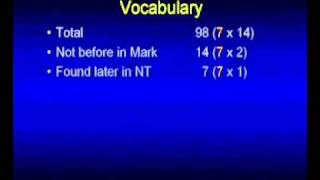
Jesus' Resurrection: Mark 16:9-20 was quoted by Early Church Fathers: Papias, Justin Martyr, Irenaeous, Hippolytus, Vincentius, Augustine - Chuck Missler
001067
15
 44:45
44:45
697
1501545600
1785022530
Mark 16:9-20 is missing in the Earliest Bible Manuscripts: Codex Sinaiticus (350 AD) and Codex Vaticanus (300 AD)
002685
16
 5:01
5:01
687
1501545600
1785025768
Jesus' Resurrection: Mark 16:9-20 was added into the Bible - Ali Ataie vs David Wood
000301
17
 10:48
10:48
814
1501894583
1785026811
In Luke 8:45, Jesus asks who touched me. In Mark and Matthew's Gospel, why is a different account given? - Rizwan vs American Lady
000648
18
 1:03:15
706
1501894612
1784998558
In Mark's Gospel, Jesus is never God. I question all Biblical scripture on Jesus' divinity - Paul William vs Richard London
003795
19
 12:34
12:34
844
1502278627
1785014854
99% of the foremost Bible Scholars, believe the historical Jesus in Mark's Gospel is more accurate than John's Gospel - Paul William vs Richard London
000754
20
 14:10
14:10
505
1504459796
1785003518
Mark 7:16 is missing from the Bible. Is this a conspiracy to change Mark's Gospel? - Daniel Boyarin
000850
21
 12:06
12:06
1049
1505259041
1784985791
In Exodus 3:14, John 6:20, John 8:24, John 8:58, Mark 6:50, Mark 13:6, Luke 21:8, Matthew 14:27 and Acts 26:29 Jesus claims I AM (Ego Eimi) God - John Schoenheit (BiblicalUnitarian)
000726
22
 4:54
4:54
282
1505868364
1785016418
In Mark 4:11, the kingdom of God is a parable - Anthony Buzzard
000294
23
 24:01
24:01
442
1510767852
1785003190
The 3 most questionnable Bible verses: Luke 23:44, Mark 15:38 or Matthew 27:52? - Ken Humphreys
001441
24
 26:58
26:58
668
1511300162
1784990348
The Biblical gospels (Mark, Matthew, Luke, John) were originally 'Nameless' Anonymous Texts - Daniel Wallace
001618
25
 4:40
4:40
629
1512005441
1785024229
Sun, Moon and Easter to mark Jesus' Resurrection - Ken Humphreys
000280
26
 1:39:02
297
1512437623
1784994673
Did the author of Mark copy pagan Homer's Odyssey?
005942
27
 1:32
1:32
679
1512437630
1785012473
Jesus was not God according to Mark, Matthew, Luke and Apostle Paul - Karen Armstrong
000092
28
 19:58
19:58
660
1512437634
1785022161
In Mark 6:52 and Matthew 14:33, Jesus walked on water. Did the disciples turn away or turn towards Jesus - Paul William vs Christian
001198
29
 2:29
2:29
267
1512438067
1785021442
Mark, Matthew, Luke and John are Anonymous pre-existing Texts. We do not have any Originals - Mike Licona
000149
30
 28:13
28:13
632
1512501625
1785029653
Jesus' Crucifixion is a celebrated Triumph in John, but a sad Tragedy in Mark, Matthew and Luke's gospel - John Spong
001693
31
 55:20
55:20
646
1513189665
1785004444
In Mark 7:15 and Acts 10:13, Dietary Laws were changed by Jesus, Apostle Paul, Mark or James? Does God Care? - Hamza Myatt vs Nathan
003320
32
 1:13:38
303
1513189668
1785025108
Mary, Mother of Jesus was a significant, powerful Jewish figure in Mark - John Spong
004418
33
 4:51
4:51
397
1513217378
1784999274
In Mark 7:15, Jesus upheld the Jewish dietary food laws, and forbid consuming swine (pig) - BeyondTV
000291
34
 33:57
33:57
583
1522452149
1785006167
Matthew copied Mark. Therefore, Matthew believed Mark's Gospel was imperfect and not God's word - Zakir Hussain vs Christian Colin
002037
35
 59:12
59:12
180
1523592047
1785022512
Matthew, Mark, Luke and John - Ali Ataie
003552
36
 0:45
0:45
474
1526689243
1785003145
Gospel of Mark, Matthew, Luke and John were written by anonymous Authors - Daniel Wallace
000045
37
 0:18
0:18
499
1526689250
1785005658
Gospel of Mark should have been entitled 'Gospel of Peter' - Daniel Wallace
000018
38
 28:37
28:37
269
1526869667
1785002955
In Mark 13:32, Jesus denied knowledge of the Hour. Yes-No - Hashim vs Mark
001717
39
 14:04
14:04
497
1528197361
1784983805
In Mark 10:18, Jesus explicity denied he was God - Trinity Delusion
000844
40
 0:42
0:42
749
1528562125
1784664335
Christmas and Easter mark the Winter Solstice and Equinox (Astrology) - Doug Michael
000042
41
 4:36
4:36
734
1528567043
1785020263
In Marks Gospel, Jesus is a normal human being. Not the Jesus of today - David Fitzgerald
000276
42
 2:32
2:32
423
1529106357
1785008951
In Mark 16:9-20, the earliest manuscripts do not have these 11 extra verses. Scribes added them later - Daniel Wallace
000152
43
 2:56
2:56
574
1529023006
1785027666
In Mark 16:9-20, Codex Sinaiticus and Codex Vaticanus do not have Mark's long ending - Daniel Wallace
000176
44
 0:16
0:16
741
1529106416
1785008681
Gospels were not written by Mark, Matthew, Luke or John. These names were decided 100 years later - Bart Ehrman
000016
45
 3:53
3:53
276
1529281428
1785001415
John copies from Mark, Matthew and Luke and adds his own reasoning, experts agree - Richard Carrier
000233
46
 0:36
0:36
403
1529332033
1784982841
Jesus never claimed to be divine or God-like in Matthew, Mark or Luke - Bart Ehrman
000036
47
 1:09
1:09
816
1529332023
1785001127
Mark, Matthew, Luke and John could not read or write. Who wrote the Gospels? - Bart Ehrman
000069
48
 2:27
2:27
445
1529332027
1785012725
Mark, Matthew, Luke and John have too many differences and contradictions - Bart Ehrman
000147
49
 5:01
5:01
700
1529454383
1785027795
In 70 AD, Mark, the earliest Gospel depicts Jesus as suffering & dying Jewish Messiah - Bart Ehrman
000301
50
 0:57
0:57
472
1529591136
1785009497
In Mark 2:10, Jesus claims authority to forgive Sin. But this does not make him God - Bart Ehrman
000057
51
 3:22
3:22
709
1529793131
1785022127
Mark, Matthew, Luke, John... Where's the other Gospels, Acts and Epistles? - Bart Ehrman
000202
52
 1:22
1:22
567
1530141496
1785015854
Matthew, Mark and Luke are similar and different. Were the Gospel differences 'inspired' by God? - Bart Ehrman
000082
53
 0:26
0:26
428
1530141495
1785015360
Mark was copied by Matthew and Luke - Bart Ehrman
000026
54
 0:45
0:45
448
1530141509
1785004912
Matthew, Mark, Luke and John are NOT objective, historically accurate accounts of Jesus' life - Bart Ehrman
000045
55
 2:06
2:06
305
1530142882
1785015888
Matthew, Mark, Luke and John are written by Anonymous Authors in third-person (i.e. they) - Bart Ehrman
000126
56
 2:29
2:29
468
1530142891
1784996224
Matthew, Mark, Luke and John authored by highly-educated, literate, 2nd gen. Greek speakers - Bart Ehrman
000149
57
 3:44
3:44
488
1530143088
1785011224
On Jesus' death, Mark and Luke give different accounts - Bart Ehrman
000224
58
 4:53
4:53
556
1530143074
1785006557
Mark Gospel, the first gospel, Jesus is the suffering Son of God who nobody recognizes - Bart Ehrman
000293
59
 3:22
3:22
540
1530143004
1784990853
In Mark 16:9-20, Scribes wrote a 'longer ending' to New Testament Bible - Bart Ehrman
000202
60
 0:53
0:53
450
1530142997
1785016272
In Mark 1:40, Scribes replaced an 'angry' Jesus with a 'compassionate' Jesus - Bart Ehrman
000053
61
 0:53
0:53
455
1530143835
1785016122
Anonymous Texts given Apostolic titles, Matthew, Mark etc. to qualify for Bible NT canon - Bart Ehrman
000053
62
 1:09
1:09
853
1530742209
1785028692
Mark's Gospel was not based on Peter's Testimony or any other Jerusalem eyewitness - Bart Ehrman
000069
63
 1:36
1:36
691
1530742211
1785021929
John-Mark wrote Mark's Gospel? Historical studies and evidences do not prove this - Bart Ehrman
000096
64
 0:36
0:36
994
1530742252
1785028241
Anonymous author of Mark's Gospel resided outside of Palestine - Bart Ehrman
000036
65
 2:09
2:09
398
1530742296
1785019370
Source for Mark's Gospel? It was not Peter's Testimony or any eyewitness' account - Bart Ehrman
000129
66
 0:41
0:41
575
1530742149
1784999081
If Mark's Gospel was based on eyewitness', why did Matthew & Luke 'radically' edit it? - Bart Ehrman
000041
67
 1:37
1:37
571
1530742143
1784999385
Irenaeus (180 AD) named popular, 'anonymous' texts Mark, Matthew, Luke, John for Apostolic reasons - Bart Ehrman
000097
68
 1:12
1:12
481
1530742285
1785021640
Matthew and Luke 'revised' the order of historical events copied from Mark's Gospel - Richard Bauckham
000072
69
 1:02
1:02
477
1530742021
1784984260
If Matthew and Luke revised Mark, what about the earlier 'unchecked' Oral tradition? - Bart Ehrman
000062
70
 0:57
0:57
222
1531349688
1785022347
Mark, Matthew, Luke or John do not give eyewitness' names or their sources - Richard Carrier
000057
71
 2:56
2:56
379
1531349702
1785006166
In Mark 11:13, Jesus cursed Fig tree is allegory for God abandoning the Jewish Temple cult - Richard Carrier
000176
72
 2:43
2:43
609
1531339962
1785024965
In Mark's Gospel, a 'triadic' structure may be evidence for Jesus Christ myth - Richard Carrier
000163
73
 2:40
2:40
641
1531349897
1784998521
On the Gospel writers: Matthew copied Mark, Luke copied Matthew and Mark, John copied Luke - Richard Carrier
000160
74
 3:20
3:20
248
1531553612
1784996704
On Mark 16:9-20, RSV Bible places the 12 'longer ending' verses in a footnote - Bruce Metzger
000200
75
 1:51
1:51
377
1531954478
1785012960
Anonymous writings were named after Apostles (Peter, James, Mark etc.) for credibility - Bart Ehrman
000111
76
 0:36
0:36
196
1532037755
1785015010
Mark, Matthew, Luke & John do not compliment each other, but are 'competitive' - Charles Hedrick
000036
77
 1:36
1:36
448
1532037762
1785014136
Mark, Matthew & Luke write of Jesus a mythical Jewish Man who did 'mighty deeds' - Charles Hedrick
000096
78
 1:25
1:25
653
1532147216
1784998374
Mark, Matthew, Luke & John are 4 Gospels. Their are 34 more Gospels - Charles Hedrick
000085
79
 0:34
0:34
608
1533124697
1785025607
In Mark 10:18 and Mark 13:32, Jesus differentiates himself from God | Lorence Yufa | Milwaukee Atheists
000034
80
 1:11
1:11
222
1533831758
1784982859
Mark, Matthew, Luke, John are anonymous texts named later (false ascriptions) - Bart Ehrman
000071
81
 0:38
0:38
930
1533564004
1785025802
After 100 years, Church Fathers refered to gospels as Matthew, Mark, Luke & John - Bart Ehrman
000038
82
 2:07
2:07
757
1533868863
1785017068
In Gospels, Jesus is crucified by 'innocent' Pontius Pilate who reluctantly bows to Jewish leaders. In reality, Pilate was a ruthless, sadistic ruler - Mark Goodacre
000127
83
 7:54
7:54
283
1535194559
1784994331
In Mark 12:29, the Lord our God is One, unitarian (mono-theos), not Trinitarian - Restoration Fellowship
000474
84
 7:10
7:10
518
1542651448
1784998391
Mark is the most reliable Gospel. Matthew, Luke and John are later 'corrections' of Mark - Godless Engineer
000430
85
 11:36
11:36
821
1544684980
1785018156
Jesus spoke Aramaic. Mark spoke Aramaic. Why is Mark's Gospel write in Koine Greek? - Frank Turek
000696
86
 50:03
50:03
669
1545226477
1785028475
Evolution of Jesus Christ: Gospel of Mark - Mike Lawrence (NotoriUK) 5/6
003003
87
 12:40
12:40
322
1548094195
1785009112
In Mark 6:5, Jesus performed healing miracles which failed to impress people - Muhammad Lamin
000760
88
 17:10
17:10
272
1548891094
1785026941
In 1 Kings 8:27, about God, Solomon said 'the Heavens cannot contain you'. Jesus was God on Earth? - Shamsi vs Mark
001030
89
 38:56
38:56
323
1548891073
1785028274
In John 17:3, only 'True God' is The Father, who is One Person. Jesus is not the True God - Mansur Ahmad vs Mark
002336
90
 15:46
15:46
647
1549453759
1785018341
Is Mark's Gospel based on writings of Philo of Alexandria?
000946
91
 20:00
20:00
639
1552481426
1784977340
Dating Mark's Gospel is not straightforward - Fishers Evidence
001200
92
 28:25
28:25
1130
1552936964
1785025550
Mark's Gospel has longer ending. Depends which manuscript you use? - Mansur Ahmad vs Christian
001705
93
 23:29
23:29
856
1553512519
1785023482
In Mark 1:5, John The Baptist preached forgiveness of Sins through Repentence alone, not Human sacrifice. Muslims Agree - Paul William vs Christian
001409
94
 12:24
12:24
619
1554229253
1785005529
Was Mark's Gospel copied from Josephus 'War of the Jews' after 75 AD? - Fishers Evidence
000744
95
 1:09:33
712
1558813157
1784996186
Mark's Gospel, a collection of copied: Quotes, Parables, Imitation, Prophecy and Literary devices - PineCreek
004173
96
 3:55
3:55
653
1559259700
1785026736
Jesus became the Passover Lamb in John's Gospel, not Mark, Matthew or Luke - Tovia Singer
000235
97
 16:46
16:46
484
1561323502
1785028820
Catholic Church challanges Transgender ideology as attack on Christian family values - Mark Dowd vs Jules Gomes
001006
98
 1:42
1:42
558
1566242728
1785027828
In Mark 15:35, on his Crucifixion, Jesus cried out to Elijah, the Sun God (Helios) - Robert Price
000102
99
 2:28
2:28
962
1566862429
1785013623
John's Gospel is different from Mark, Matthew and Luke due to emerging Gnostic ideas - Kegan Chandler
000148
100
 10:13
10:13
732
1570021309
1785024689
Jesus' Resurrection (Mark 9-20) is missing in earliest Bible Manuscripts, Codex Sinaiticus and Vaticanus - TruthSurge
000613
101
 5:55
5:55
791
1570022217
1785009666
Mark's Gospel is a Hero biography, written in a 'fiction-like' Third-Person style - TruthSurge
000355
102
 15:06
15:06
433
1570022242
1785019896
Homer's Odyssey (800 BC, Greek myth) parallels Jesus in Mark's Gospel (70 AD) - TruthSurge 1/4
000906
103
 12:10
12:10
746
1570022253
1785021238
Homer's Odyssey (800 BC, Greek myth) parallels Jesus in Mark's Gospel (70 AD) - TruthSurge 2/4
000730
104
 8:40
8:40
608
1570022263
1785027053
Homer's Odyssey (800 BC, Greek myth) parallels Jesus in Mark's Gospel (70 AD) - TruthSurge 3/4
000520
105
 10:58
10:58
702
1570022277
1785026512
Homer's Odyssey (800 BC, Greek myth) parallels Jesus in Mark's Gospel (70 AD) - TruthSurge 4/4
000658
106
 14:59
14:59
541
1570022293
1785006160
Mark's Gospel casts James & John, Jesus' disciples from Castor & Polydeuces, brothers in Greek mythology - TruthSurge
000899
107
 3:55
3:55
451
1570022306
1785023287
Homer's Odysseus (800 BC, Greek myth), a skilled Craftsman ('tekton') parallels Jesus the Carpenter in Mark's Gospel (70 AD) - TruthSurge
000235
108
 11:21
11:21
376
1570022322
1785029042
Dead Heros ascend to Heaven. Crucified Jesus ascend to Heaven in Mark 9-20 - TruthSurge
000681
109
 12:08
12:08
701
1570024765
1785007304
Gospel of Mark: 29% Reliability Score against 'US Federal Rules' - TruthSurge
000728
110
 3:44
3:44
205
1570024773
1785025663
Mark 9-20 is a late Textual forgery due to Vocabulary, Text style & Content - TruthSurge
000224
111
2:15
505
1570024789
1785004164
In Mark 16:5 & Matthew 28:2, a Man changes to Angel - TruthSurge
000135
112
6:42
562
1570024798
1785022168
Was the 'fake' Jesus' Resurrection in Mark 9-20 copied by Matthew, Luke and John? - TruthSurge
000402
113
 4:25
4:25
679
1570804850
1785000082
Jesus of Gospels: Mark, Matthew, Luke & John was a Jew - Adele Reinhartz
000265
114
 3:31
3:31
1433
1571010243
1785027268
Richard Carrier EXPOSES: How Mark Used Apostle Paul's Letters to Invent the Jesus Story (Mythicism)
000211
115
3:30
979
1571010245
1785024229
Gospels of Mark, Matthew, Luke, John disagreed over Torah, Jewish Law & Gentiles - Richard Carrier
000210
116
 1:21
1:21
787
1572279402
1785020895
Matthew and Luke copied from Gospel of Mark - Bart Ehrman
000081
117
 7:55
7:55
61
1586865022
1785013001
Order Followers follow orders with no Judgement - Mark Passio
000475
118
 10:01
10:01
423
1592867794
1785002323
Mark, career selling investments, became homeless after landlord increased rent - Invisible People
000601
119
 18:08
18:08
627
1594852113
1785022286
New World Order: The Future Starts Here. Show your COVID Passport or Wear a Face Mask - Mark Sargent
001088
120
 3:05
3:05
629
1595787849
1784994571
In Mark 12:29, Jesus was an observant Jewish Man, not a Trinitarian - Anthony Buzzard
000185
121
 41:39
41:39
513
1602943655
1785001480
Digital Dollar will transform a Free Market, Capitalist USA into a Centrally-planned, 'Socially-driven' Communist society - George Gammon
002499
122
 9:57
9:57
329
1603725982
1785025602
In Revelation 13:18, the 666 is The Beast's name displayed on our wrist - Mark Hitchcock (100huntley)
000597
123
 13:27
13:27
546
1616418301
1785022542
How the COVID Digital Health Passport will work in Denmark - Hugo Talks
000807
124
 30:04
30:04
695
1619774070
1785003305
War on Cash leads to a Cashless Society, CBDC and Social Credit Scores - Mark Moss
001804
125
 3:30
3:30
407
1621449239
1785028936
UK Government increases COVID Marketing expenditure to £320M to April 2022 - Hugo Talks
000210
126
 1:11:08
453
1629373919
1785022537
We Care so much for you. Just take Mark of the Beast! - Keith Malcomson
004268
127
 39:20
39:20
407
1749180613
1785002471
Preparing for the NWO Great Reset | Mark Moss
002360
128
 3:00
3:00
156
1776118037
1785017658
'Evil Israel' bombs Lebanon - 100 targets in 10 minutes. 100+ dead, 1000+ injured AFTER ceasefire | chunkymark
000180
129
 21:08
21:08
72
1782176111
1785027109
Did Apostle Paul even exist? Scholar DESTROYS the Mythicist Argument | Mark Goodacre | MythVision
001268
130