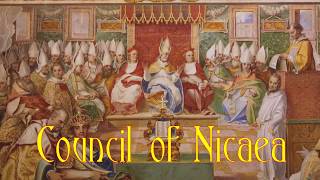
What details were agreed at Council of Nicaea in 325 AD?

Seek knowledge

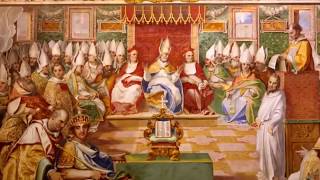
The Nicene Creed was agreed at Council of Nicaea (325 AD) and Constantinople (381 AD) by 316 Christian Bishops.

The Nicene Creed presents the Christian Catholic teachings on the nature of God. The Creed can be considered the foundation for all the Christian sects that emerged from thereon. In particular, the Creed was written in response to Arianism, a form of Christianity that denied Jesus was fully God.

To view the text of the Nicene Creed, click here.

Below is a line-by-line breakdown of the Nicene Creed, and the theological implications of the text.


The Nicene Creed
NICAEA 325 AD   |   CONSTANTINOPLE 381 AD
We Believe in One God
  1. Christians believe in only one God.
  2. The creed states the assumption of the ancient Jewish Shema: Hear O Israel, the Lord our God is one Lord.
The Father Almighty
  1. Jesus frequently calls God "Father" in the Scriptures, and this usage tells us that God is a loving God active within His creation.
  2. God the Father is the first person (Greek hypostasis, "individual reality"), or distinction, within the Godhead.
  3. God the Father is the "origin" or "source" of the Trinity.
  4. God the Father was called "God Unbegotten" in early Christian thought.
Maker of Heaven and Earth of All Things Visible and Invisible
  1. God created both the visible world (created matter) and the invisible world (spiritual, angels etc).
  2. God created everything.
  3. Early sects, the Gnostics and Marcionites, believed the Father created the spirit world, but an "Evil" god ('demiurge') created the evil material world.
We Believe in One Lord Jesus Christ
  1. Jesus Christ is the Lord of all.
  2. The title Lord means that Jesus is master of all, which suggests of Jesus' divinity.
  3. Hebrew word 'adonai' and Greek word 'kyrios' both meaning 'Lord', were applied to Yahweh in the Old Testament.
The Only Begotten Son of God
  1. Jesus is in a unique relationship with God the Father.
  2. Hebrew kings were sons of God symbolically (see Psalm 2), Jesus is the only Son of God by nature.
Born of the Father Before All Ages
  1. Begotten has the meaning of born, fathered, generated or produced.
  2. God the Son is born out of the essence of God the Father.
  3. A child shares the same humanness as the parents. Therefore, the Son shares the essential nature of God with the Father.
  4. Since God is eternal, the Son, being begotten of God, is also eternal.
  5. The Son is often called the 'Only-Begotten God' (see John 1:18).
God from God, Light from Light
  1. God the Son exists in relation to God the Father.
  2. The Son is not the Father, but they both are God.
  3. Early sects, the Sabellians and Modalists, believed the Father, Son and Holy Spirit were one God who changed roles. When God creates, he is the Father, while on earth, he is the Son etc.
  4. The Scriptures have all three persons, Father, Son and Holy Spirit, interacting at the same time, i.e. Jesus' baptism
True God from True God
  1. God the Son is not a half-god or inferior to God the Father.
  2. God the Son is fully and utterly God, distinct from the Father, yet not divided from the Father.
  3. Early sect, the Arians believed Jesus could be called "god" but not true God.
Begotten, Not Made
  1. Early sects, the Arians and more recently, the Jehovah's Witnesses' believe Jesus was a creation of God.
  2. When a woman gives birth, she does not create a child out of nothing. Therefore, being begotten of God, the Son is not created out of nothing.
  3. Since the Son's birth from the Father occurred before the creation of time, begotten refers to a permanent relationship as opposed to an event limited by time.
Consubstantial (Greek: homoousia) with the Father
  1. God the Father and God the Son are equally divine, united in substance and will.
  2. Father and Son share the qualities and essential nature that make one in reality God.
  3. Father and Son share the same substance or essence of divinity.
  4. Sharing the same substance does not mean they share identity of person.
Through Him All Things Were Made
  1. The Bible tells us that through the Son, as Word of God, all things have been created.
  2. As Logos, the Son is the agent and artificer of creation.
For Us Men and for Our Salvation, He Came Down from Heaven
  1. Jesus came from heaven, from a numinous reality other than our own.
  2. Whilst the creed says "Down", our language is limited. Heaven is not "Up".
  3. Similarly, God the Father is not a biological male father.
  4. Language is limited by time and spatiality, so we describe heaven etc. symbolically.
And by the the Holy Spirit, Was Incarnate of the Virgin Mary, and Became Man
  1. God the Son became incarnate in the person of Jesus of Nazareth.
  2. He was born of a virgin through the Holy Spirit.
  3. God truly became human in Jesus Christ.
  4. Catholics believe that Jesus of Nazareth was and is a real human being, not simply a spirit or ghost.
  5. The incarnation of God in Christ is the ultimate act of love. Rather than sending an angel or good human to accomplish the redemption and restoration of creation, God Himself became human.
  6. Early sect, Ebionites denied Jesus was born of a virgin.
  7. The virgin birth is a doctrine many modern day skeptics choose to reject.
  8. The Catholic Church teaches that the virgin birth is dogma, i.e. a fundamental belief.
For Our Sake He Was Crucified Under Pontius Pilate; He Suffered Death, and Was Buried
  1. Jesus died on a cross, suffered as humans do, truly died, and was laid in a tomb.
  2. The Nicene Creed is more than just metaphysical speculation, and includes important historical confessions.
  3. In addition to being "true God from true God", Jesus is fully human as well.
  4. Early sect, the Docetists, from Greek 'dokeo', "to seem", believed Jesus only seemed to be human, but was not human at all. He went through the motions of being human, i.e. he pretended to eat.
And Rose Again On the Third Day in Accordance With the Scriptures
  1. Jesus was resurrected bodily as the Scriptures say.
  2. Jesus truly died, and he truly rose from the dead three days later.
  3. Belief in the bodily resurrection is central to Christian doctrine and experience.
  4. Jesus was not just physically resuscitated (like Lazarus), but rather his body was transformed at the resurrection.
  5. Rejection of the bodily resurrection is a rejection of the foundation of Catholic Christianity.
  6. The word "again" is used because Jesus' first "rising" was his birth. To "rise again" is to come back alive again.
He Ascended Into Heaven and Is Seated at the Right Hand of the Father
  1. Heaven was thought to be "up", above the skies.
  2. In Scripture, Jesus "ascends" to heaven.
  3. Luke's Gospel wrote this as Jesus "went up" to heaven. In this instance, we are limited by language and experience of spatiality.
  4. Jesus is at the right hand of the Father, i.e. sharing authority with the Father, not literally sitting next to the Father.
He Will Come Again in Glory to Judge the Living and the Dead and His Kingdom Will Have No End
  1. Jesus is coming again to righteously judge the living and dead.
  2. His kingdom cannot be destroyed, despite all of humanity's efforts.
  3. We do not know when, or how Jesus will return, nor do we speculate on this.
We Believe in the Holy Spirit, the Lord, the Giver of Life
  1. The Holy Spirit is also called "Lord."
  2. The Holy Spirit sustains our lives as Christians, illuminating us after the new birth.
  3. The original Nicene Creed (325 AD) ended at "We believe in the Holy Spirit".
  4. The words, "the Lord, the Giver of Life" were approved at the Council of Constantinople (381 AD).
  5. Early sect, the Macedonians ("fighters against the Spirit") denied the full divinity of the Holy Spirit, and so the above words were added in response.
Who Proceeds from the Father and the Son
  1. The Son is said to be begotten, while the Spirit is said to proceed.
  2. Both the Son and Spirit are in special relationships to the Father, yet fully divine.
  3. The Catholic Church acknowledges the Father is the sole source within the Trinity, and admits that "proceeds from the Father and Son" actually means "proceeds from the Father through the Son".
  4. The words "and the Son" was not in the original Nicene Creed.
  5. The words "and the Son" were likely added to combat Arianism in the Gothic lands.
  6. The words "and the Son" were added in many Western Churches, but opposed by Eastern Churches.
  7. The words "and the Son" continue to cause conflict between Eastern and Western Christianity. as the Western Church updated the Nicene Creed with no Eastern Church input.
Who With the Father and Son Is Adored and Glorified
  1. The Holy Spirit is fully God, like the Father and Son
  2. The Holy Spirit is worthy of worship and adoration.
Who Has Spoken Through the Prophets
  1. The Spirit inspired the prophets of the past.
  2. The Spirit inspires the Church of today.
We Believe in the One Holy Catholic and Apostolic Church
  1. The Nicene Creed requires belief in the Catholic (Universal) Church, whose origins are ancient and historical.
  2. The Catholic Church goes back to the Apostles.
  3. The Catholic Church was built upon the faith and witness of the Apostles.
  4. Witness of the Apostles survives through 'Apostolic Succession'.
  5. 'Apostolic Succession' is where the Apostles appointed leaders, who appointed leaders, who appointed leaders, and so on. A process that continues to this day.
  6. 'Apostolic Succession' survives today primarily in Catholic and Orthodox Churches.
  7. The Church is "holy" due to Christ's holiness and grace.
  8. The Church remains "holy", even when attended by "unholy" leaders and members.
We Confess One Baptism for the Forgiveness of Sins
  1. Through the waters of baptism, God forgives our sins, and we are born again.
  2. Baptism, an act of Atonement is ancient and universally acknowledged in early Christian writings.
  3. Baptism, in the name of Trinity, is definitely "taken", repeating the ritual is not required.
And We Look forward the Resurrection of the Dead, and the Life of the World to Come
  1. Christians await the day when the universe is reconciled to God in Christ Jesus.
  2. Christians affirm the existence of a soul-filled heaven and the resurrection of the dead when souls meet glorified bodies.
Amen
  1. The Nicene Creed does not define God's nature exactly.
  2. God's nature, such as the Trinity, His threeness and His oneness, is knowledge we can never fully comprehend.
  3. The Nicene Creed is an authoritative framework, but it too is rooted in mystery.
  4. Our minds cannot comprehend Love or Joy. And our minds cannot comprehend God, whose nature is beyond our scope.


CREDIT
David Bennett. http://www.ancient-future.net/nicene.html
19292 views · 5 hrs ago |   Author: Guest   •   Updated: 26 Sep 2018
ALL ARTICLES ARE INTENDED FOR GENERAL EDUCATIONAL PURPOSES ONLY. ALL INFORMATION IS BELIEVED TO BE CORRECT, ACCURATE AND TRUTHFUL. YOU ARE ADVISED TO DO YOUR OWN RESEARCH. ARTICLES ARE LIVE DOCUMENTS AND MAY BE UPDATED WITH NEW CONTENT AT ANY TIME. WHERE AVAILABLE, SOURCES AND REFERENCES ARE CREDITED. IF YOU SPOT ANY ERRORS, OMISSIONS OR GIVE FEEDBACK KINDLY CONTACT US WITH DETAILS

148-nicaea-catholic

Videos on 'Nicaea' (28)

Video: At Council of Nicaea 325 AD, Arian, Orthodox and Eusebians debated Jesus' divinity - InspiringPhilosophy 9:30
680 views · 4 days ago
Video: The Council of Nicaea, Arian and Athanasian Creed 8:06
508 views · 5 days ago
Video: Arian Controversy and the Council of Nicaea - Khan Academy 11:24
393 views · 2 days ago
Video: Serapis Christus, Ptolemy and how Constantine created Jesus Christ at the Council of Nicaea - Ray Hagins 51:30
890 views · 2 days ago
Video: At Nicaea, Serapis Christus finally became Jesus Christ 4:46
516 views · 14 hrs ago
Video: Early Christianity: Arius, Athanasius and Nicaea - Ryan Reeves 32:34
971 views · 8 hrs ago
Video: After the Council of Nicaea - Ryan Reeves 27:05
591 views · 14 hrs ago
Video: Arius, Athanasius & Constantine at Nicaea: Who won the debate? - Richard Rubenstein 55:53
751 views · 1 day ago
Video: In 325 AD, Trinity became Official Church Doctrine at Council of Nicaea - Tovia Singer 50:14
775 views · 9 hrs ago
Video: In 325 AD, Council of Nicaea created Jesus and Christianity by unifying pagan Gods and beliefs - Doug Michael 1:51
906 views · 5 hrs ago
Video: Arguing Bishops at Council of Nicaea voted Pagan rituals into Christianity i.e. Trinity - Doug Michael 2:10
1160 views · 8 hrs ago
Video: In 325 AD, Council of Nicaea debated and voted on divinity of Jesus - Bart Ehrman 2:00
524 views · 30 mins ago
Video: At Nicaea 325 AD, Jesus was declared co-equal, co-substantial, co-eternal with God - Charles Hedrick 1:52
242 views · 1 week ago
Video: After Nicaea 325 AD, Constantine had Eusebius determine the earliest New Testament canon - Charles Hedrick 1:48
737 views · 14 hrs ago
Video: Christianity did not exist until AFTER the Council of Nicaea (325 AD) - Charles Hedrick 1:46
839 views · 2 days ago
Video: Council of Nicaea (325 AD) ignored earlier writings on Jesus' divinity in the Gospels - Charles Hedrick 0:56
679 views · 47 mins ago
Video: In 325 AD, Council of Nicaea decided the final Christian doctrine - Lorence Yufa | Milwaukee Atheists 1:50
755 views · 9 hrs ago
Video: At Nicaea (325 AD), Arian Controversy was settled; a 'disadvantaged' Arius defeated - Richard Rubenstein 5:56
450 views · 2 days ago
Video: Council of Nicaea (325 AD) - Jim Papandrea 1:02:30
442 views · 3 days ago
Video: Nicene Creed (Nicaea) - Jim Papandrea 1:06:39
431 views · 4 days ago
Video: Nobody believed Jesus was God, until the Council of Nicaea in 325 AD - Michael Skobac 9:15
632 views · 1 min ago
Video: What Happened at the Council of Nicaea? - Milwaukee Atheists 18:25
646 views · 1 week ago
Video: Greek Philosophy won at Council of Nicaea. The Bible lost - Richard Rubenstein 5:21
776 views · 18 hrs ago
Video: Greek philosophy, John's gospel and Philo of Alexandria were merged at Council of Nicaea in 325 AD - William Lane Craig & approvedofGod 12:38
952 views · 2 days ago
Video: In 325 AD, the Council of Nicaea defined Jesus as 'Homoousios', of same substance with God - Kegan Chandler 1:00:25
496 views · 2 weeks ago
Video: In 325 AD, the Council of Nicaea defined Jesus as 'Homoousios', of same substance with God - Kegan Chandler 3:04
628 views · 1 week ago
Video: In 325 AD, the Council of Nicaea defined Jesus as 'Homoousios', of same substance with God - Kegan Chandler 2:14
872 views · 6 hrs ago
Video: In 325 AD, the Council of Nicaea defined Jesus as 'Homoousios', of same substance with God - Kegan Chandler 4:24
813 views · 14 hrs ago


News on 'Council of nicaea'

The Messed Up Truth of The Council Of Nicaea   | Grunge
15 Sep 2020   |   1059 views · 3 weeks ago

Latest videos  •  5,623 videos  •  0 viewed/24 hour
About  |  Help  |  Contact    •    Terms  |  Privacy  |  Disclaimer
Connect:      Facebook  |    Twitter  |    Youtube