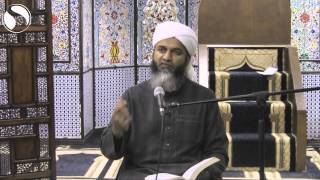
Arius, Athanasius & Constantine at Nicaea: Who won the debate? - Richard Rubenstein

   55:53
829 views  ·  Last viewed: 13 hrs ago
Uploaded: 28 Feb 2017   (9 years ago)  ·  Shared: 21 Nov 2017

Video Description (from Youtube)

In a rare presentation, Richard Rubenstein, author and professor of Conflict Resolution at George Mason University, addresses a conference of One God believers in Atlanta. Rubenstein, author of the

book 'When Jesus became God' brings us exceptional insights into the great Christian conflicts that surrounded the  'Arian' controversy and particularly the council of Nicea in 325 AD. This is a must see for everyone with an interest in church history, the development of post-biblical Christian orthodoxy and/or conflict resolution.

DISCLAIMER
All videos are shared for educational and information purposes only. All videos are hosted and viewable on Youtube servers. Video titles are generated using the original video title; overall content theme including actual dialogue and speech (Transcript); and A.I-based recommendations with a focus on SEO, keyword density, and internal search functions. The video title does not represent the views held by the Youtube video uploader, or any individual, organisation or business.

If you spot any mistake, omission or give feedback, kindly Contact Us with details


Search Results on 'Arius, Athanasius & Constantine at Nicaea: Who won the debate? - Richard Rubenstein'

SCROLL TO:TOPICS |   6NEWS |   2ARTICLES |   5FAQ |   2VIDEO |   70LINKS |   0

Topics include Nicaea, Constantine, Richard Rubenstein, Athanasius, Arius (6)

Where is Nicaea?
Nicaea or Nicea was an ancient city in northwestern Anatolia. It is primarily known as the site of the First and Second Councils of Nicaea (the first and seventh Ecumenical councils in the early history of the Christian Church), the Nicene Creed (which comes from the First Council), and as the

capital city of the Empire of Nicaea following the Fourth Crusade in 1204, until the recapture of Constantinople by the Byzantines in 1261.
Who was Constantine?
Constantine the Great (27 February 272 AD-22 May 337 AD) was a Roman Emperor who ruled between 306 and 337 AD. Born on the territory now known as Nis, located in Serbia, he was the son of Flavius Valerius Constantius, a Roman Army officer of Illyrian origins. His mother Helena was Greek. His father

became Caesar, the deputy emperor in the west, in 293 AD. Constantine was sent east, where he rose through the ranks to become a military tribune under Emperors Diocletian and Galerius. Constantine was the first Roman emperor to convert to Christianity. Although he lived most of his life as a pagan, he joined the Christian faith on his deathbed, being baptised by Eusebius of Nicomedia. He played an influential role in the proclamation of the Edict of Milan in 313, which declared religious tolerance for Christianity in the Roman empire. He called the First Council of Nicaea in 325 AD that produced the statement of Christian belief known as the Nicene Creed.
Who is Richard Rubenstein?
Richard Rubenstein (born 1938) is an author and University Professor of Conflict Resolution and Public Affairs at George Mason University. Rubenstein holds degrees from Harvard College, Oxford University (as a Rhodes Scholar), and Harvard Law School.
Who was Athanasius?
Athanasius of Alexandria (298-373 AD), also called Athanasius the Great, Athanasius the Confessor or Athanasius the Apostolic was the 20th bishop of Alexandria (as Athanasius I). His on-again-off-again episcopate spanned 45 years of which over 17 encompassed five exiles, when his episcopate was

replaced on the order of four different Roman emperors. Athanasius was a Christian theologian, a Church Father, the chief defender of Trinitarianism against Arianism, and a noted Egyptian leader of the fourth century. Conflict with Arius and Arianism as well as successive Roman emperors shaped Athanasius' career. In 325 AD, at the age of 27, Athanasius began his leading role against the Arians as a deacon and assistant to Bishop Alexander of Alexandria during the First Council of Nicaea. Roman emperor Constantine the Great had convened the council in August 325 to address the Arian position that the Son of God, Jesus of Nazareth, is of a distinct substance from the Father.
Who was Arius?
Arius 256-336 AD, was a Christian presbyter and ascetic of Berber origin, and priest in Baucalis in Alexandria, Egypt. His teachings about the nature of the Godhead in Christianity, which emphasized the Father's divinity over the Son, and his opposition to what would become the dominant Christology

Homoousian Christology, made him a primary topic of the First Council of Nicaea, which was convened by Emperor Constantine in 325 AD.

What was the Council of Nicaea?
The First Council of Nicaea was a council of Christian bishops convened in the Bithynian city of Nicaea (now ?znik, Bursa province, Turkey) by the Roman Emperor Constantine I in 325 AD. Its main accomplishments were settlement of the Christological issue of the divine nature of God the Son and his

relationship to God the Father, the construction of the first part of the Nicene Creed, establishing uniform observance of the date of Easter, and promulgation of early canon law.

News on Nicaea, Constantine, Richard Rubenstein, Athanasius, Arius (2)

1.Archeologists discover site of Emperor Constantine and Council of Nicaea, 325 AD in Turkey | RT News
2.The Messed Up Truth of The Council Of Nicaea | Grunge

Articles on Nicaea, Constantine, Richard Rubenstein, Athanasius, Arius (5)

1.Constantine and Christianity
2.Council of Nicaea 325 AD
3.Arius vs Bishop Athanasius
4.Nicene Creed - Council of Nicaea 325 AD
5.Constantine, Nicaea and History

FAQ on Nicaea, Constantine, Richard Rubenstein, Athanasius, Arius (2)

1.What happened at the Council of Nicaea in 325 AD?
2.In 325 AD, did Emperor Constantine burn gospels, writings and religious text?

Youtube Videos on Nicaea, Constantine, Richard Rubenstein, Athanasius, Arius (70)

1183 views 2:50:03
613 views 12:32
775 views 9:30
757 views 48:10
836 views 43:58
567 views 8:06
1187 views 11:37
454 views 11:24
988 views 51:30
772 views 5:45
804 views 51:59
801 views 40:53
580 views 4:46
865 views 32:00
678 views 2:57
208 views 2:16
754 views 2:38
906 views 8:18
1073 views 32:34
645 views 27:05
1106 views 45:17
237 views 43:58
829 views 55:53
505 views 2:14
880 views 50:14
1004 views 1:51
980 views 2:01
1293 views 2:10
703 views 2:28
1072 views 0:49
597 views 2:00
701 views 0:40
287 views 1:52
826 views 1:48
921 views 1:46
526 views 1:19
771 views 0:56
843 views 1:50
867 views 2:00
995 views 0:39
1012 views 1:28
1044 views 1:58
968 views 0:48
370 views 4:17
463 views 1:45
495 views 4:19
510 views 5:56
508 views 1:02:30
481 views 1:06:39
284 views 13:25
859 views 9:15
700 views 18:25
275 views 2:29
978 views 56:50
610 views 3:55
851 views 5:21
182 views 2:56
1103 views 12:38
798 views 2:49
893 views 7:48
581 views 1:00:25
714 views 3:04
947 views 1:17
544 views 2:39
906 views 3:21
991 views 2:14
1220 views 2:29
707 views 5:51
886 views 4:24
128 views 21:00
EXPLORE TOPICS : NICAEA | 33 CONSTANTINE | 33 RICHARD RUBENSTEIN | 11 ATHANASIUS | 12 ARIUS | 10

Latest videos  •  6,061 videos  •  0 viewed/24 hour

SUBSCRIBE

Receive the latest news and updates by email - Subscribe Now!
About  |  Q&A  |  Contact Us    •    Terms  |  Privacy  |  Disclaimer  |  Sitemap
Connect:      Facebook  |    Twitter  |    Youtube
MuslimProphets.com is an educational website on the Prophets of God: David, Noah, Abraham, Moses, Jesus and Muhammad, who established the Abrahamic faiths of Judaism, Christianity and Islam. MuslimProphets.com explores contemporary social themes through Scripture, Evidences, Photo, Video, Maps, Current Affairs, Debate and 'alternative' Views held by Theologians, Apologists, Scholars and Street Preachers. Take a Site Tour

In accordance with Islamic etiquette, all prophet names should be followed with 'Peace Be Upon Him (PBUH)'. This is omitted to minimise text.

DISCLAIMER: All website content is for general information and educational purposes only and available in the public domain. Whilst all information comes from sources believed to be reliable, this cannot be guaranteed. External links are provided as a convenience and for informational purposes only. They do not constitute endorsement or approval for any products, services or comments by organizations or individuals. Title and Text links may be edited for external SEO, internal site and keyword search purposes. We bear no responsibility for the accuracy, legality, or content found on any external website or its subsequent links. Unless indicated, all images and content is licensed under a Creative Commons Attribution License distributed by Wikipedia, Wikimedia Commons, Pixabay, Pxhere, Pexels, Unsplash, Flickr and others. All Torah, Psalms, Old and New Testament Bible quotes are from the King James Version (KJV) Holy Bible in the public domain. All Quran quotes are from Taqi-ud-Din al-Hilali/Muhsin Khan English Quran translation.

ALWAYS DO YOUR OWN RESEARCH. If you spot any mistake, error or omission of information, contact us so we can correct it.