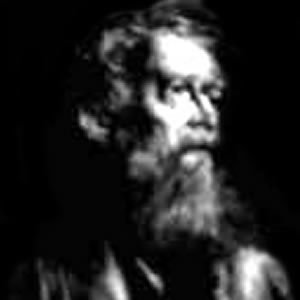
ENGLISH: Shem
HEBREW: Shem
ARAMAIC: Sem
ARABIC: Saam
BIRTH: 2665 BC
DEATH: 2065 BC
AGE: 600 Years
SCRIPTURE: Unknown
Who was Shem?
He is a survivior of the great flood. Among Shem's descendants are the Arabs and the Hebrews, and he was the forefather of all the subsequent prophets.
Jewish tradition regarded Shem as the greatest, but youngest son of Noah, who was born circumcised and served as a prophet for 400 years.
Muslim tradition believes that Shem was given the 'middle of the earth' as his land, and he went on to become the father of the Arabs, Persians and Byzantines.
Why did God send Shem?
The primary purpose of prophets was to deliver divine guidance, moral laws, and spiritual warnings directly from God to humanity.
Judaism: Speaking truth to power, correcting kings, and calling Israel back to its covenant with God.
Christianity: Foretelling the Messiah (Jesus) and preparing humanity for the Kingdom of God.
Islam: Establishing absolute monotheism (Tawhid) and delivering legal frameworks to every nation.
What was Shem's role?
A son of Noah and an ancestor of the Semitic peoples, whose line preserved the worship of the one true God.
What was Shem's core message to the people?
Describe the society/world Shem came into
| The Environment |
| The rapidly changing, uncolonized alluvial plains of the ancient Near East immediately following the catastrophic global Flood. |
| The Society |
| A freshly developing, centralized human population comprising the immediate expanding families of Noah's three sons, who shared a single universal language. |
| The Social Climate |
| Marked by the intense pressures of post-Flood survival, geographical migration, and a dramatic societal shift into cultural fragmentation and linguistic division during the Tower of Babel incident. |
List the countries Shem set foot in?
- Mesopotamian plains (Specific city unknown), Iraq
- Mesopotamian plains, Iraq
- Mount Ararat region, Turkey / Armenia
- Jerusalem region (Traditionally identified as Melchizedek, King of Salem), West Bank, Palestine
- Global waters via the Ark (International waters)
- Shinar plains (Region of the Tower of Babel), Iraq
- Southern Levant region, Israel / Palestine
- Jerusalem, West Bank, Palestine
On googlemaps, where was Shem sent?
When was Shem on Earth?
Who is Shem in other religions?
| Shem in Judaism |
| Regarded as the son of Noah and a transmitter of divine tradition, he is considered the ancestor of the Semitic peoples and the forefather of Abraham. |
| Shem in Christianity |
| Similar to Judaism, Christianity views Shem in the genealogy of Jesus, continuing the holy line from Noah to Abraham. |
| Shem in Islam |
| He is considered a righteous son of Noah and is venerated by some Islamic scholars as a prophet who inherited divine wisdom. |
Was Shem related to other prophets?
What photo evidence exists for Shem?
Is Shem in the news today?
What interesting facts are there about Shem?
SHEM
Lived after the flood for 502 years
SHEM
Lived for 600 years
SHEM
Son of Noah
SHEM
Talked with Methuselah for 98 years
What faq questions are asked of Shem?
Where can I learn more of Shem?
What did Shem finally achieve?
What Youtube videos can I watch to learn more on Shem?
 41:27
41:27
25
1783099183
1784248867
Origins of Humanity - Shem, Ham, and Japheth | Unraveling Scriptures
002487
1
 4:06
4:06
10
1783340454
1784221387
Origins of Semitic People. Five Sons of Shem - Elam, Asshur, Arphaxad, Lud and Aram
000246
2
 1:28:37
25
1783345258
1784272584
Shem's 5 Sons: Elam (Elamites), Asshur (Assyrians), Arphaxad (Chaldeans/Hebrews), Lud (Lydians), and Aram (Arameans)
005317
3
 11:26
11:26
23
1783099177
1784274326
Shem, the firstborn of Noah and father of Semitic Nations | Unraveling Scriptures
000686
4
 24:41
24:41
30
1783099191
1784250655
Wives of Shem, Ham & Japheth: The Story Nobody Tells You | Unraveling Scriptures
001481
5
Do any scripture texts refer to Shem?
Shem in the Torah
Torah is the first 5 books* of the Old Testament: Genesis, Exodus, Leviticus, Numbers and Deuteronomy.Shem in the Psalms
Psalms is the third section of the Hebrew Bible. Many of the Psalms are linked to David.Shem in the Bible (Old Testament)
The Old Testament consists of 39 books* including the Jewish Torah (Genesis, Exodus, Leviticus, Numbers and Deuteronomy).Shem in the Bible (New Testament)
The New Testament (Christianity) consists of 66 books*. 39 books from the Old Testament, and 27 additional books including Matthew, Mark, Luke and John.Shem in the Quran
The Quran was revealed to Muhammad through the Angel Gabrial. It is the central religious text of Islam, which Muslims believe to be a direct revelation from God.Shem in Hadith
Hadith are the "prophetic traditions" of Muhammad; his teachings, actions, deeds and sayings. Hadith were compiled from oral reports in circulation in society around the time of their compilation.Shem in Ibn Kathir
Ibn Kathir (1300-1373) was an influential Muslim scholar/historian who wrote the reknowned 'Qisas Al-Anbiya' (Stories of the Prophets) book. An authorative and respected thesis on the many prophets of GodIMPORTANT NOTE: Ibn Kathir is NOT Revealed Scripture. It appears here as it contains relevant information