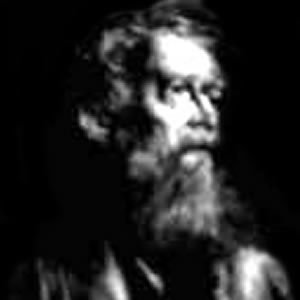
ENGLISH: Abel
HEBREW: Hevel
ARAMAIC: Habil
ARABIC: Habil
BIRTH:
DEATH:
AGE:
SCRIPTURE: Unknown
Who was Abel?
When they grew up, Abel, the younger brother, became a shepherd. He herded sheep, goats and other animals. The elder brother Cain, worked as a farmer.
Abel and Cain had a disagreement. Cain's anger got the better of him and he killed his innocent brother Abel.
Why did God send Abel?
The primary purpose of prophets was to deliver divine guidance, moral laws, and spiritual warnings directly from God to humanity.
Judaism: Speaking truth to power, correcting kings, and calling Israel back to its covenant with God.
Christianity: Foretelling the Messiah (Jesus) and preparing humanity for the Kingdom of God.
Islam: Establishing absolute monotheism (Tawhid) and delivering legal frameworks to every nation.
What was Abel's role?
Demonstrated the value of pure devotion and faith through his righteous offerings, becoming a foundational example of true worship.
What was Abel's core message to the people?
Describe the society/world Abel came into
| The Environment |
| The early agrarian and pastoral landscape of the first generation of humans outside the Garden of Eden. |
| The Society |
| Society was still entirely tribal and strictly confined to the immediate family unit of Adam and Eve. |
| The Social Climate |
| The environment was split between two primary human livelihoods: arable farming (represented by his brother Cain) and animal husbandry (represented by Abel as a shepherd). The social climate was tense, marked by the birth of human rivalry, jealousy, and spiritual entitlement. There were no laws, courts, or police; the social structure relied entirely on parental authority and individual conscience, which ultimately fractured when Cain's resentment led to the world's first homicide. |
List the countries Abel set foot in?
- Southern Levant region (Specific city unknown), Israel / Palestine
- Southern Levant region, Israel / Palestine
- Pasturelands of the Southern Levant, Israel / Palestine
- Southern Levant region (Location of his murder by Cain), Israel / Palestine
On googlemaps, where was Abel sent?
When was Abel on Earth?
Who is Abel in other religions?
| Abel in Judaism |
| Abel is recognized in the Hebrew Bible as the righteous shepherd and the first victim of murder. His story serves as a profound early lesson in the sanctity of human life and the destructive nature of jealousy. |
| Abel in Christianity |
| Christians honor Abel as the first martyr of faith. The New Testament contrasts Abel's spilled blood with the redemptive blood of Jesus, which speaks of forgiveness rather than vengeance. |
| Abel in Islam |
| Although the Quran does not mention him by name, Islamic tradition recognizes him as the righteous son of Adam whose humble sacrifice was accepted by God. His innocent acceptance of his brother's hostility makes him a symbol of patience and submission in Muslim teachings. |
Was Abel related to other prophets?
What photo evidence exists for Abel?
-
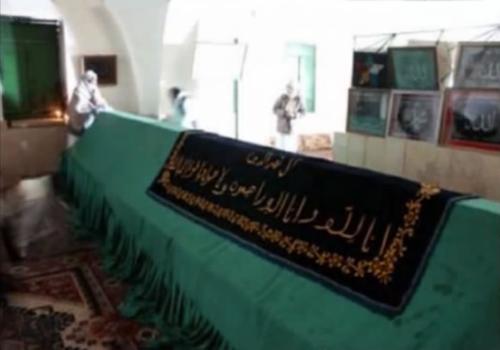 Buried at the Nabi Habeel Mosque, Zabadani Valley, Syria 1
ABEL
Buried at the Nabi Habeel Mosque, Zabadani Valley, Syria 1
ABEL
-
 Grave of Abel within the Mosque 2
ABEL
Grave of Abel within the Mosque 2
ABEL
-
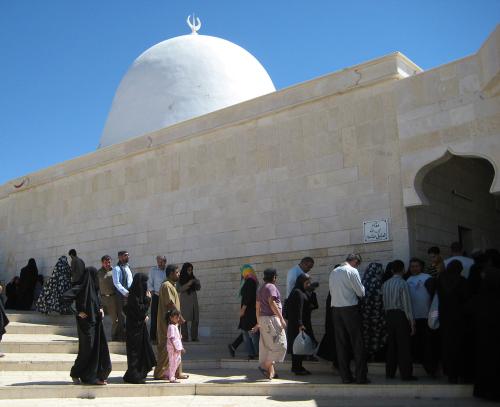 Tomb of Abel, son of Adam and Eve located at Nabi Habeel Mosque, Zabadani Valley, Syria 3
ABEL
Tomb of Abel, son of Adam and Eve located at Nabi Habeel Mosque, Zabadani Valley, Syria 3
ABEL
-
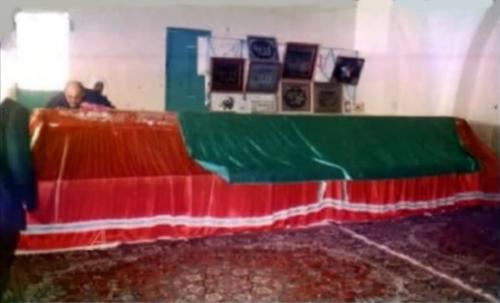 4
ABEL
4
ABEL
-
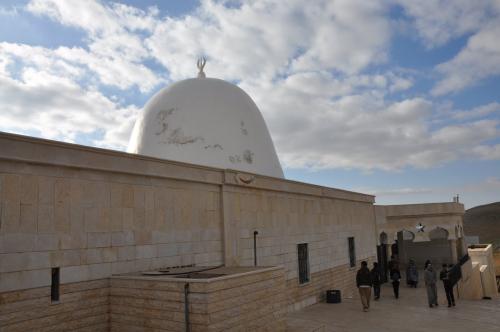 Tomb of Abel, son of Adam and Eve, located 50km of Damascus, Syria and 20km of Syria-Lebanon border 5
ABEL
Tomb of Abel, son of Adam and Eve, located 50km of Damascus, Syria and 20km of Syria-Lebanon border 5
ABEL
-
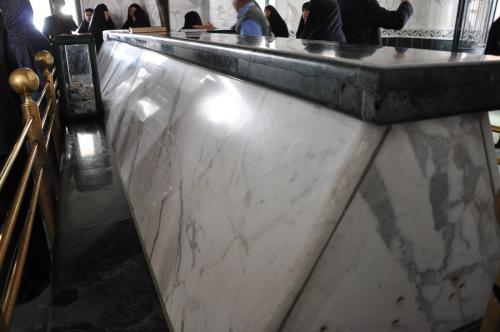 Grave of Abel 6
ABEL
Grave of Abel 6
ABEL
-
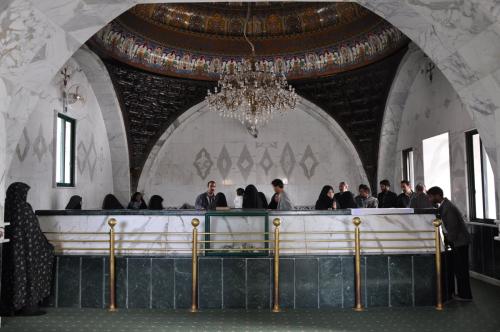 Grave of Abel 7
ABEL
Grave of Abel 7
ABEL
Is Abel in the news today?
What interesting facts are there about Abel?
What faq questions are asked of Abel?
Where can I learn more of Abel?
| 1. Cain and Abel (Genesis 4) |
ABEL
|
Bible Gateway |
What did Abel finally achieve?
What Youtube videos can I watch to learn more on Abel?
 4:40
4:40
55
1783030413
1784251198
Adam, Eve, Cain, Abel | Bible Movies (2026) | Bible In Nutshell
000280
1
 1:40
1:40
50
1782956229
1784243365
Cain & Abel | The Bible (2026) | Bible In Nutshell
000100
2
 25:33
25:33
389
1438041600
1784228115
Cain and Abel - The Old Testament
001533
3
 2:10
2:10
772
1750940638
1784279583
Cain and Abel, Sons of Adam and Eve | Bible In Nutshell
000130
4
 10:19
10:19
418
1516838346
1783673145
Cain and Abel: Son's of Adam & Eve - Kids Stories
000619
5
 9:24
9:24
337
1618487190
1784156861
Cain and Abel: Spiritual Teachings - Tariq Ramadan 2
000564
6
 4:08
4:08
703
1482192000
1783876309
Did Adam & Eve's Children Commit Incest? - Shabir Ally
000248
7
 18:39
18:39
696
1749747606
1784206436
Origins of Cain & Abel in Ancient Mesopotamia | MythVision
001119
8
 37:33
37:33
572
1570127078
1784093067
Reflections on Prophets: Cain & Abel, the First Murder - Belal Assaad
002253
9
 12:43
12:43
397
1424217600
1784183710
Seth: Music & Adultery Begins - Merciful Servant
000763
10
 17:53
17:53
76
1570473464
1784156380
The Story of Cain, Abel & Seth
001073
11
 7:44
7:44
349
1501894648
1783661830
Who did Adam's Sons, Cain and Abel marry? - Tovia Singer
000464
12
 22:28
22:28
342
1753879272
1784252914
Who was Cain's Wife and the Forgotten Daughters of Adam and Eve? | Unraveling Scriptures
001348
13
 28:13
28:13
90
1772074596
1783705662
Who was Cain's wife? The forbidden story of Adam and Eve's daughters REVEALED | Unraveling Scriptures
001693
14
 30:31
30:31
402
1549213197
1784137045
With the Prophets: Cain & Abel - Ahsan Hanif (GLM)
001831
15
Do any scripture texts refer to Abel?
Abel in the Torah
Torah is the first 5 books* of the Old Testament: Genesis, Exodus, Leviticus, Numbers and Deuteronomy.Abel in the Psalms
Psalms is the third section of the Hebrew Bible. Many of the Psalms are linked to David.Abel in the Bible (Old Testament)
The Old Testament consists of 39 books* including the Jewish Torah (Genesis, Exodus, Leviticus, Numbers and Deuteronomy).Abel in the Bible (New Testament)
The New Testament (Christianity) consists of 66 books*. 39 books from the Old Testament, and 27 additional books including Matthew, Mark, Luke and John.Abel in the Quran
The Quran was revealed to Muhammad through the Angel Gabrial. It is the central religious text of Islam, which Muslims believe to be a direct revelation from God.Abel in Hadith
Hadith are the "prophetic traditions" of Muhammad; his teachings, actions, deeds and sayings. Hadith were compiled from oral reports in circulation in society around the time of their compilation.Abel in Ibn Kathir
Ibn Kathir (1300-1373) was an influential Muslim scholar/historian who wrote the reknowned 'Qisas Al-Anbiya' (Stories of the Prophets) book. An authorative and respected thesis on the many prophets of GodIMPORTANT NOTE: Ibn Kathir is NOT Revealed Scripture. It appears here as it contains relevant information