728 views
·
Last viewed: 27 mins ago
Uploaded: 02 Nov 2014 (12 years ago) · Shared: 16 Jun 2018
Duration: 20:58 ·
Uploaded: 02 Nov 2014 (12 years ago) · Shared: 16 Jun 2018
Duration: 20:58 ·
Youtube Description
► 01: Prophet Adam: https://www.youtube.com/watch?v=XFBfOX9HOxo ► 02: Prophet Sheath: https://www.youtube.com/watch?v=FLQkeCRj1s8 ► 03: Prophet Idris:https://www.youtube.com/watch?v=J9CUsrl7AfI
► 04: Prophet Nuh: https://www.youtube.com/watch?v=D0KvuKrkoCQ
► 05: Prophet Hud: https://www.youtube.com/watch?v=FAZ4ara0q-c
► 06: Prophet Salih: https://www.youtube.com/watch?v=twb6pRPIDHI
► 07: Prophet Ibrahim: https://www.youtube.com/watch?v=KWUsz2fcgrs
► 08: Prophet Lut: https://www.youtube.com/watch?v=zQwVIBRB_Kc
► 09: Prophet Ismail: https://www.youtube.com/watch?v=pMByh3-YwhI
► 10: Prophet Ishaaq: https://www.youtube.com/watch?v=x3Bwa1gpoxU
► 11: Prophet Yusuf and Yaqoob: https://www.youtube.com/watch?v=7ENLDycXU_Y
► 12: Prophet Ayyub: https://www.youtube.com/watch?v=CkFlL1-VJjQ
► 13: Prophet Yunus: https://www.youtube.com/watch?v=VlGav7eV3l8
► 14: Prophet Shu'ayb: https://www.youtube.com/watch?v=7cln0kLXDhc
► 15: Prophet Musa part 1: https://www.youtube.com/watch?v=vjQEHpfRK5w&feature=youtu.be
► 16: Prophet Musa part 2: https://www.youtube.com/watch?v=x4xvWcYTXHs
► 17: Prophet Yusha and Hizqeel: https://www.youtube.com/watch?v=BULq0m8cjzI
And We had already taken a promise from Adam before, but he forgot; and We found not in him determination. And [mention] when We said to the angels, 'Prostrate to Adam,' and they prostrated, except Iblees; he refused. So We said, 'O Adam, indeed this is an enemy to you and to your wife. Then let him not remove you from Paradise so you would suffer. Indeed, it is [promised] for you not to be hungry therein or be unclothed. And indeed, you will not be thirsty therein or be hot from the sun.' Then Satan whispered to him; he said, 'O Adam, shall I direct you to the tree of eternity and possession that will not deteriorate?' And Adam and his wife ate of it, and their private parts became apparent to them, and they began to fasten over themselves from the leaves of Paradise. And Adam disobeyed his Lord and erred. Then his Lord chose him and turned to him in forgiveness and guided [him]. [ Allah ] said, 'Descend from Paradise - all, [your descendants] being enemies to one another. And if there should come to you guidance from Me - then whoever follows My guidance will neither go astray [in the world] nor suffer [in the Hereafter]. [20:115-123]
Explore More
TOPIC IslamicCinema Messenger Prophet Muslim Islam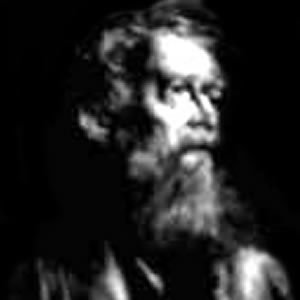 ADAM
EVE
Search Google Search Explore Topics
 Who are IslamicCinema?
IslamicCinema is a youtube channel. They produce short, informative, video documentaries. The link is https://www.youtube.com/user/TheIslamicCinema
What is a Messenger?In religion, a prophet is an individual who is regarded as being in contact with a divine being and is said to speak on that entity's behalf. They claim to be serving as an intermediary with humanity
by delivering messages or teachings from the supernatural source to other people. The message that the prophet conveys is called a prophecy. In Islam, all prophetic messengers are prophets (such as Adam, Noah, Abraham, Moses, Jesus, and Muhammad) though not all prophets are prophetic messengers. The primary distinction is that a prophet is required to demonstrate God's law through his actions, character, and behavior without necessarily calling people to follow him, while a prophetic messenger is required to pronounce God's law (i.e. revelation) and call his people to submit and follow him.
What is a Prophet?In religion, a prophet is an individual who is regarded as being in contact with a divine being and is said to speak on that entity's behalf. They claim to be serving as an intermediary with humanity
by delivering messages or teachings from the supernatural source to other people. The message that the prophet conveys is called a prophecy. In Islam, all prophetic messengers are prophets (such as Adam, Noah, Abraham, Moses, Jesus, and Muhammad) though not all prophets are prophetic messengers. The primary distinction is that a prophet is required to demonstrate God's law through his actions, character, and behavior without necessarily calling people to follow him, while a prophetic messenger is required to pronounce God's law (i.e. revelation) and call his people to submit and follow him.
 What is Muslim?
One of the major religions of the world, Islam literally translates to "submission," as a follower of Islam (Muslims) devotes their life to that of their God. The religion began with the teachings of
Muhammad in the 7th century. The theology of Islam is based on the Qur'an, which was given to Muhammad by God. Some of the major fundamental principles of Islam include the Five Pillars, which hope to unite all Muslims into a community. Two different factions of Muslims exist - the majority are known as Sunni, with a small percentage known as Shi'a - both predominantly reside throughout the Middle East.<br><br>
<i class="fa fa-calendar"></i> Muhammad died in 632 AD and the religion of Islam formally started after his death. The Quran was formally compiled and finalised in 650 AD, prior to which it was 'memorised' and written across many parchments.
What is Islam?One of the major religions of the world, Islam literally translates to "submission," as a follower of Islam (Muslims) devotes their life to that of their God. The religion began with the teachings of
Muhammad in the 7th century. The theology of Islam is based on the Qur'an, which was given to Muhammad by God. Some of the major fundamental principles of Islam include the Five Pillars, which hope to unite all Muslims into a community. Two different factions of Muslims exist - the majority are known as Sunni, with a small percentage known as Shi'a - both predominantly reside throughout the Middle East.<br><br>
<i class="fa fa-calendar"></i> Muhammad died in 632 AD and the religion of Islam formally started after his death. The Quran was formally compiled and finalised in 650 AD, prior to which it was 'memorised' and written across many parchments.
 20:01
 12:12
610 views · 50 secs ago
 17:10
617 views · 2 mins ago
 2:40:03
402 views · 2 mins ago

 12:24
771 views · 3 mins ago
 1:26:52
814 views · 3 mins ago