894 views
·
Last viewed: 1 day ago
Uploaded: 09 Nov 2017 (9 years ago) · Shared: 06 Feb 2019
Duration: 3:04 ·
Video Description
Uncovering the early history behind theological concepts provides vital context for truth-seekers exploring comparative religion. Presented by approvedofGod, this insightful video examines the historical origins of the Trinity doctrine, tracing triune god concepts back to ancient Babylon, Gnostic mysticism, and esoteric Kabbalah traditions within Judaism. Through compelling quotes from foundational texts, the discussion highlights how the philosophy of Philo of Alexandria influenced early Catholic Church fathers and shaped historical Christian theology.
For individuals studying scripture across the Bible, Torah, and Quran, evaluating these historical links offers essential spiritual reminders about the development of faith and monotheistic worship. Whether you are seeking Islamic guidance on pure monotheism or researching early Church history, this informative analysis provides an engaging perspective on how ancient cultural beliefs influenced mainstream religious doctrines throughout the centuries.
Explore More
TOPIC approvedofGod Trinitarian Gnosticism Babylon Gnostic Trinity GODSearch Google Search Explore Topics
 Who are approvedofGod?
I am here to teach all people, but especially the "body of Christ" (the Church), that the bible is sufficient for what we believe. Throughout the centuries, men have brought many doctrines into the
church that have caused confusion and separation. My desire and goal is to clarify some of these errors and bring all Christians back to the basics of the Bible.
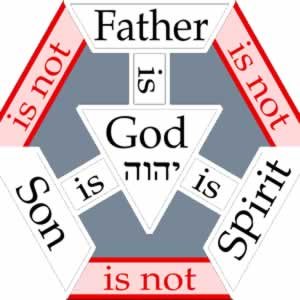 What is Trinitarian?
The Christian doctrine of the Trinity (Latin: trinus "threefold") holds that God is one God, but three coeternal consubstantial persons or hypostases. These being the Father, the Son (Jesus Christ)
and the Holy Spirit - as "one God in three Divine Persons". The three Persons are distinct, yet are one "substance, essence or nature" (homoousios).
What is Gnosticism?Gnosticism (from Ancient Greek: gnostikos, "having knowledge") is a modern name for a variety of ancient religious ideas and systems. Originating in Jewish-Christian milieus in the first and second
century AD. These systems believed that the material world is created by an emanation of the highest God, trapping the divine spark within the human body.<br><br>Gnosticism is also defined as the belief in, dualism of good and bad and special knowledge for salvation.
Where is Babylon?Babylon was an ancient city located on the lower Euphrates river in southern Mesopotamia, within modern-day Hillah, Iraq. This is about 85 kilometres (53 miles) south of modern-day Baghdad. Babylon
functioned as the main cultural and political centre of the Akkadian-speaking region of Babylonia. Its rulers established two important empires in antiquity, the 19th-16th century BC Old Babylonian Empire, and the 7th-6th century BC Neo-Babylonian Empire. Babylon was also used as a regional capital of other empires, such as the Achaemenid Empire. Babylon was one of the most important urban centres of the ancient Near East, until its decline during the Hellenistic period.
What is Gnostic?Gnosticism (from Ancient Greek: gnostikos, "having knowledge") is a modern name for a variety of ancient religious ideas and systems. Originating in Jewish-Christian milieus in the first and second
century AD. These systems believed that the material world is created by an emanation of the highest God, trapping the divine spark within the human body.<br><br>Gnosticism is also defined as the belief in, dualism of good and bad and special knowledge for salvation.
What is Trinity?The Christian doctrine of the Trinity (Latin: trinus "threefold") holds that God is one God, but three coeternal consubstantial persons or hypostases. These being the Father, the Son (Jesus Christ)
and the Holy Spirit - as "one God in three Divine Persons". The three Persons are distinct, yet are one "substance, essence or nature" (homoousios).
 Who is GOD?
In monotheism and henotheism, God is conceived as the Supreme Being and principal object of faith. The concept of God as described by theologians commonly includes the attributes of omniscience
(infinite knowledge), omnipotence (unlimited power), omnipresence (present everywhere), omnibenevolence (perfect goodness), divine simplicity, and eternal and necessary existence.
<ul>
<li>In theism, God is the creator and sustainer of the universe</li>
<li>In deism, God is the creator, but not the sustainer, of the universe</li>
<li>Monotheism is the belief in the existence of one God or in the oneness of God</li>
<li>In pantheism, God is the universe itself</li>
<li>In atheism, God is purported not to exist, while deemed unknown or unknowable within the context of agnosticism. </li>
</ul>
 4:56
228 views · 15 secs ago
 19:58
778 views · 51 secs ago
 7:46
2207 views · 1 min ago
 6:03
728 views · 2 mins ago
 2:16
950 views · 2 mins ago
 7:06
904 views · 3 mins ago
 1:55:25
736 views · 3 mins ago
 16:01
213 views · 3 mins ago
 49:14
443 views · 4 mins ago
 1:58:18
943 views · 4 mins ago