1281 views
·
Last viewed: 4 hrs ago
Uploaded: 30 Jun 2015 (11 years ago) · Shared: 16 Nov 2017
Duration: 17:42 ·
Uploaded: 30 Jun 2015 (11 years ago) · Shared: 16 Nov 2017
Duration: 17:42 ·
Video Description
Join Ken Humphreys as he explores the transformative journey of Saul on the Road to Damascus, a pivotal moment in early Christian history. This compelling video delves into the profound spiritual and historical significance of Saul’s transformation into Apostle Paul, a figure revered in Christian tradition. Humphreys examines the biblical narrative and its implications, offering insights that bridge Jewish and Christian perspectives. For those interested in the intersection of faith, history, and religious development, this video provides a thoughtful analysis, enriched with spiritual reminders and historical context. Whether you are a follower of Judaism, Christianity, or Islam, this exploration of one of the most iconic stories in the Bible offers valuable insights into the early history of religious transformation.
Explore More
TOPIC Ken Humphreys Apostle Paul Damascus Pauline Syria SaulSearch Google Search Explore Topics
 Who is Ken Humphreys?
Kenneth Humphreys is a featured scholar in the documentary film "Caesar's Messiah: The Roman Conspiracy to Invent Jesus". Kenneth Humphreys holds a Master's degree from the University of Essex in
history and social sciences, a post-graduate pedagogic certificate from the University of Leicester, and a higher national certificate in business studies. He taught for many years in the UK and abroad. Religion, and in particular the claims of Christianity, have been a life-long interest. <br><br>His book Jesus Never Existed, published in 2005 by Iconoclast Press, currently ships to 30 countries. His website receives more than a million visitors a year. He is now fully occupied as a writer, radio broadcaster, and public speaker, and campaigns energetically against the tide of resurgent superstition and unreason.
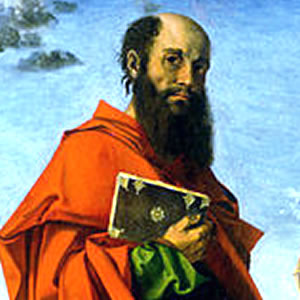 Who was Apostle Paul?
Paul the Apostle (Latin: Paulus), commonly known as Saint Paul and also known by his Jewish name Saul of Tarsus was an apostle (though not one of the Twelve Apostles) who taught the gospel of Christ
to the first century world. Paul is generally considered one of the most important figures of the Apostolic Age and in the mid-30s to the mid-50s AD he founded several churches in Asia Minor and Europe. He took advantage of his status as both a Jew and a Roman citizen to minister to both Jewish and Roman audiences. According to writings in the New Testament and prior to his conversion, Paul was dedicated to persecuting the early disciples of Jesus in the area of Jerusalem. In Acts, Paul was traveling on the road from Jerusalem to Damascus on a mission to 'arrest them and bring them back to Jerusalem' when the resurrected Jesus appeared to him in a great light. He was struck blind, but after three days his sight was restored by Ananias of Damascus and Paul began to preach that Jesus of Nazareth is the Jewish Messiah and the Son of God.
 Where is Damascus?
Damascus is the capital of the Syrian Arab Republic. It is also the country's largest city, following the decline in population of Aleppo due to the battle for the city. In addition to being one of
the oldest continuously inhabited cities in the world, Damascus is a major cultural center of the Levant and the Arab world. The city has an estimated population of 1,711,000 as of 2009.
Who was Pauline?Paul the Apostle (Latin: Paulus), commonly known as Saint Paul and also known by his Jewish name Saul of Tarsus was an apostle (though not one of the Twelve Apostles) who taught the gospel of Christ
to the first century world. Paul is generally considered one of the most important figures of the Apostolic Age and in the mid-30s to the mid-50s AD he founded several churches in Asia Minor and Europe. He took advantage of his status as both a Jew and a Roman citizen to minister to both Jewish and Roman audiences. According to writings in the New Testament and prior to his conversion, Paul was dedicated to persecuting the early disciples of Jesus in the area of Jerusalem. In Acts, Paul was traveling on the road from Jerusalem to Damascus on a mission to 'arrest them and bring them back to Jerusalem' when the resurrected Jesus appeared to him in a great light. He was struck blind, but after three days his sight was restored by Ananias of Damascus and Paul began to preach that Jesus of Nazareth is the Jewish Messiah and the Son of God.
 What is Syria?
Syria, officially the Syrian Arab Republic is a country in Western Asia, bordering Lebanon to the southwest, the Mediterranean Sea to the west, Turkey to the north, Iraq to the east, Jordan to the
south, and Israel to the southwest. A country of fertile plains, high mountains, and deserts, Syria is home to diverse ethnic and religious groups, including Syrian Arabs, Greeks, Armenians, Assyrians, Kurds, Circassians, Mandeans and Turkemens. Religious groups include Sunnis, Christians, Alawites, Druze, Isma'ilis, Mandeans, Shiites, Salafis, Yazidis, and Jews. Sunnis make up the largest religious group in Syria.
 Who was Saul?
Saul was a monarch of ancient Israel and Judah and, according to the Hebrew Bible and Old Testament, the first king of the United Monarchy. His reign, traditionally placed in the late eleventh century
BC, marked the transition of the Israelites from a scattered tribal society ruled by various judges to organized statehood.
<br><br>
The historicity of Saul and the United Kingdom of Israel is not universally accepted, as what is known of both comes largely from the Hebrew Bible. According to the text, he was anointed as king of the Israelites by Samuel, and reigned from Gibeah. Saul is said to have committed suicide when he fell on his sword during a battle with the Philistines at Mount Gilboa, in which three of his sons were also killed. Saul's son Ish-bosheth succeeded him to the throne, reigning for only two years before being murdered by his own military leaders. Saul's son-in-law David then became king.
 5:36
1061 views · 47 secs ago
 3:16
206 views · 48 secs ago

 16:55
1107 views · 1 min ago

 1:07:04
864 views · 1 min ago


 11:03
1030 views · 2 mins ago