ENGLISH: Judah
HEBREW: Yehudah
ARAMAIC: Yehuda
ARABIC: Yahuda
AGE: 119 Years
BIRTH: 1751 BC
DEATH: 1632 BC
GENDER: Male
BORN IN: Turkey, Haran / Syria
LIVED IN: Egypt
DIED IN: Yehud, Israel
SCRIPTURE: Testament of Judah
56,002 views
Last view: 3 hrs ago
HEBREW: Yehudah
ARAMAIC: Yehuda
ARABIC: Yahuda
AGE: 119 Years
BIRTH: 1751 BC
DEATH: 1632 BC
GENDER: Male
BORN IN: Turkey, Haran / Syria
LIVED IN: Egypt
DIED IN: Yehud, Israel
SCRIPTURE: Testament of Judah
56,002 views
Last view: 3 hrs ago
Judah was the influential fourth son of the patriarch Jacob and his wife Leah, and the founding father of the prominent Tribe of Judah.
Born in Haran around 1742 BC, his life was marked by deep personal growth and family trials. While he initially agreed to throw his younger brother Joseph into a dry well, it was Judah who suggested selling him into slavery rather than leaving him to die. Decades later, during a severe regional famine in Egypt, Judah demonstrated immense maturity by offering his own life as a guarantee for the safety of his youngest brother, Benjamin, which triggered their emotional family reunion with Joseph. Before his death, Jacob blessed Judah, prophesying that his lineage would produce a glorious line of future kings and rulers. Judah lived to 119 years old and died around 1623 BC in Egypt.
Born in Haran around 1742 BC, his life was marked by deep personal growth and family trials. While he initially agreed to throw his younger brother Joseph into a dry well, it was Judah who suggested selling him into slavery rather than leaving him to die. Decades later, during a severe regional famine in Egypt, Judah demonstrated immense maturity by offering his own life as a guarantee for the safety of his youngest brother, Benjamin, which triggered their emotional family reunion with Joseph. Before his death, Jacob blessed Judah, prophesying that his lineage would produce a glorious line of future kings and rulers. Judah lived to 119 years old and died around 1623 BC in Egypt.
| INTRODUCTION |
| 1. Prophet Judah in Judaism, Christianity, and Islam |
| 2. Family Tree of Judah and His Relations to Abrahamic Prophets |
| HISTORICAL CONTEXT |
| 3. Describe the World and Society Judah Came Into |
| 4. Why Did God Send Judah? |
| KEY LIFE EVENTS |
| 5. Chronological Timeline of Judah's Life and Ministry |
| 6. Did Judah Perform Miracles? 1 miracles |
| GEOGRAPHY & EVIDENCE |
| 7. On Google Maps: Birth, Life, and Death Locations of Judah 7 locations |
| 8. Photograpic Evidence for Judah 7 photos / 0 albums |
| SCRIPTURE & NEWS |
| 9. Is Judah Mentioned in Current News Today? 5 news |
| 10. Frequently Asked Questions About Judah 8 faqs |
| EXPLORE FURTHER |
| 11. Revealed Scripture That Mention Judah 808 verse |
| 12. YouTube Videos to Learn More About Judah 3 videos |
Prophet Judah in Judaism, Christianity, and Islam
Judaism
Regarded as an ancestral patriarch and head of one of the Twelve Tribes, rather than a prophet. Jewish tradition exalts Judah for his leadership and as the ancestor of the Davidic royal line.
Christianity
Judah is not classified as a prophet. He is viewed as a patriarch whose tribe was prophesied to hold the sceptre of kingship, culminating in the lineage of Jesus Christ (the "Lion of the tribe of Judah").
Islam
Viewed as the ancestor of the Israelites and one of the sons of Prophet Jacob. He is treated as a foundational figure in the lineage of the tribes, though not categorized as a prophet himself.
“
The influential fourth son of Jacob who secured his brothers' survival. His royal lineage birthed King David and the Messiah.
”
Family Tree of Judah and His Relations to Abrahamic Prophets
Describe the World and Society Judah Came Into
The Environment
The rugged hill countries and open pastoral grazing lands of ancient Canaan, frequently impacted by changing seasonal weather patterns.The Society
A decentralized network of independent, nomadic livestock-herding Hebrew clans navigating trade and territorial boundaries alongside local Canaanite city-states.The Social Climate
Dominated by intense polygamist family rivalries, personal moral lapses, shifting tribal alliances, and widespread regional economic anxiety driven by a severe, long-term famine.
“
Authentic leadership requires stepping forward with sacrificial accountability, demonstrating that true authority is earned by putting your own life on the line for your brothers.
”
Why Did God Send Judah?
1. To secure the royal and messianic lineage of Israel
Judah was placed in history to receive Jacob's ultimate deathbed blessing, establishing that the royal scepter and ruler's staff would belong to his tribe, eventually leading to the birth of the Messiah.GENESIS 49:10
QURAN 4:163
2. To offer himself as a substitute to protect his family
Judah's character arc served as a powerful lesson in redemption; he transformed from a brother who suggested selling Joseph into a selfless leader who offered to take Benjamin's place as a slave to save his father from grief.GENESIS 44:33
QURAN 12:80
Chronological Timeline of Judah's Life and Ministry
Did Judah Perform Miracles?
- Unknown
On Google Maps: Birth, Life, and Death Locations of Judah | 7 locations
Born In :Harran, Turkey
Lived In :Hebron, West Bank, Palestine / Nile Delta region, Egypt
Travelled To :Shechem, West Bank, Palestine / Adullam, West Bank, Palestine / Chezib, West Bank, Palestine / Timnah, West Bank, Palestine / Cairo and Memphis area, Egypt
Died In :Nile Delta region (Specific city unknown), Egypt
Lived In :Hebron, West Bank, Palestine / Nile Delta region, Egypt
Travelled To :Shechem, West Bank, Palestine / Adullam, West Bank, Palestine / Chezib, West Bank, Palestine / Timnah, West Bank, Palestine / Cairo and Memphis area, Egypt
Died In :Nile Delta region (Specific city unknown), Egypt
Photographic Evidence for Judah | 7 photos
-
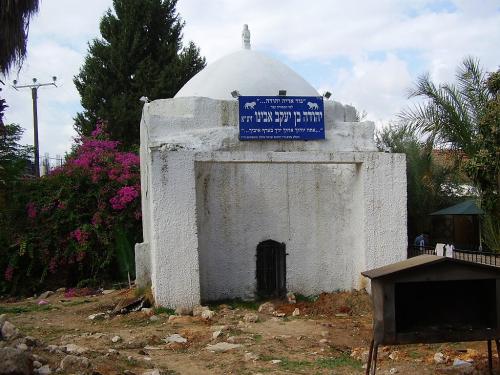 1. Prophet Judah: Tomb attributed to Judah in Yehud, Israel. The image shows the traditional Tomb of Judah (Yehuda [...] ON MAP
 -
 Photo: Theugursevinc | CC BY-SA 4.02. Prophet Judah: Haran (Sanliurfa Province, Turkey)Haran (Sanliurfa Province, Turkey): [...] ON MAP
 -
 Photo: Netanel h | CC BY-SA 4.03. Prophet Judah: Dothan Plain (Samaria Hills, West Bank): Judah lived and shepherded [...] ON MAP
 -
 Photo: Wilson44691 | CC04. Prophet Judah: Adullam (Shephelah Foothills, Israel): Judah moved away from his [...] ON MAP
 -
 Photo: Matson Collection | Public domain5. Prophet Judah: Hebron / Mamre (West Bank): Judah returned here to live with his [...] ON MAP
 -
 Photo: LBM1948 | CC BY-SA 4.06. Prophet Judah: Land of Goshen (Lower Egypt): Jacob sent Judah ahead of the caravan [...] ON MAP
 -
 Photo: Matson Collection | Public domain7. Prophet Judah: Nabi Yahuda Shrine (Yehud / Sharon Plain, Israel): Judah died in [...] ON MAP
Is Judah Mentioned in Current News Today? | 5 news
Frequently Asked Questions About Judah | 8 faqs
| Links to more content on Judah and other Prophets |
| Articles on Judah and other Prophets |
Revealed Scripture That Mention Judah | 808 texts
1.
And she conceived again, and bare a son and she said, Now will I praise the LORD therefore she called his name Judah; and left bearing.
GENESIS 29:35
2.
The sons of Leah; Reuben, Jacob's firstborn, and Simeon, and Levi, and Judah, and Issachar, and Zebulun
GENESIS 35:23
3.
And Judah said unto his brethren, What profit is it if we slay our brother, and conceal his blood?
GENESIS 37:26
4.
And it came to pass at that time, that Judah went down from his brethren, and turned in to a certain Adullamite, whose name was Hirah.
GENESIS 38:1
5.
And Judah saw there a daughter of a certain Canaanite, whose name was Shuah; and he took her, and went in unto her.
GENESIS 38:2
6.
And Judah took a wife for Er his firstborn, whose name was Tamar.
GENESIS 38:6
7.
And Er, Judah's firstborn, was wicked in the sight of the LORD; and the LORD slew him.
GENESIS 38:7
8.
And Judah said unto Onan, Go in unto thy brother's wife, and marry her, and raise up seed to thy brother.
GENESIS 38:8
9.
Then said Judah to Tamar his daughter in law, Remain a widow at thy father's house, till Shelah my son be grown for he said, Lest peradventure he die also, as his brethren did. And Tamar went and dwelt in her father's house.
GENESIS 38:11
10.
And in process of time the daughter of Shuah Judah's wife died; and Judah was comforted, and went up unto his sheepshearers to Timnath, he and his friend Hirah the Adullamite.
GENESIS 38:12
11.
When Judah saw her, he thought her to be an harlot; because she had covered her face.
GENESIS 38:15
12.
And Judah sent the kid by the hand of his friend the Adullamite, to receive his pledge from the woman's hand but he found her not.
GENESIS 38:20
13.
And he returned to Judah, and said, I cannot find her; and also the men of the place said, that there was no harlot in this place.
GENESIS 38:22
14.
And Judah said, Let her take it to her, lest we be shamed behold, I sent this kid, and thou hast not found her.
GENESIS 38:23
15.
And it came to pass about three months after, that it was told Judah, saying, Tamar thy daughter in law hath played the harlot; and also, behold, she is with child by whoredom. And Judah said, Bring her forth, and let her be burnt.
GENESIS 38:24
16.
And Judah acknowledged them, and said, She hath been more righteous than I; because that I gave her not to Shelah my son. And he knew her again no more.
GENESIS 38:26
17.
And Judah spake unto him, saying, The man did solemnly protest unto us, saying, Ye shall not see my face, except your brother be with you.
GENESIS 43:3
18.
And Judah said unto Israel his father, Send the lad with me, and we will arise and go; that we may live, and not die, both we, and thou, and also our little ones.
GENESIS 43:8
19.
And Judah and his brethren came to Joseph's house; for he was yet there and they fell before him on the ground.
GENESIS 44:14
20.
And Judah said, What shall we say unto my lord? what shall we speak? or how shall we clear ourselves? God hath found out the iniquity of thy servants behold, we are my lord's servants, both we, and he also with whom the cup is found.
GENESIS 44:16
21.
Then Judah came near unto him, and said, Oh my lord, let thy servant, I pray thee, speak a word in my lord's ears, and let not thine anger burn against thy servant for thou art even as Pharaoh.
GENESIS 44:18
22.
And the sons of Judah; Er, and Onan, and Shelah, and Pharez, and Zarah but Er and Onan died in the land of Canaan. And the sons of Pharez were Hezron and Hamul.
GENESIS 46:12
23.
And he sent Judah before him unto Joseph, to direct his face unto Goshen; and they came into the land of Goshen.
GENESIS 46:28
24.
Judah, thou art he whom thy brethren shall praise thy hand shall be in the neck of thine enemies; thy father's children shall bow down before thee.
GENESIS 49:8
25.
Judah is a lion's whelp from the prey, my son, thou art gone up he stooped down, he couched as a lion, and as an old lion; who shall rouse him up?
GENESIS 49:9
26.
The sceptre shall not depart from Judah, nor a lawgiver from between his feet, until Shiloh come; and unto him shall the gathering of the people be.
GENESIS 49:10
27.
Reuben, Simeon, Levi, and Judah,
EXODUS 1:2
28.
See, I have called by name Bezaleel the son of Uri, the son of Hur, of the tribe of Judah
EXODUS 31:2
29.
And Moses said unto the children of Israel, See, the LORD hath called by name Bezaleel the son of Uri, the son of Hur, of the tribe of Judah;
EXODUS 35:30
30.
And Bezaleel the son of Uri, the son of Hur, of the tribe of Judah, made all that the LORD commanded Moses.
EXODUS 38:22
31.
Of Judah; Nahshon the son of Amminadab.
NUMBERS 1:7
32.
Of the children of Judah, by their generations, after their families, by the house of their fathers, according to the number of the names, from twenty years old and upward, all that were able to go forth to war;
NUMBERS 1:26
33.
Those that were numbered of them, even of the tribe of Judah, were threescore and fourteen thousand and six hundred.
NUMBERS 1:27
34.
And on the east side toward the rising of the sun shall they of the standard of the camp of Judah pitch throughout their armies and Nahshon the son of Amminadab shall be captain of the children of Judah.
NUMBERS 2:3
35.
All that were numbered in the camp of Judah were an hundred thousand and fourscore thousand and six thousand and four hundred, throughout their armies. These shall first set forth.
NUMBERS 2:9
36.
And he that offered his offering the first day was Nahshon the son of Amminadab, of the tribe of Judah
NUMBERS 7:12
37.
In the first place went the standard of the camp of the children of Judah according to their armies and over his host was Nahshon the son of Amminadab.
NUMBERS 10:14
38.
Of the tribe of Judah, Caleb the son of Jephunneh.
NUMBERS 13:6
39.
The sons of Judah were Er and Onan and Er and Onan died in the land of Canaan.
NUMBERS 26:19
40.
And the sons of Judah after their families were; of Shelah, the family of the Shelanites of Pharez, the family of the Pharzites of Zerah, the family of the Zarhites.
NUMBERS 26:20
41.
These are the families of Judah according to those that were numbered of them, threescore and sixteen thousand and five hundred.
NUMBERS 26:22
42.
And the names of the men are these Of the tribe of Judah, Caleb the son of Jephunneh.
NUMBERS 34:19
43.
These shall stand upon mount Gerizim to bless the people, when ye are come over Jordan; Simeon, and Levi, and Judah, and Issachar, and Joseph, and Benjamin
DEUTERONOMY 27:12
44.
And this is the blessing of Judah and he said, Hear, LORD, the voice of Judah, and bring him unto his people let his hands be sufficient for him; and be thou an help to him from his enemies.
DEUTERONOMY 33:7
45.
And all Naphtali, and the land of Ephraim, and Manasseh, and all the land of Judah, unto the utmost sea,
DEUTERONOMY 34:2
1.
Let mount Zion rejoice, let the daughters of Judah be glad, because of thy judgments.
PSALMS 48:11
2.
Gilead is mine, and Manasseh is mine; Ephraim also is the strength of mine head; Judah is my lawgiver;
PSALMS 60:7
3.
There is little Benjamin with their ruler, the princes of Judah and their council, the princes of Zebulun, and the princes of Naphtali.
PSALMS 68:27
4.
For God will save Zion, and will build the cities of Judah that they may dwell there, and have it in possession.
PSALMS 69:35
5.
In Judah is God known his name is great in Israel.
PSALMS 76:1
6.
But chose the tribe of Judah, the mount Zion which he loved.
PSALMS 78:68
7.
Zion heard, and was glad; and the daughters of Judah rejoiced because of thy judgments, O LORD.
PSALMS 97:8
8.
Gilead is mine; Manasseh is mine; Ephraim also is the strength of mine head; Judah is my lawgiver;
PSALMS 108:8
9.
Judah was his sanctuary, and Israel his dominion.
PSALMS 114:2
1.
And she conceived again, and bare a son and she said, Now will I praise the LORD therefore she called his name Judah; and left bearing.
GENESIS 29:35
2.
The sons of Leah; Reuben, Jacob's firstborn, and Simeon, and Levi, and Judah, and Issachar, and Zebulun
GENESIS 35:23
3.
And Judah said unto his brethren, What profit is it if we slay our brother, and conceal his blood?
GENESIS 37:26
4.
And it came to pass at that time, that Judah went down from his brethren, and turned in to a certain Adullamite, whose name was Hirah.
GENESIS 38:1
5.
And Judah saw there a daughter of a certain Canaanite, whose name was Shuah; and he took her, and went in unto her.
GENESIS 38:2
6.
And Judah took a wife for Er his firstborn, whose name was Tamar.
GENESIS 38:6
7.
And Er, Judah's firstborn, was wicked in the sight of the LORD; and the LORD slew him.
GENESIS 38:7
8.
And Judah said unto Onan, Go in unto thy brother's wife, and marry her, and raise up seed to thy brother.
GENESIS 38:8
9.
Then said Judah to Tamar his daughter in law, Remain a widow at thy father's house, till Shelah my son be grown for he said, Lest peradventure he die also, as his brethren did. And Tamar went and dwelt in her father's house.
GENESIS 38:11
10.
And in process of time the daughter of Shuah Judah's wife died; and Judah was comforted, and went up unto his sheepshearers to Timnath, he and his friend Hirah the Adullamite.
GENESIS 38:12
11.
When Judah saw her, he thought her to be an harlot; because she had covered her face.
GENESIS 38:15
12.
And Judah sent the kid by the hand of his friend the Adullamite, to receive his pledge from the woman's hand but he found her not.
GENESIS 38:20
13.
And he returned to Judah, and said, I cannot find her; and also the men of the place said, that there was no harlot in this place.
GENESIS 38:22
14.
And Judah said, Let her take it to her, lest we be shamed behold, I sent this kid, and thou hast not found her.
GENESIS 38:23
15.
And it came to pass about three months after, that it was told Judah, saying, Tamar thy daughter in law hath played the harlot; and also, behold, she is with child by whoredom. And Judah said, Bring her forth, and let her be burnt.
GENESIS 38:24
16.
And Judah acknowledged them, and said, She hath been more righteous than I; because that I gave her not to Shelah my son. And he knew her again no more.
GENESIS 38:26
17.
And Judah spake unto him, saying, The man did solemnly protest unto us, saying, Ye shall not see my face, except your brother be with you.
GENESIS 43:3
18.
And Judah said unto Israel his father, Send the lad with me, and we will arise and go; that we may live, and not die, both we, and thou, and also our little ones.
GENESIS 43:8
19.
And Judah and his brethren came to Joseph's house; for he was yet there and they fell before him on the ground.
GENESIS 44:14
20.
And Judah said, What shall we say unto my lord? what shall we speak? or how shall we clear ourselves? God hath found out the iniquity of thy servants behold, we are my lord's servants, both we, and he also with whom the cup is found.
GENESIS 44:16
21.
Then Judah came near unto him, and said, Oh my lord, let thy servant, I pray thee, speak a word in my lord's ears, and let not thine anger burn against thy servant for thou art even as Pharaoh.
GENESIS 44:18
22.
And the sons of Judah; Er, and Onan, and Shelah, and Pharez, and Zarah but Er and Onan died in the land of Canaan. And the sons of Pharez were Hezron and Hamul.
GENESIS 46:12
23.
And he sent Judah before him unto Joseph, to direct his face unto Goshen; and they came into the land of Goshen.
GENESIS 46:28
24.
Judah, thou art he whom thy brethren shall praise thy hand shall be in the neck of thine enemies; thy father's children shall bow down before thee.
GENESIS 49:8
25.
Judah is a lion's whelp from the prey, my son, thou art gone up he stooped down, he couched as a lion, and as an old lion; who shall rouse him up?
GENESIS 49:9
26.
The sceptre shall not depart from Judah, nor a lawgiver from between his feet, until Shiloh come; and unto him shall the gathering of the people be.
GENESIS 49:10
27.
Reuben, Simeon, Levi, and Judah,
EXODUS 1:2
28.
See, I have called by name Bezaleel the son of Uri, the son of Hur, of the tribe of Judah
EXODUS 31:2
29.
And Moses said unto the children of Israel, See, the LORD hath called by name Bezaleel the son of Uri, the son of Hur, of the tribe of Judah;
EXODUS 35:30
30.
And Bezaleel the son of Uri, the son of Hur, of the tribe of Judah, made all that the LORD commanded Moses.
EXODUS 38:22
31.
Of Judah; Nahshon the son of Amminadab.
NUMBERS 1:7
32.
Of the children of Judah, by their generations, after their families, by the house of their fathers, according to the number of the names, from twenty years old and upward, all that were able to go forth to war;
NUMBERS 1:26
33.
Those that were numbered of them, even of the tribe of Judah, were threescore and fourteen thousand and six hundred.
NUMBERS 1:27
34.
And on the east side toward the rising of the sun shall they of the standard of the camp of Judah pitch throughout their armies and Nahshon the son of Amminadab shall be captain of the children of Judah.
NUMBERS 2:3
35.
All that were numbered in the camp of Judah were an hundred thousand and fourscore thousand and six thousand and four hundred, throughout their armies. These shall first set forth.
NUMBERS 2:9
36.
And he that offered his offering the first day was Nahshon the son of Amminadab, of the tribe of Judah
NUMBERS 7:12
37.
In the first place went the standard of the camp of the children of Judah according to their armies and over his host was Nahshon the son of Amminadab.
NUMBERS 10:14
38.
Of the tribe of Judah, Caleb the son of Jephunneh.
NUMBERS 13:6
39.
The sons of Judah were Er and Onan and Er and Onan died in the land of Canaan.
NUMBERS 26:19
40.
And the sons of Judah after their families were; of Shelah, the family of the Shelanites of Pharez, the family of the Pharzites of Zerah, the family of the Zarhites.
NUMBERS 26:20
41.
These are the families of Judah according to those that were numbered of them, threescore and sixteen thousand and five hundred.
NUMBERS 26:22
42.
And the names of the men are these Of the tribe of Judah, Caleb the son of Jephunneh.
NUMBERS 34:19
43.
These shall stand upon mount Gerizim to bless the people, when ye are come over Jordan; Simeon, and Levi, and Judah, and Issachar, and Joseph, and Benjamin
DEUTERONOMY 27:12
44.
And this is the blessing of Judah and he said, Hear, LORD, the voice of Judah, and bring him unto his people let his hands be sufficient for him; and be thou an help to him from his enemies.
DEUTERONOMY 33:7
45.
And all Naphtali, and the land of Ephraim, and Manasseh, and all the land of Judah, unto the utmost sea,
DEUTERONOMY 34:2
46.
But the children of Israel committed a trespass in the accursed thing for Achan, the son of Carmi, the son of Zabdi, the son of Zerah, of the tribe of Judah, took of the accursed thing and the anger of the LORD was kindled against the children of Israel.
JOSHUA 7:1
47.
So Joshua rose up early in the morning, and brought Israel by their tribes; and the tribe of Judah was taken
JOSHUA 7:16
48.
And he brought the family of Judah; and he took the family of the Zarhites and he brought the family of the Zarhites man by man; and Zabdi was taken
JOSHUA 7:17
49.
And he brought his household man by man; and Achan, the son of Carmi, the son of Zabdi, the son of Zerah, of the tribe of Judah, was taken.
JOSHUA 7:18
50.
And at that time came Joshua, and cut off the Anakims from the mountains, from Hebron, from Debir, from Anab, and from all the mountains of Judah, and from all the mountains of Israel Joshua destroyed them utterly with their cities.
JOSHUA 11:21
51.
Then the children of Judah came unto Joshua in Gilgal and Caleb the son of Jephunneh the Kenezite said unto him, Thou knowest the thing that the LORD said unto Moses the man of God concerning me and thee in Kadeshbarnea.
JOSHUA 14:6
52.
This then was the lot of the tribe of the children of Judah by their families; even to the border of Edom the wilderness of Zin southward was the uttermost part of the south coast.
JOSHUA 15:1
53.
And the west border was to the great sea, and the coast thereof. This is the coast of the children of Judah round about according to their families.
JOSHUA 15:12
54.
And unto Caleb the son of Jephunneh he gave a part among the children of Judah, according to the commandment of the LORD to Joshua, even the city of Arba the father of Anak, which city is Hebron.
JOSHUA 15:13
55.
This is the inheritance of the tribe of the children of Judah according to their families.
JOSHUA 15:20
56.
And the uttermost cities of the tribe of the children of Judah toward the coast of Edom southward were Kabzeel, and Eder, and Jagur,
JOSHUA 15:21
57.
As for the Jebusites the inhabitants of Jerusalem, the children of Judah could not drive them out but the Jebusites dwell with the children of Judah at Jerusalem unto this day.
JOSHUA 15:63
58.
And they shall divide it into seven parts Judah shall abide in their coast on the south, and the house of Joseph shall abide in their coasts on the north.
JOSHUA 18:5
59.
And the lot of the tribe of the children of Benjamin came up according to their families and the coast of their lot came forth between the children of Judah and the children of Joseph.
JOSHUA 18:11
60.
And the border was drawn thence, and compassed the corner of the sea southward, from the hill that lieth before Bethhoron southward; and the goings out thereof were at Kirjathbaal, which is Kirjathjearim, a city of the children of Judah this was the west quarter.
JOSHUA 18:14
61.
And the second lot came forth to Simeon, even for the tribe of the children of Simeon according to their families and their inheritance was within the inheritance of the children of Judah.
JOSHUA 19:1
62.
Out of the portion of the children of Judah was the inheritance of the children of Simeon for the part of the children of Judah was too much for them therefore the children of Simeon had their inheritance within the inheritance of them.
JOSHUA 19:9
63.
And then the coast turneth westward to Aznothtabor, and goeth out from thence to Hukkok, and reacheth to Zebulun on the south side, and reacheth to Asher on the west side, and to Judah upon Jordan toward the sunrising.
JOSHUA 19:34
64.
And they appointed Kedesh in Galilee in mount Naphtali, and Shechem in mount Ephraim, and Kirjatharba, which is Hebron, in the mountain of Judah.
JOSHUA 20:7
65.
And the lot came out for the families of the Kohathites and the children of Aaron the priest, which were of the Levites, had by lot out of the tribe of Judah, and out of the tribe of Simeon, and out of the tribe of Benjamin, thirteen cities.
JOSHUA 21:4
66.
And they gave out of the tribe of the children of Judah, and out of the tribe of the children of Simeon, these cities which are here mentioned by name,
JOSHUA 21:9
67.
And they gave them the city of Arba the father of Anak, which city is Hebron, in the hill country of Judah, with the suburbs thereof round about it.
JOSHUA 21:11
68.
And the LORD said, Judah shall go up behold, I have delivered the land into his hand.
JUDGES 1:2
69.
And Judah said unto Simeon his brother, Come up with me into my lot, that we may fight against the Canaanites; and I likewise will go with thee into thy lot. So Simeon went with him.
JUDGES 1:3
70.
And Judah went up; and the LORD delivered the Canaanites and the Perizzites into their hand and they slew of them in Bezek ten thousand men.
JUDGES 1:4
71.
Now the children of Judah had fought against Jerusalem, and had taken it, and smitten it with the edge of the sword, and set the city on fire.
JUDGES 1:8
72.
And afterward the children of Judah went down to fight against the Canaanites, that dwelt in the mountain, and in the south, and in the valley.
JUDGES 1:9
73.
And Judah went against the Canaanites that dwelt in Hebron (now the name of Hebron before was Kirjatharba ) and they slew Sheshai, and Ahiman, and Talmai.
JUDGES 1:10
74.
And the children of the Kenite, Moses' father in law, went up out of the city of palm trees with the children of Judah into the wilderness of Judah, which lieth in the south of Arad; and they went and dwelt among the people.
JUDGES 1:16
75.
And Judah went with Simeon his brother, and they slew the Canaanites that inhabited Zephath, and utterly destroyed it. And the name of the city was called Hormah.
JUDGES 1:17
76.
Also Judah took Gaza with the coast thereof, and Askelon with the coast thereof, and Ekron with the coast thereof.
JUDGES 1:18
77.
And the LORD was with Judah; and he drave out the inhabitants of the mountain; but could not drive out the inhabitants of the valley, because they had chariots of iron.
JUDGES 1:19
78.
Moreover the children of Ammon passed over Jordan to fight also against Judah, and against Benjamin, and against the house of Ephraim; so that Israel was sore distressed.
JUDGES 10:9
79.
Then the Philistines went up, and pitched in Judah, and spread themselves in Lehi.
JUDGES 15:9
80.
And the men of Judah said, Why are ye come up against us? And they answered, To bind Samson are we come up, to do to him as he hath done to us.
JUDGES 15:10
81.
Then three thousand men of Judah went to the top of the rock Etam, and said to Samson, Knowest thou not that the Philistines are rulers over us? what is this that thou hast done unto us? And he said unto them, As they did unto me, so have I done unto them.
JUDGES 15:11
82.
And there was a young man out of Bethlehemjudah of the family of Judah, who was a Levite, and he sojourned there.
JUDGES 17:7
83.
And they went up, and pitched in Kirjathjearim, in Judah wherefore they called that place Mahanehdan unto this day behold, it is behind Kirjathjearim.
JUDGES 18:12
84.
And the children of Israel arose, and went up to the house of God, and asked counsel of God, and said, Which of us shall go up first to the battle against the children of Benjamin? And the LORD said, Judah shall go up first.
JUDGES 20:18
85.
Wherefore she went forth out of the place where she was, and her two daughters in law with her; and they went on the way to return unto the land of Judah.
RUTH 1:7
86.
And let thy house be like the house of Pharez, whom Tamar bare unto Judah, of the seed which the LORD shall give thee of this young woman.
RUTH 4:12
87.
And when he numbered them in Bezek, the children of Israel were three hundred thousand, and the men of Judah thirty thousand.
1 SAMUEL 11:8
88.
And Saul gathered the people together, and numbered them in Telaim, two hundred thousand footmen, and ten thousand men of Judah.
1 SAMUEL 15:4
89.
Now the Philistines gathered together their armies to battle, and were gathered together at Shochoh, which belongeth to Judah, and pitched between Shochoh and Azekah, in Ephesdammim.
1 SAMUEL 17:1
90.
And the men of Israel and of Judah arose, and shouted, and pursued the Philistines, until thou come to the valley, and to the gates of Ekron. And the wounded of the Philistines fell down by the way to Shaaraim, even unto Gath, and unto Ekron.
1 SAMUEL 17:52
91.
But all Israel and Judah loved David, because he went out and came in before them.
1 SAMUEL 18:16
92.
And the prophet Gad said unto David, Abide not in the hold; depart, and get thee into the land of Judah. Then David departed, and came into the forest of Hareth.
1 SAMUEL 22:5
93.
And David's men said unto him, Behold, we be afraid here in Judah how much more then if we come to Keilah against the armies of the Philistines?
1 SAMUEL 23:3
94.
See therefore, and take knowledge of all the lurking places where he hideth himself, and come ye again to me with the certainty, and I will go with you and it shall come to pass, if he be in the land, that I will search him out throughout all the thousands of Judah.
1 SAMUEL 23:23
95.
Then Achish gave him Ziklag that day wherefore Ziklag pertaineth unto the kings of Judah unto this day.
1 SAMUEL 27:6
96.
And Achish said, Whither have ye made a road to day? And David said, Against the south of Judah, and against the south of the Jerahmeelites, and against the south of the Kenites.
1 SAMUEL 27:10
97.
We made an invasion upon the south of the Cherethites, and upon the coast which belongeth to Judah, and upon the south of Caleb; and we burned Ziklag with fire.
1 SAMUEL 30:14
98.
And when he had brought him down, behold, they were spread abroad upon all the earth, eating and drinking, and dancing, because of all the great spoil that they had taken out of the land of the Philistines, and out of the land of Judah.
1 SAMUEL 30:16
99.
And when David came to Ziklag, he sent of the spoil unto the elders of Judah, even to his friends, saying, Behold a present for you of the spoil of the enemies of the LORD;
1 SAMUEL 30:26
100.
(Also he bade them teach the children of Judah the use of the bow behold, it is written in the book of Jasher.)
2 SAMUEL 1:18
101.
And it came to pass after this, that David enquired of the LORD, saying, Shall I go up into any of the cities of Judah? And the LORD said unto him, Go up. And David said, Whither shall I go up? And he said, Unto Hebron.
2 SAMUEL 2:1
102.
And the men of Judah came, and there they anointed David king over the house of Judah. And they told David, saying, That the men of Jabeshgilead were they that buried Saul.
2 SAMUEL 2:4
103.
Therefore now let your hands be strengthened, and be ye valiant for your master Saul is dead, and also the house of Judah have anointed me king over them.
2 SAMUEL 2:7
104.
Ishbosheth Saul's son was forty years old when he began to reign over Israel, and reigned two years. But the house of Judah followed David.
2 SAMUEL 2:10
105.
And the time that David was king in Hebron over the house of Judah was seven years and six months.
2 SAMUEL 2:11
106.
Then was Abner very wroth for the words of Ishbosheth, and said, Am I a dog's head, which against Judah do shew kindness this day unto the house of Saul thy father, to his brethren, and to his friends, and have not delivered thee into the hand of David, that thou chargest me to day with a fault concerning this woman?
2 SAMUEL 3:8
107.
To translate the kingdom from the house of Saul, and to set up the throne of David over Israel and over Judah, from Dan even to Beersheba.
2 SAMUEL 3:10
108.
In Hebron he reigned over Judah seven years and six months and in Jerusalem he reigned thirty and three years over all Israel and Judah.
2 SAMUEL 5:5
109.
And David arose, and went with all the people that were with him from Baale of Judah, to bring up from thence the ark of God, whose name is called by the name of the LORD of hosts that dwelleth between the cherubims.
2 SAMUEL 6:2
110.
And Uriah said unto David, The ark, and Israel, and Judah, abide in tents; and my lord Joab, and the servants of my lord, are encamped in the open fields; shall I then go into mine house, to eat and to drink, and to lie with my wife? as thou livest, and as thy soul liveth, I will not do this thing.
2 SAMUEL 11:11
111.
And I gave thee thy master's house, and thy master's wives into thy bosom, and gave thee the house of Israel and of Judah; and if that had been too little, I would moreover have given unto thee such and such things.
2 SAMUEL 12:8
112.
And king David sent to Zadok and to Abiathar the priests, saying, Speak unto the elders of Judah, saying, Why are ye the last to bring the king back to his house? seeing the speech of all Israel is come to the king, even to his house.
2 SAMUEL 19:11
113.
And he bowed the heart of all the men of Judah, even as the heart of one man; so that they sent this word unto the king, Return thou, and all thy servants.
2 SAMUEL 19:14
114.
So the king returned, and came to Jordan. And Judah came to Gilgal, to go to meet the king, to conduct the king over Jordan.
2 SAMUEL 19:15
115.
And Shimei the son of Gera, a Benjamite, which was of Bahurim, hasted and came down with the men of Judah to meet king David.
2 SAMUEL 19:16
116.
Then the king went on to Gilgal, and Chimham went on with him and all the people of Judah conducted the king, and also half the people of Israel.
2 SAMUEL 19:40
117.
And, behold, all the men of Israel came to the king, and said unto the king, Why have our brethren the men of Judah stolen thee away, and have brought the king, and his household, and all David's men with him, over Jordan?
2 SAMUEL 19:41
118.
And all the men of Judah answered the men of Israel, Because the king is near of kin to us wherefore then be ye angry for this matter? have we eaten at all of the king's cost? or hath he given us any gift?
2 SAMUEL 19:42
119.
And the men of Israel answered the men of Judah, and said, We have ten parts in the king, and we have also more right in David than ye why then did ye despise us, that our advice should not be first had in bringing back our king? And the words of the men of Judah were fiercer than the words of the men of Israel.
2 SAMUEL 19:43
120.
So every man of Israel went up from after David, and followed Sheba the son of Bichri but the men of Judah clave unto their king, from Jordan even to Jerusalem.
2 SAMUEL 20:2
121.
Then said the king to Amasa, Assemble me the men of Judah within three days, and be thou here present.
2 SAMUEL 20:4
122.
So Amasa went to assemble the men of Judah but he tarried longer than the set time which he had appointed him.
2 SAMUEL 20:5
123.
And the king called the Gibeonites, and said unto them; (now the Gibeonites were not of the children of Israel, but of the remnant of the Amorites; and the children of Israel had sworn unto them and Saul sought to slay them in his zeal to the children of Israel and Judah.)
2 SAMUEL 21:2
124.
And again the anger of the LORD was kindled against Israel, and he moved David against them to say, Go, number Israel and Judah.
2 SAMUEL 24:1
125.
And came to the strong hold of Tyre, and to all the cities of the Hivites, and of the Canaanites and they went out to the south of Judah, even to Beersheba.
2 SAMUEL 24:7
126.
And Joab gave up the sum of the number of the people unto the king and there were in Israel eight hundred thousand valiant men that drew the sword; and the men of Judah were five hundred thousand men.
2 SAMUEL 24:9
127.
And Adonijah slew sheep and oxen and fat cattle by the stone of Zoheleth, which is by Enrogel, and called all his brethren the king's sons, and all the men of Judah the king's servants
1 KINGS 1:9
128.
Then ye shall come up after him, that he may come and sit upon my throne; for he shall be king in my stead and I have appointed him to be ruler over Israel and over Judah.
1 KINGS 1:35
129.
And the LORD shall return his blood upon his own head, who fell upon two men more righteous and better than he, and slew them with the sword, my father David not knowing thereof, to wit, Abner the son of Ner, captain of the host of Israel, and Amasa the son of Jether, captain of the host of Judah.
1 KINGS 2:32
130.
Judah and Israel were many, as the sand which is by the sea in multitude, eating and drinking, and making merry.
1 KINGS 4:20
131.
And Judah and Israel dwelt safely, every man under his vine and under his fig tree, from Dan even to Beersheba, all the days of Solomon.
1 KINGS 4:25
132.
But as for the children of Israel which dwelt in the cities of Judah, Rehoboam reigned over them.
1 KINGS 12:17
133.
And it came to pass, when all Israel heard that Jeroboam was come again, that they sent and called him unto the congregation, and made him king over all Israel there was none that followed the house of David, but the tribe of Judah only.
1 KINGS 12:20
134.
And when Rehoboam was come to Jerusalem, he assembled all the house of Judah, with the tribe of Benjamin, an hundred and fourscore thousand chosen men, which were warriors, to fight against the house of Israel, to bring the kingdom again to Rehoboam the son of Solomon.
1 KINGS 12:21
135.
Speak unto Rehoboam, the son of Solomon, king of Judah, and unto all the house of Judah and Benjamin, and to the remnant of the people, saying,
1 KINGS 12:23
136.
If this people go up to do sacrifice in the house of the LORD at Jerusalem, then shall the heart of this people turn again unto their lord, even unto Rehoboam king of Judah, and they shall kill me, and go again to Rehoboam king of Judah.
1 KINGS 12:27
137.
And Jeroboam ordained a feast in the eighth month, on the fifteenth day of the month, like unto the feast that is in Judah, and he offered upon the altar. So did he in Bethel, sacrificing unto the calves that he had made and he placed in Bethel the priests of the high places which he had made.
1 KINGS 12:32
138.
And, behold, there came a man of God out of Judah by the word of the LORD unto Bethel and Jeroboam stood by the altar to burn incense.
1 KINGS 13:1
139.
And their father said unto them, What way went he? For his sons had seen what way the man of God went, which came from Judah.
1 KINGS 13:12
140.
And went after the man of God, and found him sitting under an oak and he said unto him, Art thou the man of God that camest from Judah? And he said, I am.
1 KINGS 13:14
141.
And he cried unto the man of God that came from Judah, saying, Thus saith the LORD, Forasmuch as thou hast disobeyed the mouth of the LORD, and hast not kept the commandment which the LORD thy God commanded thee,
1 KINGS 13:21
142.
And Rehoboam the son of Solomon reigned in Judah. Rehoboam was forty and one years old when he began to reign, and he reigned seventeen years in Jerusalem, the city which the LORD did choose out of all the tribes of Israel, to put his name there. And his mother's name was Naamah an Ammonitess.
1 KINGS 14:21
143.
And Judah did evil in the sight of the LORD, and they provoked him to jealousy with their sins which they had committed, above all that their fathers had done.
1 KINGS 14:22
144.
Now the rest of the acts of Rehoboam, and all that he did, are they not written in the book of the chronicles of the kings of Judah?
1 KINGS 14:29
145.
Now in the eighteenth year of king Jeroboam the son of Nebat reigned Abijam over Judah.
1 KINGS 15:1
146.
Now the rest of the acts of Abijam, and all that he did, are they not written in the book of the chronicles of the kings of Judah? And there was war between Abijam and Jeroboam.
1 KINGS 15:7
147.
And in the twentieth year of Jeroboam king of Israel reigned Asa over Judah.
1 KINGS 15:9
148.
And Baasha king of Israel went up against Judah, and built Ramah, that he might not suffer any to go out or come in to Asa king of Judah.
1 KINGS 15:17
149.
Then king Asa made a proclamation throughout all Judah; none was exempted and they took away the stones of Ramah, and the timber thereof, wherewith Baasha had builded; and king Asa built with them Geba of Benjamin, and Mizpah.
1 KINGS 15:22
150.
The rest of all the acts of Asa, and all his might, and all that he did, and the cities which he built, are they not written in the book of the chronicles of the kings of Judah? Nevertheless in the time of his old age he was diseased in his feet.
1 KINGS 15:23
151.
And Nadab the son of Jeroboam began to reign over Israel in the second year of Asa king of Judah, and reigned over Israel two years.
1 KINGS 15:25
152.
Even in the third year of Asa king of Judah did Baasha slay him, and reigned in his stead.
1 KINGS 15:28
153.
In the third year of Asa king of Judah began Baasha the son of Ahijah to reign over all Israel in Tirzah, twenty and four years.
1 KINGS 15:33
154.
In the twenty and sixth year of Asa king of Judah began Elah the son of Baasha to reign over Israel in Tirzah, two years.
1 KINGS 16:8
155.
And Zimri went in and smote him, and killed him, in the twenty and seventh year of Asa king of Judah, and reigned in his stead.
1 KINGS 16:10
156.
In the twenty and seventh year of Asa king of Judah did Zimri reign seven days in Tirzah. And the people were encamped against Gibbethon, which belonged to the Philistines.
1 KINGS 16:15
157.
In the thirty and first year of Asa king of Judah began Omri to reign over Israel, twelve years six years reigned he in Tirzah.
1 KINGS 16:23
158.
And in the thirty and eighth year of Asa king of Judah began Ahab the son of Omri to reign over Israel and Ahab the son of Omri reigned over Israel in Samaria twenty and two years.
1 KINGS 16:29
159.
And when he saw that, he arose, and went for his life, and came to Beersheba, which belongeth to Judah, and left his servant there.
1 KINGS 19:3
160.
And it came to pass in the third year, that Jehoshaphat the king of Judah came down to the king of Israel.
1 KINGS 22:2
161.
And the king of Israel and Jehoshaphat the king of Judah sat each on his throne, having put on their robes, in a void place in the entrance of the gate of Samaria; and all the prophets prophesied before them.
1 KINGS 22:10
162.
So the king of Israel and Jehoshaphat the king of Judah went up to Ramothgilead.
1 KINGS 22:29
163.
And Jehoshaphat the son of Asa began to reign over Judah in the fourth year of Ahab king of Israel.
1 KINGS 22:41
164.
Now the rest of the acts of Jehoshaphat, and his might that he shewed, and how he warred, are they not written in the book of the chronicles of the kings of Judah?
1 KINGS 22:45
165.
Ahaziah the son of Ahab began to reign over Israel in Samaria the seventeenth year of Jehoshaphat king of Judah, and reigned two years over Israel.
1 KINGS 22:51
166.
So he died according to the word of the LORD which Elijah had spoken. And Jehoram reigned in his stead in the second year of Jehoram the son of Jehoshaphat king of Judah; because he had no son.
2 KINGS 1:17
167.
Now Jehoram the son of Ahab began to reign over Israel in Samaria the eighteenth year of Jehoshaphat king of Judah, and reigned twelve years.
2 KINGS 3:1
168.
And he went and sent to Jehoshaphat the king of Judah, saying, The king of Moab hath rebelled against me wilt thou go with me against Moab to battle? And he said, I will go up I am as thou art, my people as thy people, and my horses as thy horses.
2 KINGS 3:7
169.
So the king of Israel went, and the king of Judah, and the king of Edom and they fetched a compass of seven days' journey and there was no water for the host, and for the cattle that followed them.
2 KINGS 3:9
170.
And Elisha said, As the LORD of hosts liveth, before whom I stand, surely, were it not that I regard the presence of Jehoshaphat the king of Judah, I would not look toward thee, nor see thee.
2 KINGS 3:14
171.
And in the fifth year of Joram the son of Ahab king of Israel, Jehoshaphat being then king of Judah, Jehoram the son of Je hoshaphat king of Judah began to reign.
2 KINGS 8:16
172.
Yet the LORD would not destroy Judah for David his servant's sake, as he promised him to give him alway a light, and to his children.
2 KINGS 8:19
173.
In his days Edom revolted from under the hand of Judah, and made a king over themselves.
2 KINGS 8:20
174.
Yet Edom revolted from under the hand of Judah unto this day. Then Libnah revolted at the same time.
2 KINGS 8:22
175.
And the rest of the acts of Joram, and all that he did, are they not written in the book of the chronicles of the kings of Judah?
2 KINGS 8:23
176.
In the twelfth year of Joram the son of Ahab king of Israel did Ahaziah the son of Jehoram king of Judah begin to reign.
2 KINGS 8:25
177.
And king Joram went back to be healed in Jezreel of the wounds which the Syrians had given him at Ramah, when he fought against Hazael king of Syria. And Ahaziah the son of Jehoram king of Judah went down to see Joram the son of Ahab in Jezreel, because he was sick.
2 KINGS 8:29
178.
So Jehu rode in a chariot, and went to Jezreel; for Joram lay there. And Ahaziah king of Judah was come down to see Joram.
2 KINGS 9:16
179.
And Joram said, Make ready. And his chariot was made ready. And Joram king of Israel and Ahaziah king of Judah went out, each in his chariot, and they went out against Jehu, and met him in the portion of Naboth the Jezreelite.
2 KINGS 9:21
180.
But when Ahaziah the king of Judah saw this, he fled by the way of the garden house. And Jehu followed after him, and said, Smite him also in the chariot. And they did so at the going up to Gur, which is by Ibleam. And he fled to Megiddo, and died there.
2 KINGS 9:27
181.
And in the eleventh year of Joram the son of Ahab began Ahaziah to reign over Judah.
2 KINGS 9:29
182.
Jehu met with the brethren of Ahaziah king of Judah, and said, Who are ye? And they answered, We are the brethren of Ahaziah; and we go down to salute the children of the king and the children of the queen.
2 KINGS 10:13
183.
And Jehoash king of Judah took all the hallowed things that Jehoshaphat, and Jehoram, and Ahaziah, his fathers, kings of Judah, had dedicated, and his own hallowed things, and all the gold that was found in the treasures of the house of the LORD, and in the king's house, and sent it to Hazael king of Syria and he went away from Jerusalem.
2 KINGS 12:18
184.
And the rest of the acts of Joash, and all that he did, are they not written in the book of the chronicles of the kings of Judah?
2 KINGS 12:19
185.
In the three and twentieth year of Joash the son of Ahaziah king of Judah Jehoahaz the son of Jehu began to reign over Israel in Samaria, and reigned seventeen years.
2 KINGS 13:1
186.
In the thirty and seventh year of Joash king of Judah began Jehoash the son of Jehoahaz to reign over Israel in Samaria, and reigned sixteen years.
2 KINGS 13:10
187.
And the rest of the acts of Joash, and all that he did, and his might wherewith he fought against Amaziah king of Judah, are they not written in the book of the chronicles of the kings of Israel?
2 KINGS 13:12
188.
In the second year of Joash son of Jehoahaz king of Israel reigned Amaziah the son of Joash king of Judah.
2 KINGS 14:1
189.
And Jehoash the king of Israel sent to Amaziah king of Judah, saying, The thistle that was in Lebanon sent to the cedar that was in Lebanon, saying, Give thy daughter to my son to wife and there passed by a wild beast that was in Lebanon, and trode down the thistle.
2 KINGS 14:9
190.
Thou hast indeed smitten Edom, and thine heart hath lifted thee up glory of this, and tarry at home for why shouldest thou meddle to thy hurt, that thou shouldest fall, even thou, and Judah with thee?
2 KINGS 14:10
191.
But Amaziah would not hear. Therefore Jehoash king of Israel went up; and he and Amaziah king of Judah looked one another in the face at Bethshemesh, which belongeth to Judah.
2 KINGS 14:11
192.
And Judah was put to the worse before Israel; and they fled every man to their tents.
2 KINGS 14:12
193.
And Jehoash king of Israel took Amaziah king of Judah, the son of Jehoash the son of Ahaziah, at Bethshemesh, and came to Jerusalem, and brake down the wall of Jerusalem from the gate of Ephraim unto the corner gate, four hundred cubits.
2 KINGS 14:13
194.
Now the rest of the acts of Jehoash which he did, and his might, and how he fought with Amaziah king of Judah, are they not written in the book of the chronicles of the kings of Israel?
2 KINGS 14:15
195.
And Amaziah the son of Joash king of Judah lived after the death of Jehoash son of Jehoahaz king of Israel fifteen years.
2 KINGS 14:17
196.
And the rest of the acts of Amaziah, are they not written in the book of the chronicles of the kings of Judah?
2 KINGS 14:18
197.
And all the people of Judah took Azariah, which was sixteen years old, and made him king instead of his father Amaziah.
2 KINGS 14:21
198.
He built Elath, and restored it to Judah, after that the king slept with his fathers.
2 KINGS 14:22
199.
In the fifteenth year of Amaziah the son of Joash king of Judah Jeroboam the son of Joash king of Israel began to reign in Samaria, and reigned forty and one years.
2 KINGS 14:23
200.
Now the rest of the acts of Jeroboam, and all that he did, and his might, how he warred, and how he recovered Damascus, and Hamath, which belonged to Judah, for Israel, are they not written in the book of the chronicles of the kings of Israel?
2 KINGS 14:28
201.
In the twenty and seventh year of Jeroboam king of Israel began Azariah son of Amaziah king of Judah to reign.
2 KINGS 15:1
202.
And the rest of the acts of Azariah, and all that he did, are they not written in the book of the chronicles of the kings of Judah?
2 KINGS 15:6
203.
In the thirty and eighth year of Azariah king of Judah did Zachariah the son of Jeroboam reign over Israel in Samaria six months.
2 KINGS 15:8
204.
Shallum the son of Jabesh began to reign in the nine and thirtieth year of Uzziah king of Judah; and he reigned a full month in Samaria.
2 KINGS 15:13
205.
In the nine and thirtieth year of Azariah king of Judah began Menahem the son of Gadi to reign over Israel, and reigned ten years in Samaria.
2 KINGS 15:17
206.
In the fiftieth year of Azariah king of Judah Pekahiah the son of Menahem began to reign over Israel in Samaria, and reigned two years.
2 KINGS 15:23
207.
In the two and fiftieth year of Azariah king of Judah Pekah the son of Remaliah began to reign over Israel in Samaria, and reigned twenty years.
2 KINGS 15:27
208.
In the second year of Pekah the son of Remaliah king of Israel began Jotham the son of Uzziah king of Judah to reign.
2 KINGS 15:32
209.
Now the rest of the acts of Jotham, and all that he did, are they not written in the book of the chronicles of the kings of Judah?
2 KINGS 15:36
210.
In those days the LORD began to send against Judah Rezin the king of Syria, and Pekah the son of Remaliah.
2 KINGS 15:37
211.
In the seventeenth year of Pekah the son of Remaliah Ahaz the son of Jotham king of Judah began to reign.
2 KINGS 16:1
212.
Now the rest of the acts of Ahaz which he did, are they not written in the book of the chronicles of the kings of Judah?
2 KINGS 16:19
213.
In the twelfth year of Ahaz king of Judah began Hoshea the son of Elah to reign in Samaria over Israel nine years.
2 KINGS 17:1
214.
Yet the LORD testified against Israel, and against Judah, by all the prophets, and by all the seers, saying, Turn ye from your evil ways, and keep my commandments and my statutes, according to all the law which I commanded your fathers, and which I sent to you by my servants the prophets.
2 KINGS 17:13
215.
Therefore the LORD was very angry with Israel, and removed them out of his sight there was none left but the tribe of Judah only.
2 KINGS 17:18
216.
Also Judah kept not the commandments of the LORD their God, but walked in the statutes of Israel which they made.
2 KINGS 17:19
217.
Now it came to pass in the third year of Hoshea son of Elah king of Israel, that Hezekiah the son of Ahaz king of Judah began to reign.
2 KINGS 18:1
218.
He trusted in the LORD God of Israel; so that after him was none like him among all the kings of Judah, nor any that were before him.
2 KINGS 18:5
219.
Now in the fourteenth year of king Hezekiah did Sennacherib king of Assyria come up against all the fenced cities of Judah, and took them.
2 KINGS 18:13
220.
And Hezekiah king of Judah sent to the king of Assyria to Lachish, saying, I have offended; return from me that which thou puttest on me will I bear. And the king of Assyria appointed unto Hezekiah king of Judah three hundred talents of silver and thirty talents of gold.
2 KINGS 18:14
221.
At that time did Hezekiah cut off the gold from the doors of the temple of the LORD, and from the pillars which Hezekiah king of Judah had overlaid, and gave it to the king of Assyria.
2 KINGS 18:16
222.
But if ye say unto me, We trust in the LORD our God is not that he, whose high places and whose altars Hezekiah hath taken away, and hath said to Judah and Jerusalem, Ye shall worship before this altar in Jerusalem?
2 KINGS 18:22
223.
Thus shall ye speak to Hezekiah king of Judah, saying, Let not thy God in whom thou trustest deceive thee, saying, Jerusalem shall not be delivered into the hand of the king of Assyria.
2 KINGS 19:10
224.
And the remnant that is escaped of the house of Judah shall yet again take root downward, and bear fruit upward.
2 KINGS 19:30
225.
And the rest of the acts of Hezekiah, and all his might, and how he made a pool, and a conduit, and brought water into the city, are they not written in the book of the chronicles of the kings of Judah?
2 KINGS 20:20
226.
Because Manasseh king of Judah hath done these abominations, and hath done wickedly above all that the Amorites did, which were before him, and hath made Judah also to sin with his idols
2 KINGS 21:11
227.
Therefore thus saith the LORD God of Israel, Behold, I am bringing such evil upon Jerusalem and Judah, that whosoever heareth of it, both his ears shall tingle.
2 KINGS 21:12
228.
Moreover Manasseh shed innocent blood very much, till he had filled Jerusalem from one end to another; beside his sin wherewith he made Judah to sin, in doing that which was evil in the sight of the LORD.
2 KINGS 21:16
229.
Now the rest of the acts of Manasseh, and all that he did, and his sin that he sinned, are they not written in the book of the chronicles of the kings of Judah?
2 KINGS 21:17
230.
Now the rest of the acts of Amon which he did, are they not written in the book of the chronicles of the kings of Judah?
2 KINGS 21:25
231.
Go ye, enquire of the LORD for me, and for the people, and for all Judah, concerning the words of this book that is found for great is the wrath of the LORD that is kindled against us, because our fathers have not hearkened unto the words of this book, to do according unto all that which is written concerning us.
2 KINGS 22:13
232.
Thus saith the LORD, Behold, I will bring evil upon this place, and upon the inhabitants thereof, even all the words of the book which the king of Judah hath read
2 KINGS 22:16
233.
But to the king of Judah which sent you to enquire of the LORD, thus shall ye say to him, Thus saith the LORD God of Israel, As touching the words which thou hast heard;
2 KINGS 22:18
234.
And the king sent, and they gathered unto him all the elders of Judah and of Jerusalem.
2 KINGS 23:1
235.
And the king went up into the house of the LORD, and all the men of Judah and all the inhabitants of Jerusalem with him, and the priests, and the prophets, and all the people, both small and great and he read in their ears all the words of the book of the covenant which was found in the house of the LORD.
2 KINGS 23:2
236.
And he put down the idolatrous priests, whom the kings of Judah had ordained to burn incense in the high places in the cities of Judah, and in the places round about Jerusalem; them also that burned incense unto Baal, to the sun, and to the moon, and to the planets, and to all the host of heaven.
2 KINGS 23:5
237.
And he brought all the priests out of the cities of Judah, and defiled the high places where the priests had burned incense, from Geba to Beersheba, and brake down the high places of the gates that were in the entering in of the gate of Joshua the governor of the city, which were on a man's left hand at the gate of the city.
2 KINGS 23:8
238.
And he took away the horses that the kings of Judah had given to the sun, at the entering in of the house of the LORD, by the chamber of Nathanmelech the chamberlain, which was in the suburbs, and burned the chariots of the sun with fire.
2 KINGS 23:11
239.
And the altars that were on the top of the upper chamber of Ahaz, which the kings of Judah had made, and the altars which Manasseh had made in the two courts of the house of the LORD, did the king beat down, and brake them down from thence, and cast the dust of them into the brook Kidron.
2 KINGS 23:12
240.
Then he said, What title is that that I see? And the men of the city told him, It is the sepulchre of the man of God, which came from Judah, and proclaimed these things that thou hast done against the altar of Bethel.
2 KINGS 23:17
241.
Surely there was not holden such a passover from the days of the judges that judged Israel, nor in all the days of the kings of Israel, nor of the kings of Judah;
2 KINGS 23:22
242.
Moreover the workers with familiar spirits, and the wizards, and the images, and the idols, and all the abominations that were spied in the land of Judah and in Jerusalem, did Josiah put away, that he might perform the words of the law which were written in the book that Hilkiah the priest found in the house of the LORD.
2 KINGS 23:24
243.
Notwithstanding the LORD turned not from the fierceness of his great wrath, wherewith his anger was kindled against Judah, because of all the provocations that Manasseh had provoked him withal.
2 KINGS 23:26
244.
And the LORD said, I will remove Judah also out of my sight, as I have removed Israel, and will cast off this city Jerusalem which I have chosen, and the house of which I said, My name shall be there.
2 KINGS 23:27
245.
Now the rest of the acts of Josiah, and all that he did, are they not written in the book of the chronicles of the kings of Judah?
2 KINGS 23:28
246.
And the LORD sent against him bands of the Chaldees, and bands of the Syrians, and bands of the Moabites, and bands of the children of Ammon, and sent them against Judah to destroy it, according to the word of the LORD, which he spake by his servants the prophets.
2 KINGS 24:2
247.
Surely at the commandment of the LORD came this upon Judah, to remove them out of his sight, for the sins of Manasseh, according to all that he did;
2 KINGS 24:3
248.
Now the rest of the acts of Jehoiakim, and all that he did, are they not written in the book of the chronicles of the kings of Judah?
2 KINGS 24:5
249.
And Jehoiachin the king of Judah went out to the king of Babylon, he, and his mother, and his servants, and his princes, and his officers and the king of Babylon took him in the eighth year of his reign.
2 KINGS 24:12
250.
For through the anger of the LORD it came to pass in Jerusalem and Judah, until he had cast them out from his presence, that Zedekiah rebelled against the king of Babylon.
2 KINGS 24:20
251.
And the king of Babylon smote them, and slew them at Riblah in the land of Hamath. So Judah was carried away out of their land.
2 KINGS 25:21
252.
And as for the people that remained in the land of Judah, whom Nebuchadnezzar king of Babylon had left, even over them he made Gedaliah the son of Ahikam, the son of Shaphan, ruler.
2 KINGS 25:22
253.
And it came to pass in the seven and thirtieth year of the captivity of Jehoiachin king of Judah, in the twelfth month, on the seven and twentieth day of the month, that Evilmerodach king of Babylon in the year that he began to reign did lift up the head of Jehoiachin king of Judah out of prison;
2 KINGS 25:27
254.
These are the sons of Israel; Reuben, Simeon, Levi, and Judah, Issachar, and Zebulun,
1 CHRONICLES 2:1
255.
The sons of Judah; Er, and Onan, and Shelah which three were born unto him of the daughter of Shua the Canaanitess. And Er, the firstborn of Judah, was evil in the sight of the LORD; and he slew him.
1 CHRONICLES 2:3
256.
And Tamar his daughter in law bore him Pharez and Zerah. All the sons of Judah were five.
1 CHRONICLES 2:4
257.
And Ram begat Amminadab; and Amminadab begat Nahshon, prince of the children of Judah;
1 CHRONICLES 2:10
258.
The sons of Judah; Pharez, Hezron, and Carmi, and Hur, and Shobal.
1 CHRONICLES 4:1
259.
The sons of Shelah the son of Judah were, Er the father of Lecah, and Laadah the father of Mareshah, and the families of the house of them that wrought fine linen, of the house of Ashbea,
1 CHRONICLES 4:21
260.
And Shimei had sixteen sons and six daughters; but his brethren had not many children, neither did all their family multiply, like to the children of Judah.
1 CHRONICLES 4:27
261.
And these written by name came in the days of Hezekiah king of Judah, and smote their tents, and the habitations that were found there, and destroyed them utterly unto this day, and dwelt in their rooms because there was pasture there for their flocks.
1 CHRONICLES 4:41
262.
For Judah prevailed above his brethren, and of him came the chief ruler; but the birthright was Joseph's )
1 CHRONICLES 5:2
263.
All these were reckoned by genealogies in the days of Jotham king of Judah, and in the days of Jeroboam king of Israel.
1 CHRONICLES 5:17
264.
And Jehozadak went into captivity, when the LORD carried away Judah and Jerusalem by the hand of Nebuchadnezzar.
1 CHRONICLES 6:15
265.
And they gave them Hebron in the land of Judah, and the suburbs thereof round about it.
1 CHRONICLES 6:55
266.
And to the sons of Aaron they gave the cities of Judah, namely, Hebron, the city of refuge, and Libnah with her suburbs, and Jattir, and Eshtemoa, with their suburbs,
1 CHRONICLES 6:57
267.
And they gave by lot out of the tribe of the children of Judah, and out of the tribe of the children of Simeon, and out of the tribe of the children of Benjamin, these cities, which are called by their names.
1 CHRONICLES 6:65
268.
So all Israel were reckoned by genealogies; and, behold, they were written in the book of the kings of Israel and Judah, who were carried away to Babylon for their transgression.
1 CHRONICLES 9:1
269.
And in Jerusalem dwelt of the children of Judah, and of the children of Benjamin, and of the children of Ephraim, and Manasseh;
1 CHRONICLES 9:3
270.
Uthai the son of Ammihud, the son of Omri, the son of Imri, the son of Bani, of the children of Pharez the son of Judah.
1 CHRONICLES 9:4
271.
And there came of the children of Benjamin and Judah to the hold unto David.
1 CHRONICLES 12:16
272.
The children of Judah that bare shield and spear were six thousand and eight hundred, ready armed to the war.
1 CHRONICLES 12:24
273.
And David went up, and all Israel, to Baalah, that is, to Kirjathjearim, which belonged to Judah, to bring up thence the ark of God the LORD, that dwelleth between the cherubims, whose name is called on it.
1 CHRONICLES 13:6
274.
And Joab gave the sum of the number of the people unto David. And all they of Israel were a thousand thousand and an hundred thousand men that drew sword and Judah was four hundred threescore and ten thousand men that drew sword.
1 CHRONICLES 21:5
275.
Of Judah, Elihu, one of the brethren of David of Issachar, Omri the son of Michael
1 CHRONICLES 27:18
276.
Howbeit the LORD God of Israel chose me before all the house of my father to be king over Israel for ever for he hath chosen Judah to be the ruler; and of the house of Judah, the house of my father; and among the sons of my father he liked me to make me king over all Israel
1 CHRONICLES 28:4
277.
Send me now therefore a man cunning to work in gold, and in silver, and in brass, and in iron, and in purple, and crimson, and blue, and that can skill to grave with the cunning men that are with me in Judah and in Jerusalem, whom David my father did provide.
2 CHRONICLES 2:7
278.
And the king made of the algum trees terraces to the house of the LORD, and to the king's palace, and harps and psalteries for singers and there were none such seen before in the land of Judah.
2 CHRONICLES 9:11
279.
But as for the children of Israel that dwelt in the cities of Judah, Rehoboam reigned over them.
2 CHRONICLES 10:17
280.
And when Rehoboam was come to Jerusalem, he gathered of the house of Judah and Benjamin an hundred and fourscore thousand chosen men, which were warriors, to fight against Israel, that he might bring the kingdom again to Rehoboam.
2 CHRONICLES 11:1
281.
Speak unto Rehoboam the son of Solomon, king of Judah, and to all Israel in Judah and Benjamin, saying,
2 CHRONICLES 11:3
282.
And Rehoboam dwelt in Jerusalem, and built cities for defence in Judah.
2 CHRONICLES 11:5
283.
And Zorah, and Aijalon, and Hebron, which are in Judah and in Benjamin fenced cities.
2 CHRONICLES 11:10
284.
And in every several city he put shields and spears, and made them exceeding strong, having Judah and Benjamin on his side.
2 CHRONICLES 11:12
285.
For the Levites left their suburbs and their possession, and came to Judah and Jerusalem for Jeroboam and his sons had cast them off from executing the priest's office unto the LORD
2 CHRONICLES 11:14
286.
So they strengthened the kingdom of Judah, and made Rehoboam the son of Solomon strong, three years for three years they walked in the way of David and Solomon.
2 CHRONICLES 11:17
287.
And he dealt wisely, and dispersed of all his children throughout all the countries of Judah and Benjamin, unto every fenced city and he gave them victual in abundance. And he desired many wives.
2 CHRONICLES 11:23
288.
And he took the fenced cities which pertained to Judah, and came to Jerusalem.
2 CHRONICLES 12:4
289.
Then came Shemaiah the prophet to Rehoboam, and to the princes of Judah, that were gathered together to Jerusalem because of Shishak, and said unto them, Thus saith the LORD, Ye have forsaken me, and therefore have I also left you in the hand of Shishak.
2 CHRONICLES 12:5
290.
And when he humbled himself, the wrath of the LORD turned from him, that he would not destroy him altogether and also in Judah things went well.
2 CHRONICLES 12:12
291.
Now in the eighteenth year of king Jeroboam began Abijah to reign over Judah.
2 CHRONICLES 13:1
292.
But Jeroboam caused an ambushment to come about behind them so they were before Judah, and the ambushment was behind them.
2 CHRONICLES 13:13
293.
And when Judah looked back, behold, the battle was before and behind and they cried unto the LORD, and the priests sounded with the trumpets.
2 CHRONICLES 13:14
294.
Then the men of Judah gave a shout and as the men of Judah shouted, it came to pass, that God smote Jeroboam and all Israel before Abijah and Judah.
2 CHRONICLES 13:15
295.
And the children of Israel fled before Judah and God delivered them into their hand.
2 CHRONICLES 13:16
296.
Thus the children of Israel were brought under at that time, and the children of Judah prevailed, because they relied upon the LORD God of their fathers.
2 CHRONICLES 13:18
297.
And commanded Judah to seek the LORD God of their fathers, and to do the law and the commandment.
2 CHRONICLES 14:4
298.
Also he took away out of all the cities of Judah the high places and the images and the kingdom was quiet before him.
2 CHRONICLES 14:5
299.
And he built fenced cities in Judah for the land had rest, and he had no war in those years; because the LORD had given him rest.
2 CHRONICLES 14:6
300.
Therefore he said unto Judah, Let us build these cities, and make about them walls, and towers, gates, and bars, while the land is yet before us; because we have sought the LORD our God, we have sought him, and he hath given us rest on every side. So they built and prospered.
2 CHRONICLES 14:7
301.
And Asa had an army of men that bare targets and spears, out of Judah three hundred thousand; and out of Benjamin, that bare shields and drew bows, two hundred and fourscore thousand all these were mighty men of valour.
2 CHRONICLES 14:8
302.
So the LORD smote the Ethiopians before Asa, and before Judah; and the Ethiopians fled.
2 CHRONICLES 14:12
303.
And he went out to meet Asa, and said unto him, Hear ye me, Asa, and all Judah and Benjamin; The LORD is with you, while ye be with him; and if ye seek him, he will be found of you; but if ye forsake him, he will forsake you.
2 CHRONICLES 15:2
304.
And when Asa heard these words, and the prophecy of Oded the prophet, he took courage, and put away the abominable idols out of all the land of Judah and Benjamin, and out of the cities which he had taken from mount Ephraim, and renewed the altar of the LORD, that was before the porch of the LORD.
2 CHRONICLES 15:8
305.
And he gathered all Judah and Benjamin, and the strangers with them out of Ephraim and Manasseh, and out of Simeon for they fell to him out of Israel in abundance, when they saw that the LORD his God was with him.
2 CHRONICLES 15:9
306.
And all Judah rejoiced at the oath for they had sworn with all their heart, and sought him with their whole desire; and he was found of them and the LORD gave them rest round about.
2 CHRONICLES 15:15
307.
In the six and thirtieth year of the reign of Asa Baasha king of Israel came up against Judah, and built Ramah, to the intent that he might let none go out or come in to Asa king of Judah.
2 CHRONICLES 16:1
308.
Then Asa the king took all Judah; and they carried away the stones of Ramah, and the timber thereof, wherewith Baasha was building; and he built therewith Geba and Mizpah.
2 CHRONICLES 16:6
309.
And at that time Hanani the seer came to Asa king of Judah, and said unto him, Because thou hast relied on the king of Syria, and not relied on the LORD thy God, therefore is the host of the king of Syria escaped out of thine hand.
2 CHRONICLES 16:7
310.
And, behold, the acts of Asa, first and last, lo, they are written in the book of the kings of Judah and Israel.
2 CHRONICLES 16:11
311.
And he placed forces in all the fenced cities of Judah, and set garrisons in the land of Judah, and in the cities of Ephraim, which Asa his father had taken.
2 CHRONICLES 17:2
312.
Therefore the LORD stablished the kingdom in his hand; and all Judah brought to Jehoshaphat presents; and he had riches and honour in abundance.
2 CHRONICLES 17:5
313.
And his heart was lifted up in the ways of the LORD moreover he took away the high places and groves out of Judah.
2 CHRONICLES 17:6
314.
Also in the third year of his reign he sent to his princes, even to Benhail, and to Obadiah, and to Zechariah, and to Nethaneel, and to Michaiah, to teach in the cities of Judah.
2 CHRONICLES 17:7
315.
And they taught in Judah, and had the book of the law of the LORD with them, and went about throughout all the cities of Judah, and taught the people.
2 CHRONICLES 17:9
316.
And the fear of the LORD fell upon all the kingdoms of the lands that were round about Judah, so that they made no war against Jehoshaphat.
2 CHRONICLES 17:10
317.
And Jehoshaphat waxed great exceedingly; and he built in Judah castles, and cities of store.
2 CHRONICLES 17:12
318.
And he had much business in the cities of Judah and the men of war, mighty men of valour, were in Jerusalem.
2 CHRONICLES 17:13
319.
And these are the numbers of them according to the house of their fathers Of Judah, the captains of thousands; Adnah the chief, and with him mighty men of valour three hundred thousand.
2 CHRONICLES 17:14
320.
These waited on the king, beside those whom the king put in the fenced cities throughout all Judah.
2 CHRONICLES 17:19
321.
And Ahab king of Israel said unto Jehoshaphat king of Judah, Wilt thou go with me to Ramothgilead? And he answered him, I am as thou art, and my people as thy people; and we will be with thee in the war.
2 CHRONICLES 18:3
322.
And the king of Israel and Jehoshaphat king of Judah sat either of them on his throne, clothed in their robes, and they sat in a void place at the entering in of the gate of Samaria; and all the prophets prophesied before them.
2 CHRONICLES 18:9
323.
So the king of Israel and Jehoshaphat the king of Judah went up to Ramothgilead.
2 CHRONICLES 18:28
324.
And Jehoshaphat the king of Judah returned to his house in peace to Jerusalem.
2 CHRONICLES 19:1
325.
And he set judges in the land throughout all the fenced cities of Judah, city by city,
2 CHRONICLES 19:5
326.
And, behold, Amariah the chief priest is over you in all matters of the LORD; and Zebadiah the son of Ishmael, the ruler of the house of Judah, for all the king's matters also the Levites shall be officers before you. Deal courageously, and the LORD shall be with the good.
2 CHRONICLES 19:11
327.
And Jehoshaphat feared, and set himself to seek the LORD, and proclaimed a fast throughout all Judah.
2 CHRONICLES 20:3
328.
And Judah gathered themselves together, to ask help of the LORD even out of all the cities of Judah they came to seek the LORD.
2 CHRONICLES 20:4
329.
And Jehoshaphat stood in the congregation of Judah and Jerusalem, in the house of the LORD, before the new court,
2 CHRONICLES 20:5
330.
And all Judah stood before the LORD, with their little ones, their wives, and their children.
2 CHRONICLES 20:13
331.
And he said, Hearken ye, all Judah, and ye inhabitants of Jerusalem, and thou king Jehoshaphat, Thus saith the LORD unto you, Be not afraid nor dismayed by reason of this great multitude; for the battle is not yours, but God's.
2 CHRONICLES 20:15
332.
Ye shall not need to fight in this battle set yourselves, stand ye still, and see the salvation of the LORD with you, O Judah and Jerusalem fear not, nor be dismayed; to morrow go out against them for the LORD will be with you.
2 CHRONICLES 20:17
333.
And Jehoshaphat bowed his head with his face to the ground and all Judah and the inhabitants of Jerusalem fell before the LORD, worshipping the LORD.
2 CHRONICLES 20:18
334.
And they rose early in the morning, and went forth into the wilderness of Tekoa and as they went forth, Jehoshaphat stood and said, Hear me, O Judah, and ye inhabitants of Jerusalem; Believe in the LORD your God, so shall ye be established; believe his prophets, so shall ye prosper.
2 CHRONICLES 20:20
335.
And when they began to sing and to praise, the LORD set ambushments against the children of Ammon, Moab, and mount Seir, which were come against Judah; and they were smitten.
2 CHRONICLES 20:22
336.
And when Judah came toward the watch tower in the wilderness, they looked unto the multitude, and, behold, they were dead bodies fallen to the earth, and none escaped.
2 CHRONICLES 20:24
337.
Then they returned, every man of Judah and Jerusalem, and Jehoshaphat in the forefront of them, to go again to Jerusalem with joy; for the LORD had made them to rejoice over their enemies.
2 CHRONICLES 20:27
338.
And Jehoshaphat reigned over Judah he was thirty and five years old when he began to reign, and he reigned twenty and five years in Jerusalem. And his mother's name was Azubah the daughter of Shilhi.
2 CHRONICLES 20:31
339.
And after this did Jehoshaphat king of Judah join himself with Ahaziah king of Israel, who did very wickedly
2 CHRONICLES 20:35
340.
And their father gave them great gifts of silver, and of gold, and of precious things, with fenced cities in Judah but the kingdom gave he to Jehoram; because he was the firstborn.
2 CHRONICLES 21:3
341.
In his days the Edomites revolted from under the dominion of Judah, and made themselves a king.
2 CHRONICLES 21:8
342.
So the Edomites revolted from under the hand of Judah unto this day. The same time also did Libnah revolt from under his hand; because he had forsaken the LORD God of his fathers.
2 CHRONICLES 21:10
343.
Moreover he made high places in the mountains of Judah, and caused the inhabitants of Jerusalem to commit fornication, and compelled Judah thereto.
2 CHRONICLES 21:11
344.
And there came a writing to him from Elijah the prophet, saying, Thus saith the LORD God of David thy father, Because thou hast not walked in the ways of Jehoshaphat thy father, nor in the ways of Asa king of Judah,
2 CHRONICLES 21:12
345.
But hast walked in the way of the kings of Israel, and hast made Judah and the inhabitants of Jerusalem to go a whoring, like to the whoredoms of the house of Ahab, and also hast slain thy brethren of thy father's house, which were better than thyself
2 CHRONICLES 21:13
346.
And they came up into Judah, and brake into it, and carried away all the substance that was found in the king's house, and his sons also, and his wives; so that there was never a son left him, save Jehoahaz, the youngest of his sons.
2 CHRONICLES 21:17
347.
And the inhabitants of Jerusalem made Ahaziah his youngest son king in his stead for the band of men that came with the Arabians to the camp had slain all the eldest. So Ahaziah the son of Jehoram king of Judah reigned.
2 CHRONICLES 22:1
348.
And he returned to be healed in Jezreel because of the wounds which were given him at Ramah, when he fought with Hazael king of Syria. And Azariah the son of Jehoram king of Judah went down to see Jehoram the son of Ahab at Jezreel, because he was sick.
2 CHRONICLES 22:6
349.
And it came to pass, that, when Jehu was executing judgment upon the house of Ahab, and found the princes of Judah, and the sons of the brethren of Ahaziah, that ministered to Ahaziah, he slew them.
2 CHRONICLES 22:8
350.
But when Athaliah the mother of Ahaziah saw that her son was dead, she arose and destroyed all the seed royal of the house of Judah.
2 CHRONICLES 22:10
351.
And they went about in Judah, and gathered the Levites out of all the cities of Judah, and the chief of the fathers of Israel, and they came to Jerusalem.
2 CHRONICLES 23:2
352.
So the Levites and all Judah did according to all things that Jehoiada the priest had commanded, and took every man his men that were to come in on the sabbath, with them that were to go out on the sabbath for Jehoiada the priest dismissed not the courses.
2 CHRONICLES 23:8
353.
And he gathered together the priests and the Levites, and said to them, Go out unto the cities of Judah, and gather of all Israel money to repair the house of your God from year to year, and see that ye hasten the matter. Howbeit the Levites hastened it not.
2 CHRONICLES 24:5
354.
And the king called for Jehoiada the chief, and said unto him, Why hast thou not required of the Levites to bring in out of Judah and out of Jerusalem the collection, according to the commandment of Moses the servant of the LORD, and of the congregation of Israel, for the tabernacle of witness?
2 CHRONICLES 24:6
355.
And they made a proclamation through Judah and Jerusalem, to bring in to the LORD the collection that Moses the servant of God laid upon Israel in the wilderness.
2 CHRONICLES 24:9
356.
Now after the death of Jehoiada came the princes of Judah, and made obeisance to the king. Then the king hearkened unto them.
2 CHRONICLES 24:17
357.
And they left the house of the LORD God of their fathers, and served groves and idols and wrath came upon Judah and Jerusalem for this their trespass.
2 CHRONICLES 24:18
358.
And it came to pass at the end of the year, that the host of Syria came up against him and they came to Judah and Jerusalem, and destroyed all the princes of the people from among the people, and sent all the spoil of them unto the king of Damascus.
2 CHRONICLES 24:23
359.
Moreover Amaziah gathered Judah together, and made them captains over thousands, and captains over hundreds, according to the houses of their fathers, throughout all Judah and Benjamin and he numbered them from twenty years old and above, and found them three hundred thousand choice men, able to go forth to war, that could handle spear and shield.
2 CHRONICLES 25:5
360.
Then Amaziah separated them, to wit, the army that was come to him out of Ephraim, to go home again wherefore their anger was greatly kindled against Judah, and they returned home in great anger.
2 CHRONICLES 25:10
361.
And other ten thousand left alive did the children of Judah carry away captive, and brought them unto the top of the rock, and cast them down from the top of the rock, that they all were broken in pieces.
2 CHRONICLES 25:12
362.
But the soldiers of the army which Amaziah sent back, that they should not go with him to battle, fell upon the cities of Judah, from Samaria even unto Bethhoron, and smote three thousand of them, and took much spoil.
2 CHRONICLES 25:13
363.
Then Amaziah king of Judah took advice, and sent to Joash, the son of Jehoahaz, the son of Jehu, king of Israel, saying, Come, let us see one another in the face.
2 CHRONICLES 25:17
364.
And Joash king of Israel sent to Amaziah king of Judah, saying, The thistle that was in Lebanon sent to the cedar that was in Lebanon, saying, Give thy daughter to my son to wife and there passed by a wild beast that was in Lebanon, and trode down the thistle.
2 CHRONICLES 25:18
365.
Thou sayest, Lo, thou hast smitten the Edomites; and thine heart lifteth thee up to boast abide now at home; why shouldest thou meddle to thine hurt, that thou shouldest fall, even thou, and Judah with thee?
2 CHRONICLES 25:19
366.
So Joash the king of Israel went up; and they saw one another in the face, both he and Amaziah king of Judah, at Bethshemesh, which belongeth to Judah.
2 CHRONICLES 25:21
367.
And Judah was put to the worse before Israel, and they fled every man to his tent.
2 CHRONICLES 25:22
368.
And Joash the king of Israel took Amaziah king of Judah, the son of Joash, the son of Jehoahaz, at Bethshemesh, and brought him to Jerusalem, and brake down the wall of Jerusalem from the gate of Ephraim to the corner gate, four hundred cubits.
2 CHRONICLES 25:23
369.
And Amaziah the son of Joash king of Judah lived after the death of Joash son of Jehoahaz king of Israel fifteen years.
2 CHRONICLES 25:25
370.
Now the rest of the acts of Amaziah, first and last, behold, are they not written in the book of the kings of Judah and Israel?
2 CHRONICLES 25:26
371.
And they brought him upon horses, and buried him with his fathers in the city of Judah.
2 CHRONICLES 25:28
372.
Then all the people of Judah took Uzziah, who was sixteen years old, and made him king in the room of his father Amaziah.
2 CHRONICLES 26:1
373.
He built Eloth, and restored it to Judah, after that the king slept with his fathers.
2 CHRONICLES 26:2
374.
Moreover he built cities in the mountains of Judah, and in the forests he built castles and towers.
2 CHRONICLES 27:4
375.
Now the rest of the acts of Jotham, and all his wars, and his ways, lo, they are written in the book of the kings of Israel and Judah.
2 CHRONICLES 27:7
376.
For Pekah the son of Remaliah slew in Judah an hundred and twenty thousand in one day, which were all valiant men; because they had forsaken the LORD God of their fathers.
2 CHRONICLES 28:6
377.
But a prophet of the LORD was there, whose name was Oded and he went out before the host that came to Samaria, and said unto them, Behold, because the LORD God of your fathers was wroth with Judah, he hath delivered them into your hand, and ye have slain them in a rage that reacheth up unto heaven.
2 CHRONICLES 28:9
378.
And now ye purpose to keep under the children of Judah and Jerusalem for bondmen and bondwomen unto you but are there not with you, even with you, sins against the LORD your God?
2 CHRONICLES 28:10
379.
For again the Edomites had come and smitten Judah, and carried away captives.
2 CHRONICLES 28:17
380.
The Philistines also had invaded the cities of the low country, and of the south of Judah, and had taken Bethshemesh, and Ajalon, and Gederoth, and Shocho with the villages thereof, and Timnah with the villages thereof, Gimzo also and the villages thereof and they dwelt there.
2 CHRONICLES 28:18
381.
For the LORD brought Judah low because of Ahaz king of Israel; for he made Judah naked, and transgressed sore against the LORD.
2 CHRONICLES 28:19
382.
And in every several city of Judah he made high places to burn incense unto other gods, and provoked to anger the LORD God of his fathers.
2 CHRONICLES 28:25
383.
Now the rest of his acts and of all his ways, first and last, behold, they are written in the book of the kings of Judah and Israel.
2 CHRONICLES 28:26
384.
Wherefore the wrath of the LORD was upon Judah and Jerusalem, and he hath delivered them to trouble, to astonishment, and to hissing, as ye see with your eyes.
2 CHRONICLES 29:8
385.
And they brought seven bullocks, and seven rams, and seven lambs, and seven he goats, for a sin offering for the kingdom, and for the sanctuary, and for Judah. And he commanded the priests the sons of Aaron to offer them on the altar of the LORD.
2 CHRONICLES 29:21
386.
And Hezekiah sent to all Israel and Judah, and wrote letters also to Ephraim and Manasseh, that they should come to the house of the LORD at Jerusalem, to keep the passover unto the LORD God of Israel.
2 CHRONICLES 30:1
387.
So the posts went with the letters from the king and his princes throughout all Israel and Judah, and according to the commandment of the king, saying, Ye children of Israel, turn again unto the LORD God of Abraham, Isaac, and Israel, and he will return to the remnant of you, that are escaped out of the hand of the kings of Assyria.
2 CHRONICLES 30:6
388.
Also in Judah the hand of God was to give them one heart to do the commandment of the king and of the princes, by the word of the LORD.
2 CHRONICLES 30:12
389.
For Hezekiah king of Judah did give to the congregation a thousand bullocks and seven thousand sheep; and the princes gave to the congregation a thousand bullocks and ten thousand sheep and a great number of priests sanctified themselves.
2 CHRONICLES 30:24
390.
And all the congregation of Judah, with the priests and the Levites, and all the congregation that came out of Israel, and the strangers that came out of the land of Israel, and that dwelt in Judah, rejoiced.
2 CHRONICLES 30:25
391.
Now when all this was finished, all Israel that were present went out to the cities of Judah, and brake the images in pieces, and cut down the groves, and threw down the high places and the altars out of all Judah and Benjamin, in Ephraim also and Manasseh, until they had utterly destroyed them all. Then all the children of Israel returned, every man to his possession, into their own cities.
2 CHRONICLES 31:1
392.
And concerning the children of Israel and Judah, that dwelt in the cities of Judah, they also brought in the tithe of oxen and sheep, and the tithe of holy things which were consecrated unto the LORD their God, and laid them by heaps.
2 CHRONICLES 31:6
393.
And thus did Hezekiah throughout all Judah, and wrought that which was good and right and truth before the LORD his God.
2 CHRONICLES 31:20
394.
After these things, and the establishment thereof, Sennacherib king of Assyria came, and entered into Judah, and encamped against the fenced cities, and thought to win them for himself.
2 CHRONICLES 32:1
395.
With him is an arm of flesh; but with us is the LORD our God to help us, and to fight our battles. And the people rested themselves upon the words of Hezekiah king of Judah.
2 CHRONICLES 32:8
396.
After this did Sennacherib king of Assyria send his servants to Jerusalem, (but he himself laid siege against Lachish, and all his power with him,) unto Hezekiah king of Judah, and unto all Judah that were at Jerusalem, saying,
2 CHRONICLES 32:9
397.
Hath not the same Hezekiah taken away his high places and his altars, and commanded Judah and Jerusalem, saying, Ye shall worship before one altar, and burn incense upon it?
2 CHRONICLES 32:12
398.
And many brought gifts unto the LORD to Jerusalem, and presents to Hezekiah king of Judah so that he was magnified in the sight of all nations from thenceforth.
2 CHRONICLES 32:23
399.
But Hezekiah rendered not again according to the benefit done unto him; for his heart was lifted up therefore there was wrath upon him, and upon Judah and Jerusalem.
2 CHRONICLES 32:25
400.
Now the rest of the acts of Hezekiah, and his goodness, behold, they are written in the vision of Isaiah the prophet, the son of Amoz, and in the book of the kings of Judah and Israel.
2 CHRONICLES 32:32
401.
And Hezekiah slept with his fathers, and they buried him in the chiefest of the sepulchres of the sons of David and all Judah and the inhabitants of Jerusalem did him honour at his death. And Manasseh his son reigned in his stead.
2 CHRONICLES 32:33
402.
So Manasseh made Judah and the inhabitants of Jerusalem to err, and to do worse than the heathen, whom the LORD had destroyed before the children of Israel.
2 CHRONICLES 33:9
403.
Now after this he built a wall without the city of David, on the west side of Gihon, in the valley, even to the entering in at the fish gate, and compassed about Ophel, and raised it up a very great height, and put captains of war in all the fenced cities of Judah.
2 CHRONICLES 33:14
404.
And he repaired the altar of the LORD, and sacrificed thereon peace offerings and thank offerings, and commanded Judah to serve the LORD God of Israel.
2 CHRONICLES 33:16
405.
For in the eighth year of his reign, while he was yet young, he began to seek after the God of David his father and in the twelfth year he began to purge Judah and Jerusalem from the high places, and the groves, and the carved images, and the molten images.
2 CHRONICLES 34:3
406.
And he burnt the bones of the priests upon their altars, and cleansed Judah and Jerusalem.
2 CHRONICLES 34:5
407.
And when they came to Hilkiah the high priest, they delivered the money that was brought into the house of God, which the Levites that kept the doors had gathered of the hand of Manasseh and Ephraim, and of all the remnant of Israel, and of all Judah and Benjamin; and they returned to Jerusalem.
2 CHRONICLES 34:9
408.
Even to the artificers and builders gave they it, to buy hewn stone, and timber for couplings, and to floor the houses which the kings of Judah had destroyed.
2 CHRONICLES 34:11
409.
Go, enquire of the LORD for me, and for them that are left in Israel and in Judah, concerning the words of the book that is found for great is the wrath of the LORD that is poured out upon us, because our fathers have not kept the word of the LORD, to do after all that is written in this book.
2 CHRONICLES 34:21
410.
Thus saith the LORD, Behold, I will bring evil upon this place, and upon the inhabitants thereof, even all the curses that are written in the book which they have read before the king of Judah
2 CHRONICLES 34:24
411.
And as for the king of Judah, who sent you to enquire of the LORD, so shall ye say unto him, Thus saith the LORD God of Israel concerning the words which thou hast heard;
2 CHRONICLES 34:26
412.
Then the king sent and gathered together all the elders of Judah and Jerusalem.
2 CHRONICLES 34:29
413.
And the king went up into the house of the LORD, and all the men of Judah, and the inhabitants of Jerusalem, and the priests, and the Levites, and all the people, great and small and he read in their ears all the words of the book of the covenant that was found in the house of the LORD.
2 CHRONICLES 34:30
414.
And there was no passover like to that kept in Israel from the days of Samuel the prophet; neither did all the kings of Israel keep such a passover as Josiah kept, and the priests, and the Levites, and all Judah and Israel that were present, and the inhabitants of Jerusalem.
2 CHRONICLES 35:18
415.
But he sent ambassadors to him, saying, What have I to do with thee, thou king of Judah? I come not against thee this day, but against the house wherewith I have war for God commanded me to make haste forbear thee from meddling with God, who is with me, that he destroy thee not.
2 CHRONICLES 35:21
416.
His servants therefore took him out of that chariot, and put him in the second chariot that he had; and they brought him to Jerusalem, and he died, and was buried in one of the sepulchres of his fathers. And all Judah and Jerusalem mourned for Josiah.
2 CHRONICLES 35:24
417.
And his deeds, first and last, behold, they are written in the book of the kings of Israel and Judah.
2 CHRONICLES 35:27
418.
And the king of Egypt made Eliakim his brother king over Judah and Jerusalem, and turned his name to Jehoiakim. And Necho took Jehoahaz his brother, and carried him to Egypt.
2 CHRONICLES 36:4
419.
Now the rest of the acts of Jehoiakim, and his abominations which he did, and that which was found in him, behold, they are written in the book of the kings of Israel and Judah and Jehoiachin his son reigned in his stead.
2 CHRONICLES 36:8
420.
And when the year was expired, king Nebuchadnezzar sent, and brought him to Babylon, with the goodly vessels of the house of the LORD, and made Zedekiah his brother king over Judah and Jerusalem.
2 CHRONICLES 36:10
421.
Thus saith Cyrus king of Persia, All the kingdoms of the earth hath the LORD God of heaven given me; and he hath charged me to build him an house in Jerusalem, which is in Judah. Who is there among you of all his people? The LORD his God be with him, and let him go up.
2 CHRONICLES 36:23
422.
Thus saith Cyrus king of Persia, The LORD God of heaven hath given me all the kingdoms of the earth; and he hath charged me to build him an house at Jerusalem, which is in Judah.
EZRA 1:2
423.
Who is there among you of all his people? his God be with him, and let him go up to Jerusalem, which is in Judah, and build the house of the LORD God of Israel, (he is the God,) which is in Jerusalem.
EZRA 1:3
424.
Then rose up the chief of the fathers of Judah and Benjamin, and the priests, and the Levites, with all them whose spirit God had raised, to go up to build the house of the LORD which is in Jerusalem.
EZRA 1:5
425.
Even those did Cyrus king of Persia bring forth by the hand of Mithredath the treasurer, and numbered them unto Sheshbazzar, the prince of Judah.
EZRA 1:8
426.
Now these are the children of the province that went up out of the captivity, of those which had been carried away, whom Nebuchadnezzar the king of Babylon had carried away unto Babylon, and came again unto Jerusalem and Judah, every one unto his city;
EZRA 2:1
427.
Then stood Jeshua with his sons and his brethren, Kadmiel and his sons, the sons of Judah, together, to set forward the workmen in the house of God the sons of Henadad, with their sons and their brethren the Levites.
EZRA 3:9
428.
Now when the adversaries of Judah and Benjamin heard that the children of the captivity builded the temple unto the LORD God of Israel;
EZRA 4:1
429.
Then the people of the land weakened the hands of the people of Judah, and troubled them in building,
EZRA 4:4
430.
And in the reign of Ahasuerus, in the beginning of his reign, wrote they unto him an accusation against the inhabitants of Judah and Jerusalem.
EZRA 4:6
431.
Then the prophets, Haggai the prophet, and Zechariah the son of Iddo, prophesied unto the Jews that were in Judah and Jerusalem in the name of the God of Israel, even unto them.
EZRA 5:1
432.
Forasmuch as thou art sent of the king, and of his seven counsellors, to enquire concerning Judah and Jerusalem, according to the law of thy God which is in thine hand;
EZRA 7:14
433.
For we were bondmen; yet our God hath not forsaken us in our bondage, but hath extended mercy unto us in the sight of the kings of Persia, to give us a reviving, to set up the house of our God, and to repair the desolations thereof, and to give us a wall in Judah and in Jerusalem.
EZRA 9:9
434.
And they made proclamation throughout Judah and Jerusalem unto all the children of the captivity, that they should gather themselves together unto Jerusalem;
EZRA 10:7
435.
Then all the men of Judah and Benjamin gathered themselves together unto Jerusalem within three days. It was the ninth month, on the twentieth day of the month; and all the people sat in the street of the house of God, trembling because of this matter, and for the great rain.
EZRA 10:9
436.
Also of the Levites; Jozabad, and Shimei, and Kelaiah, (the same is Kelita,) Pethahiah, Judah, and Eliezer.
EZRA 10:23
437.
That Hanani, one of my brethren, came, he and certain men of Judah; and I asked them concerning the Jews that had escaped, which were left of the captivity, and concerning Jerusalem.
NEHEMIAH 1:2
438.
And I said unto the king, If it please the king, and if thy servant have found favour in thy sight, that thou wouldest send me unto Judah, unto the city of my fathers' sepulchres, that I may build it.
NEHEMIAH 2:5
439.
Moreover I said unto the king, If it please the king, let letters be given me to the governors beyond the river, that they may convey me over till I come into Judah;
NEHEMIAH 2:7
440.
And Judah said, The strength of the bearers of burdens is decayed, and there is much rubbish; so that we are not able to build the wall.
NEHEMIAH 4:10
441.
And it came to pass from that time forth, that the half of my servants wrought in the work, and the other half of them held both the spears, the shields, and the bows, and the habergeons; and the rulers were behind all the house of Judah.
NEHEMIAH 4:16
442.
Moreover from the time that I was appointed to be their governor in the land of Judah, from the twentieth year even unto the two and thirtieth year of Artaxerxes the king, that is, twelve years, I and my brethren have not eaten the bread of the governor.
NEHEMIAH 5:14
443.
And thou hast also appointed prophets to preach of thee at Jerusalem, saying, There is a king in Judah and now shall it be reported to the king according to these words. Come now therefore, and let us take counsel together.
NEHEMIAH 6:7
444.
Moreover in those days the nobles of Judah sent many letters unto Tobiah, and the letters of Tobiah came unto them.
NEHEMIAH 6:17
445.
For there were many in Judah sworn unto him, because he was the son in law of Shechaniah the son of Arah; and his son Johanan had taken the daughter of Meshullam the son of Berechiah.
NEHEMIAH 6:18
446.
These are the children of the province, that went up out of the captivity, of those that had been carried away, whom Nebuchadnezzar the king of Babylon had carried away, and came again to Jerusalem and to Judah, every one unto his city;
NEHEMIAH 7:6
447.
Now these are the chief of the province that dwelt in Jerusalem but in the cities of Judah dwelt every one in his possession in their cities, to wit, Israel, the priests, and the Levites, and the Nethinims, and the children of Solomon's servants.
NEHEMIAH 11:3
448.
And at Jerusalem dwelt certain of the children of Judah, and of the children of Benjamin. Of the children of Judah; Athaiah the son of Uzziah, the son of Zechariah, the son of Amariah, the son of Shephatiah, the son of Mahalaleel, of the children of Perez;
NEHEMIAH 11:4
449.
And Joel the son of Zichri was their overseer and Judah the son of Senuah was second over the city.
NEHEMIAH 11:9
450.
And the residue of Israel, of the priests, and the Levites, were in all the cities of Judah, every one in his inheritance.
NEHEMIAH 11:20
451.
And Pethahiah the son of Meshezabeel, of the children of Zerah the son of Judah, was at the king's hand in all matters concerning the people.
NEHEMIAH 11:24
452.
And for the villages, with their fields, some of the children of Judah dwelt at Kirjatharba, and in the villages thereof, and at Dibon, and in the villages thereof, and at Jekabzeel, and in the villages thereof,
NEHEMIAH 11:25
453.
And of the Levites were divisions in Judah, and in Benjamin.
NEHEMIAH 11:36
454.
Moreover the Levites Jeshua, Binnui, Kadmiel, Sherebiah, Judah, and Mattaniah, which was over the thanksgiving, he and his brethren.
NEHEMIAH 12:8
455.
Then I brought up the princes of Judah upon the wall, and appointed two great companies of them that gave thanks, whereof one went on the right hand upon the wall toward the dung gate
NEHEMIAH 12:31
456.
And after them went Hoshaiah, and half of the princes of Judah,
NEHEMIAH 12:32
457.
Judah, and Benjamin, and Shemaiah, and Jeremiah,
NEHEMIAH 12:34
458.
And his brethren, Shemaiah, and Azarael, Milalai, Gilalai, Maai, Nethaneel, and Judah, Hanani, with the musical instruments of David the man of God, and Ezra the scribe before them.
NEHEMIAH 12:36
459.
And at that time were some appointed over the chambers for the treasures, for the offerings, for the firstfruits, and for the tithes, to gather into them out of the fields of the cities the portions of the law for the priests and Levites for Judah rejoiced for the priests and for the Levites that waited.
NEHEMIAH 12:44
460.
Then brought all Judah the tithe of the corn and the new wine and the oil unto the treasuries.
NEHEMIAH 13:12
461.
In those days saw I in Judah some treading wine presses on the sabbath, and bringing in sheaves, and lading asses; as also wine, grapes, and figs, and all manner of burdens, which they brought into Jerusalem on the sabbath day and I testified against them in the day wherein they sold victuals.
NEHEMIAH 13:15
462.
There dwelt men of Tyre also therein, which brought fish, and all manner of ware, and sold on the sabbath unto the children of Judah, and in Jerusalem.
NEHEMIAH 13:16
463.
Then I contended with the nobles of Judah, and said unto them, What evil thing is this that ye do, and profane the sabbath day?
NEHEMIAH 13:17
464.
Who had been carried away from Jerusalem with the captivity which had been carried away with Jeconiah king of Judah, whom Nebuchadnezzar the king of Babylon had carried away.
ESTHER 2:6
465.
Let mount Zion rejoice, let the daughters of Judah be glad, because of thy judgments.
PSALMS 48:11
466.
Gilead is mine, and Manasseh is mine; Ephraim also is the strength of mine head; Judah is my lawgiver;
PSALMS 60:7
467.
There is little Benjamin with their ruler, the princes of Judah and their council, the princes of Zebulun, and the princes of Naphtali.
PSALMS 68:27
468.
For God will save Zion, and will build the cities of Judah that they may dwell there, and have it in possession.
PSALMS 69:35
469.
In Judah is God known his name is great in Israel.
PSALMS 76:1
470.
But chose the tribe of Judah, the mount Zion which he loved.
PSALMS 78:68
471.
Zion heard, and was glad; and the daughters of Judah rejoiced because of thy judgments, O LORD.
PSALMS 97:8
472.
Gilead is mine; Manasseh is mine; Ephraim also is the strength of mine head; Judah is my lawgiver;
PSALMS 108:8
473.
Judah was his sanctuary, and Israel his dominion.
PSALMS 114:2
474.
These are also proverbs of Solomon, which the men of Hezekiah king of Judah copied out.
PROVERBS 25:1
475.
The vision of Isaiah the son of Amoz, which he saw concerning Judah and Jerusalem in the days of Uzziah, Jotham, Ahaz, and Hezekiah, kings of Judah.
ISAIAH 1:1
476.
The word that Isaiah the son of Amoz saw concerning Judah and Jerusalem.
ISAIAH 2:1
477.
For, behold, the Lord, the LORD of hosts, doth take away from Jerusalem and from Judah the stay and the staff, the whole stay of bread, and the whole stay of water.
ISAIAH 3:1
478.
For Jerusalem is ruined, and Judah is fallen because their tongue and their doings are against the LORD, to provoke the eyes of his glory.
ISAIAH 3:8
479.
And now, O inhabitants of Jerusalem, and men of Judah, judge, I pray you, betwixt me and my vineyard.
ISAIAH 5:3
480.
For the vineyard of the LORD of hosts is the house of Israel, and the men of Judah his pleasant plant and he looked for judgment, but behold oppression; for righteousness, but behold a cry.
ISAIAH 5:7
481.
And it came to pass in the days of Ahaz the son of Jotham, the son of Uzziah, king of Judah, that Rezin the king of Syria, and Pekah the son of Remaliah, king of Israel, went up toward Jerusalem to war against it, but could not prevail against it.
ISAIAH 7:1
482.
Let us go up against Judah, and vex it, and let us make a breach therein for us, and set a king in the midst of it, even the son of Tabeal
ISAIAH 7:6
483.
The LORD shall bring upon thee, and upon thy people, and upon thy father's house, days that have not come, from the day that Ephraim departed from Judah; even the king of Assyria.
ISAIAH 7:17
484.
And he shall pass through Judah; he shall overflow and go over, he shall reach even to the neck; and the stretching out of his wings shall fill the breadth of thy land, O Immanuel.
ISAIAH 8:8
485.
Manasseh, Ephraim; and Ephraim, Manasseh and they together shall be against Judah. For all this his anger is not turned away, but his hand is stretched out still.
ISAIAH 9:21
486.
And he shall set up an ensign for the nations, and shall assemble the outcasts of Israel, and gather together the dispersed of Judah from the four corners of the earth.
ISAIAH 11:12
487.
The envy also of Ephraim shall depart, and the adversaries of Judah shall be cut off Ephraim shall not envy Judah, and Judah shall not vex Ephraim.
ISAIAH 11:13
488.
And the land of Judah shall be a terror unto Egypt, every one that maketh mention thereof shall be afraid in himself, because of the counsel of the LORD of hosts, which he hath determined against it.
ISAIAH 19:17
489.
And he discovered the covering of Judah, and thou didst look in that day to the armour of the house of the forest.
ISAIAH 22:8
490.
And I will clothe him with thy robe, and strengthen him with thy girdle, and I will commit thy government into his hand and he shall be a father to the inhabitants of Jerusalem, and to the house of Judah.
ISAIAH 22:21
491.
In that day shall this song be sung in the land of Judah; We have a strong city; salvation will God appoint for walls and bulwarks.
ISAIAH 26:1
492.
Now it came to pass in the fourteenth year of king Hezekiah, that Sennacherib king of Assyria came up against all the defenced cities of Judah, and took them.
ISAIAH 36:1
493.
But if thou say to me, We trust in the LORD our God is it not he, whose high places and whose altars Hezekiah hath taken away, and said to Judah and to Jerusalem, Ye shall worship before this altar?
ISAIAH 36:7
494.
Thus shall ye speak to Hezekiah king of Judah, saying, Let not thy God, in whom thou trustest, deceive thee, saying, Jerusalem shall not be given into the hand of the king of Assyria.
ISAIAH 37:10
495.
And the remnant that is escaped of the house of Judah shall again take root downward, and bear fruit upward
ISAIAH 37:31
496.
The writing of Hezekiah king of Judah, when he had been sick, and was recovered of his sickness
ISAIAH 38:9
497.
O Zion, that bringest good tidings, get thee up into the high mountain; O Jerusalem, that bringest good tidings, lift up thy voice with strength; lift it up, be not afraid; say unto the cities of Judah, Behold your God!
ISAIAH 40:9
498.
That confirmeth the word of his servant, and performeth the counsel of his messengers; that saith to Jerusalem, Thou shalt be inhabited; and to the cities of Judah, Ye shall be built, and I will raise up the decayed places thereof
ISAIAH 44:26
499.
Hear ye this, O house of Jacob, which are called by the name of Israel, and are come forth out of the waters of Judah, which swear by the name of the LORD, and make mention of the God of Israel, but not in truth, nor in righteousness.
ISAIAH 48:1
500.
And I will bring forth a seed out of Jacob, and out of Judah an inheritor of my mountains and mine elect shall inherit it, and my servants shall dwell there.
ISAIAH 65:9
501.
To whom the word of the LORD came in the days of Josiah the son of Amon king of Judah, in the thirteenth year of his reign.
JEREMIAH 1:2
502.
It came also in the days of Jehoiakim the son of Josiah king of Judah, unto the end of the eleventh year of Zedekiah the son of Josiah king of Judah, unto the carrying away of Jerusalem captive in the fifth month.
JEREMIAH 1:3
503.
For, lo, I will call all the families of the kingdoms of the north, saith the LORD; and they shall come, and they shall set every one his throne at the entering of the gates of Jerusalem, and against all the walls thereof round about, and against all the cities of Judah.
JEREMIAH 1:15
504.
For, behold, I have made thee this day a defenced city, and an iron pillar, and brasen walls against the whole land, against the kings of Judah, against the princes thereof, against the priests thereof, and against the people of the land.
JEREMIAH 1:18
505.
But where are thy gods that thou hast made thee? let them arise, if they can save thee in the time of thy trouble for according to the number of thy cities are thy gods, O Judah.
JEREMIAH 2:28
506.
And I said after she had done all these things, Turn thou unto me. But she returned not. And her treacherous sister Judah saw it.
JEREMIAH 3:7
507.
And I saw, when for all the causes whereby backsliding Israel committed adultery I had put her away, and given her a bill of divorce; yet her treacherous sister Judah feared not, but went and played the harlot also.
JEREMIAH 3:8
508.
And yet for all this her treacherous sister Judah hath not turned unto me with her whole heart, but feignedly, saith the LORD.
JEREMIAH 3:10
509.
And the LORD said unto me, The backsliding Israel hath justified herself more than treacherous Judah.
JEREMIAH 3:11
510.
In those days the house of Judah shall walk with the house of Israel, and they shall come together out of the land of the north to the land that I have given for an inheritance unto your fathers.
JEREMIAH 3:18
511.
For thus saith the LORD to the men of Judah and Jerusalem, Break up your fallow ground, and sow not among thorns.
JEREMIAH 4:3
512.
Circumcise yourselves to the LORD, and take away the foreskins of your heart, ye men of Judah and inhabitants of Jerusalem lest my fury come forth like fire, and burn that none can quench it, because of the evil of your doings.
JEREMIAH 4:4
513.
Declare ye in Judah, and publish in Jerusalem; and say, Blow ye the trumpet in the land cry, gather together, and say, Assemble yourselves, and let us go into the defenced cities.
JEREMIAH 4:5
514.
Make ye mention to the nations; behold, publish against Jerusalem, that watchers come from a far country, and give out their voice against the cities of Judah.
JEREMIAH 4:16
515.
For the house of Israel and the house of Judah have dealt very treacherously against me, saith the LORD.
JEREMIAH 5:11
516.
Declare this in the house of Jacob, and publish it in Judah, saying,
JEREMIAH 5:20
517.
Stand in the gate of the LORD's house, and proclaim there this word, and say, Hear the word of the LORD, all ye of Judah, that enter in at these gates to worship the LORD.
JEREMIAH 7:2
518.
Seest thou not what they do in the cities of Judah and in the streets of Jerusalem?
JEREMIAH 7:17
519.
For the children of Judah have done evil in my sight, saith the LORD they have set their abominations in the house which is called by my name, to pollute it.
JEREMIAH 7:30
520.
Then will I cause to cease from the cities of Judah, and from the streets of Jerusalem, the voice of mirth, and the voice of gladness, the voice of the bridegroom, and the voice of the bride for the land shall be desolate.
JEREMIAH 7:34
521.
At that time, saith the LORD, they shall bring out the bones of the kings of Judah, and the bones of his princes, and the bones of the priests, and the bones of the prophets, and the bones of the inhabitants of Jerusalem, out of their graves
JEREMIAH 8:1
522.
And I will make Jerusalem heaps, and a den of dragons; and I will make the cities of Judah desolate, without an inhabitant.
JEREMIAH 9:11
523.
Egypt, and Judah, and Edom, and the children of Ammon, and Moab, and all that are in the utmost corners, that dwell in the wilderness for all these nations are uncircumcised, and all the house of Israel are uncircumcised in the heart.
JEREMIAH 9:26
524.
Behold, the noise of the bruit is come, and a great commotion out of the north country, to make the cities of Judah desolate, and a den of dragons.
JEREMIAH 10:22
525.
Hear ye the words of this covenant, and speak unto the men of Judah, and to the inhabitants of Jerusalem;
JEREMIAH 11:2
526.
Then the LORD said unto me, Proclaim all these words in the cities of Judah, and in the streets of Jerusalem, saying, Hear ye the words of this covenant, and do them.
JEREMIAH 11:6
527.
And the LORD said unto me, A conspiracy is found among the men of Judah, and among the inhabitants of Jerusalem.
JEREMIAH 11:9
528.
They are turned back to the iniquities of their forefathers, which refused to hear my words; and they went after other gods to serve them the house of Israel and the house of Judah have broken my covenant which I made with their fathers.
JEREMIAH 11:10
529.
Then shall the cities of Judah and inhabitants of Jerusalem go, and cry unto the gods unto whom they offer incense but they shall not save them at all in the time of their trouble.
JEREMIAH 11:12
530.
For according to the number of thy cities were thy gods, O Judah; and according to the number of the streets of Jerusalem have ye set up altars to that shameful thing, even altars to burn incense unto Baal.
JEREMIAH 11:13
531.
For the LORD of hosts, that planted thee, hath pronounced evil against thee, for the evil of the house of Israel and of the house of Judah, which they have done against themselves to provoke me to anger in offering incense unto Baal.
JEREMIAH 11:17
532.
Thus saith the LORD against all mine evil neighbours, that touch the inheritance which I have caused my people Israel to inherit; Behold, I will pluck them out of their land, and pluck out the house of Judah from among them.
JEREMIAH 12:14
533.
Thus saith the LORD, After this manner will I mar the pride of Judah, and the great pride of Jerusalem.
JEREMIAH 13:9
534.
For as the girdle cleaveth to the loins of a man, so have I caused to cleave unto me the whole house of Israel and the whole house of Judah, saith the LORD; that they might be unto me for a people, and for a name, and for a praise, and for a glory but they would not hear.
JEREMIAH 13:11
535.
The cities of the south shall be shut up, and none shall open them Judah shall be carried away captive all of it, it shall be wholly carried away captive.
JEREMIAH 13:19
536.
Judah mourneth, and the gates thereof languish; they are black unto the ground; and the cry of Jerusalem is gone up.
JEREMIAH 14:2
537.
Hast thou utterly rejected Judah? hath thy soul lothed Zion? why hast thou smitten us, and there is no healing for us? we looked for peace, and there is no good; and for the time of healing, and behold trouble!
JEREMIAH 14:19
538.
And I will cause them to be removed into all kingdoms of the earth, because of Manasseh the son of Hezekiah king of Judah, for that which he did in Jerusalem.
JEREMIAH 15:4
539.
The sin of Judah is written with a pen of iron, and with the point of a diamond it is graven upon the table of their heart, and upon the horns of your altars;
JEREMIAH 17:1
540.
Thus said the LORD unto me; Go and stand in the gate of the children of the people, whereby the kings of Judah come in, and by the which they go out, and in all the gates of Jerusalem;
JEREMIAH 17:19
541.
And say unto them, Hear ye the word of the LORD, ye kings of Judah, and all Judah, and all the inhabitants of Jerusalem, that enter in by these gates
JEREMIAH 17:20
542.
Then shall there enter into the gates of this city kings and princes sitting upon the throne of David, riding in chariots and on horses, they, and their princes, the men of Judah, and the inhabitants of Jerusalem and this city shall remain for ever.
JEREMIAH 17:25
543.
And they shall come from the cities of Judah, and from the places about Jerusalem, and from the land of Benjamin, and from the plain, and from the mountains, and from the south, bringing burnt offerings, and sacrifices, and meat offerings, and incense, and bringing sacrifices of praise, unto the house of the LORD.
JEREMIAH 17:26
544.
Now therefore go to, speak to the men of Judah, and to the inhabitants of Jerusalem, saying, Thus saith the LORD; Behold, I frame evil against you, and devise a device against you return ye now every one from his evil way, and make your ways and your doings good.
JEREMIAH 18:11
545.
And say, Hear ye the word of the LORD, O kings of Judah, and inhabitants of Jerusalem; Thus saith the LORD of hosts, the God of Israel; Behold, I will bring evil upon this place, the which whosoever heareth, his ears shall tingle.
JEREMIAH 19:3
546.
Because they have forsaken me, and have estranged this place, and have burned incense in it unto other gods, whom neither they nor their fathers have known, nor the kings of Judah, and have filled this place with the blood of innocents;
JEREMIAH 19:4
547.
And I will make void the counsel of Judah and Jerusalem in this place; and I will cause them to fall by the sword before their enemies, and by the hands of them that seek their lives and their carcases will I give to be meat for the fowls of the heaven, and for the beasts of the earth.
JEREMIAH 19:7
548.
And the houses of Jerusalem, and the houses of the kings of Judah, shall be defiled as the place of Tophet, because of all the houses upon whose roofs they have burned incense unto all the host of heaven, and have poured out drink offerings unto other gods.
JEREMIAH 19:13
549.
For thus saith the LORD, Behold, I will make thee a terror to thyself, and to all thy friends and they shall fall by the sword of their enemies, and thine eyes shall behold it and I will give all Judah into the hand of the king of Babylon, and he shall carry them captive into Babylon, and shall slay them with the sword.
JEREMIAH 20:4
550.
Moreover I will deliver all the strength of this city, and all the labours thereof, and all the precious things thereof, and all the treasures of the kings of Judah will I give into the hand of their enemies, which shall spoil them, and take them, and carry them to Babylon.
JEREMIAH 20:5
551.
And afterward, saith the LORD, I will deliver Zedekiah king of Judah, and his servants, and the people, and such as are left in this city from the pestilence, from the sword, and from the famine, into the hand of Nebuchadrezzar king of Babylon, and into the hand of their enemies, and into the hand of those that seek their life and he shall smite them with the edge of the sword; he shall not spare them, neither have pity, nor have mercy.
JEREMIAH 21:7
552.
And touching the house of the king of Judah, say, Hear ye the word of the LORD;
JEREMIAH 21:11
553.
Thus saith the LORD; Go down to the house of the king of Judah, and speak there this word,
JEREMIAH 22:1
554.
And say, Hear the word of the LORD, O king of Judah, that sittest upon the throne of David, thou, and thy servants, and thy people that enter in by these gates
JEREMIAH 22:2
555.
For thus saith the LORD unto the king's house of Judah; Thou art Gilead unto me, and the head of Lebanon yet surely I will make thee a wilderness, and cities which are not inhabited.
JEREMIAH 22:6
556.
For thus saith the LORD touching Shallum the son of Josiah king of Judah, which reigned instead of Josiah his father, which went forth out of this place; He shall not return thither any more
JEREMIAH 22:11
557.
Therefore thus saith the LORD concerning Jehoiakim the son of Josiah king of Judah; They shall not lament for him, saying, Ah my brother! or, Ah sister! they shall not lament for him, saying, Ah lord! or, Ah his glory!
JEREMIAH 22:18
558.
As I live, saith the LORD, though Coniah the son of Jehoiakim king of Judah were the signet upon my right hand, yet would I pluck thee thence;
JEREMIAH 22:24
559.
Thus saith the LORD, Write ye this man childless, a man that shall not prosper in his days for no man of his seed shall prosper, sitting upon the throne of David, and ruling any more in Judah.
JEREMIAH 22:30
560.
In his days Judah shall be saved, and Israel shall dwell safely and this is his name whereby he shall be called, THE LORD OUR RIGHTEOUSNESS.
JEREMIAH 23:6
561.
The LORD shewed me, and, behold, two baskets of figs were set before the temple of the LORD, after that Nebuchadrezzar king of Babylon had carried away captive Jeconiah the son of Jehoiakim king of Judah, and the princes of Judah, with the carpenters and smiths, from Jerusalem, and had brought them to Babylon.
JEREMIAH 24:1
562.
Thus saith the LORD, the God of Israel; Like these good figs, so will I acknowledge them that are carried away captive of Judah, whom I have sent out of this place into the land of the Chaldeans for their good.
JEREMIAH 24:5
563.
And as the evil figs, which cannot be eaten, they are so evil; surely thus saith the LORD, So will I give Zedekiah the king of Judah, and his princes, and the residue of Jerusalem, that remain in this land, and them that dwell in the land of Egypt
JEREMIAH 24:8
564.
The word that came to Jeremiah concerning all the people of Judah in the fourth year of Jehoiakim the son of Josiah king of Judah, that was the first year of Nebuchadrezzar king of Babylon;
JEREMIAH 25:1
565.
The which Jeremiah the prophet spake unto all the people of Judah, and to all the inhabitants of Jerusalem, saying,
JEREMIAH 25:2
566.
From the thirteenth year of Josiah the son of Amon king of Judah, even unto this day, that is the three and twentieth year, the word of the LORD hath come unto me, and I have spoken unto you, rising early and speaking; but ye have not hearkened.
JEREMIAH 25:3
567.
To wit, Jerusalem, and the cities of Judah, and the kings thereof, and the princes thereof, to make them a desolation, an astonishment, an hissing, and a curse; as it is this day;
JEREMIAH 25:18
568.
In the beginning of the reign of Jehoiakim the son of Josiah king of Judah came this word from the LORD, saying,
JEREMIAH 26:1
569.
Thus saith the LORD; Stand in the court of the LORD's house, and speak unto all the cities of Judah, which come to worship in the LORD's house, all the words that I command thee to speak unto them; diminish not a word
JEREMIAH 26:2
570.
When the princes of Judah heard these things, then they came up from the king's house unto the house of the LORD, and sat down in the entry of the new gate of the LORD's house.
JEREMIAH 26:10
571.
Micah the Morasthite prophesied in the days of Hezekiah king of Judah, and spake to all the people of Judah, saying, Thus saith the LORD of hosts; Zion shall be plowed like a field, and Jerusalem shall become heaps, and the mountain of the house as the high places of a forest.
JEREMIAH 26:18
572.
Did Hezekiah king of Judah and all Judah put him at all to death? did he not fear the LORD, and besought the LORD, and the LORD repented him of the evil which he had pronounced against them? Thus might we procure great evil against our souls.
JEREMIAH 26:19
573.
In the beginning of the reign of Jehoiakim the son of Josiah king of Judah came this word unto Jeremiah from the LORD, saying,
JEREMIAH 27:1
574.
And send them to the king of Edom, and to the king of Moab, and to the king of the Ammonites, and to the king of Tyrus, and to the king of Zidon, by the hand of the messengers which come to Jerusalem unto Zedekiah king of Judah;
JEREMIAH 27:3
575.
I spake also to Zedekiah king of Judah according to all these words, saying, Bring your necks under the yoke of the king of Babylon, and serve him and his people, and live.
JEREMIAH 27:12
576.
But if they be prophets, and if the word of the LORD be with them, let them now make intercession to the LORD of hosts, that the vessels which are left in the house of the LORD, and in the house of the king of Judah, and at Jerusalem, go not to Babylon.
JEREMIAH 27:18
577.
Which Nebuchadnezzar king of Babylon took not, when he carried away captive Jeconiah the son of Jehoiakim king of Judah from Jerusalem to Babylon, and all the nobles of Judah and Jerusalem;
JEREMIAH 27:20
578.
Yea, thus saith the LORD of hosts, the God of Israel, concerning the vessels that remain in the house of the LORD, and in the house of the king of Judah and of Jerusalem;
JEREMIAH 27:21
579.
And it came to pass the same year, in the beginning of the reign of Zedekiah king of Judah, in the fourth year, and in the fifth month, that Hananiah the son of Azur the prophet, which was of Gibeon, spake unto me in the house of the LORD, in the presence of the priests and of all the people, saying,
JEREMIAH 28:1
580.
And I will bring again to this place Jeconiah the son of Jehoiakim king of Judah, with all the captives of Judah, that went into Babylon, saith the LORD for I will break the yoke of the king of Babylon.
JEREMIAH 28:4
581.
(After that Jeconiah the king, and the queen, and the eunuchs, the princes of Judah and Jerusalem, and the carpenters, and the smiths, were departed from Jerusalem;)
JEREMIAH 29:2
582.
By the hand of Elasah the son of Shaphan, and Gemariah the son of Hilkiah, (whom Zedekiah king of Judah sent unto Babylon to Nebuchadnezzar king of Babylon) saying,
JEREMIAH 29:3
583.
And of them shall be taken up a curse by all the captivity of Judah which are in Babylon, saying, The LORD make thee like Zedekiah and like Ahab, whom the king of Babylon roasted in the fire;
JEREMIAH 29:22
584.
For, lo, the days come, saith the LORD, that I will bring again the captivity of my people Israel and Judah, saith the LORD and I will cause them to return to the land that I gave to their fathers, and they shall possess it.
JEREMIAH 30:3
585.
And these are the words that the LORD spake concerning Israel and concerning Judah.
JEREMIAH 30:4
586.
Thus saith the LORD of hosts, the God of Israel; As yet they shall use this speech in the land of Judah and in the cities thereof, when I shall bring again their captivity; The LORD bless thee, O habitation of justice, and mountain of holiness.
JEREMIAH 31:23
587.
And there shall dwell in Judah itself, and in all the cities thereof together, husbandmen, and they that go forth with flocks.
JEREMIAH 31:24
588.
Behold, the days come, saith the LORD, that I will sow the house of Israel and the house of Judah with the seed of man, and with the seed of beast.
JEREMIAH 31:27
589.
Behold, the days come, saith the LORD, that I will make a new covenant with the house of Israel, and with the house of Judah
JEREMIAH 31:31
590.
The word that came to Jeremiah from the LORD in the tenth year of Zedekiah king of Judah, which was the eighteenth year of Nebuchadrezzar.
JEREMIAH 32:1
591.
For then the king of Babylon's army besieged Jerusalem and Jeremiah the prophet was shut up in the court of the prison, which was in the king of Judah's house.
JEREMIAH 32:2
592.
For Zedekiah king of Judah had shut him up, saying, Wherefore dost thou prophesy, and say, Thus saith the LORD, Behold, I will give this city into the hand of the king of Babylon, and he shall take it;
JEREMIAH 32:3
593.
And Zedekiah king of Judah shall not escape out of the hand of the Chaldeans, but shall surely be delivered into the hand of the king of Babylon, and shall speak with him mouth to mouth, and his eyes shall behold his eyes;
JEREMIAH 32:4
594.
For the children of Israel and the children of Judah have only done evil before me from their youth for the children of Israel have only provoked me to anger with the work of their hands, saith the LORD.
JEREMIAH 32:30
595.
Because of all the evil of the children of Israel and of the children of Judah, which they have done to provoke me to anger, they, their kings, their princes, their priests, and their prophets, and the men of Judah, and the inhabitants of Jerusalem.
JEREMIAH 32:32
596.
And they built the high places of Baal, which are in the valley of the son of Hinnom, to cause their sons and their daughters to pass through the fire unto Molech; which I commanded them not, neither came it into my mind, that they should do this abomination, to cause Judah to sin.
JEREMIAH 32:35
597.
Men shall buy fields for money, and subscribe evidences, and seal them, and take witnesses in the land of Benjamin, and in the places about Jerusalem, and in the cities of Judah, and in the cities of the mountains, and in the cities of the valley, and in the cities of the south for I will cause their captivity to return, saith the LORD.
JEREMIAH 32:44
598.
For thus saith the LORD, the God of Israel, concerning the houses of this city, and concerning the houses of the kings of Judah, which are thrown down by the mounts, and by the sword;
JEREMIAH 33:4
599.
And I will cause the captivity of Judah and the captivity of Israel to return, and will build them, as at the first.
JEREMIAH 33:7
600.
Thus saith the LORD; Again there shall be heard in this place, which ye say shall be desolate without man and without beast, even in the cities of Judah, and in the streets of Jerusalem, that are desolate, without man, and without inhabitant, and without beast,
JEREMIAH 33:10
601.
In the cities of the mountains, in the cities of the vale, and in the cities of the south, and in the land of Benjamin, and in the places about Jerusalem, and in the cities of Judah, shall the flocks pass again under the hands of him that telleth them, saith the LORD.
JEREMIAH 33:13
602.
Behold, the days come, saith the LORD, that I will perform that good thing which I have promised unto the house of Israel and to the house of Judah.
JEREMIAH 33:14
603.
In those days shall Judah be saved, and Jerusalem shall dwell safely and this is the name wherewith she shall be called, The LORD our righteousness.
JEREMIAH 33:16
604.
Thus saith the LORD, the God of Israel; Go and speak to Zedekiah king of Judah, and tell him, Thus saith the LORD; Behold, I will give this city into the hand of the king of Babylon, and he shall burn it with fire
JEREMIAH 34:2
605.
Yet hear the word of the LORD, O Zedekiah king of Judah; Thus saith the LORD of thee, Thou shalt not die by the sword
JEREMIAH 34:4
606.
Then Jeremiah the prophet spake all these words unto Zedekiah king of Judah in Jerusalem,
JEREMIAH 34:6
607.
When the king of Babylon's army fought against Jerusalem, and against all the cities of Judah that were left, against Lachish, and against Azekah for these defenced cities remained of the cities of Judah.
JEREMIAH 34:7
608.
The princes of Judah, and the princes of Jerusalem, the eunuchs, and the priests, and all the people of the land, which passed between the parts of the calf;
JEREMIAH 34:19
609.
And Zedekiah king of Judah and his princes will I give into the hand of their enemies, and into the hand of them that seek their life, and into the hand of the king of Babylon's army, which are gone up from you.
JEREMIAH 34:21
610.
Behold, I will command, saith the LORD, and cause them to return to this city; and they shall fight against it, and take it, and burn it with fire and I will make the cities of Judah a desolation without an inhabitant.
JEREMIAH 34:22
611.
The word which came unto Jeremiah from the LORD in the days of Jehoiakim the son of Josiah king of Judah, saying,
JEREMIAH 35:1
612.
Thus saith the LORD of hosts, the God of Israel; Go and tell the men of Judah and the inhabitants of Jerusalem, Will ye not receive instruction to hearken to my words? saith the LORD.
JEREMIAH 35:13
613.
Therefore thus saith the LORD God of hosts, the God of Israel; Behold, I will bring upon Judah and upon all the inhabitants of Jerusalem all the evil that I have pronounced against them because I have spoken unto them, but they have not heard; and I have called unto them, but they have not answered.
JEREMIAH 35:17
614.
And it came to pass in the fourth year of Jehoiakim the son of Josiah king of Judah, that this word came unto Jeremiah from the LORD, saying,
JEREMIAH 36:1
615.
Take thee a roll of a book, and write therein all the words that I have spoken unto thee against Israel, and against Judah, and against all the nations, from the day I spake unto thee, from the days of Josiah, even unto this day.
JEREMIAH 36:2
616.
It may be that the house of Judah will hear all the evil which I purpose to do unto them; that they may return every man from his evil way; that I may forgive their iniquity and their sin.
JEREMIAH 36:3
617.
Therefore go thou, and read in the roll, which thou hast written from my mouth, the words of the LORD in the ears of the people in the LORD's house upon the fasting day and also thou shalt read them in the ears of all Judah that come out of their cities.
JEREMIAH 36:6
618.
And it came to pass in the fifth year of Jehoiakim the son of Josiah king of Judah, in the ninth month, that they proclaimed a fast before the LORD to all the people in Jerusalem, and to all the people that came from the cities of Judah unto Jerusalem.
JEREMIAH 36:9
619.
Take thee again another roll, and write in it all the former words that were in the first roll, which Jehoiakim the king of Judah hath burned.
JEREMIAH 36:28
620.
And thou shalt say to Jehoiakim king of Judah, Thus saith the LORD; Thou hast burned this roll, saying, Why hast thou written therein, saying, The king of Babylon shall certainly come and destroy this land, and shall cause to cease from thence man and beast?
JEREMIAH 36:29
621.
Therefore thus saith the LORD of Jehoiakim king of Judah; He shall have none to sit upon the throne of David and his dead body shall be cast out in the day to the heat, and in the night to the frost.
JEREMIAH 36:30
622.
And I will punish him and his seed and his servants for their iniquity; and I will bring upon them, and upon the inhabitants of Jerusalem, and upon the men of Judah, all the evil that I have pronounced against them; but they hearkened not.
JEREMIAH 36:31
623.
Then took Jeremiah another roll, and gave it to Baruch the scribe, the son of Neriah; who wrote therein from the mouth of Jeremiah all the words of the book which Jehoiakim king of Judah had burned in the fire and there were added besides unto them many like words.
JEREMIAH 36:32
624.
And king Zedekiah the son of Josiah reigned instead of Coniah the son of Jehoiakim, whom Nebuchadrezzar king of Babylon made king in the land of Judah.
JEREMIAH 37:1
625.
Thus saith the LORD, the God of Israel; Thus shall ye say to the king of Judah, that sent you unto me to enquire of me; Behold, Pharaoh's army, which is come forth to help you, shall return to Egypt into their own land.
JEREMIAH 37:7
626.
And, behold, all the women that are left in the king of Judah's house shall be brought forth to the king of Babylon's princes, and those women shall say, Thy friends have set thee on, and have prevailed against thee thy feet are sunk in the mire, and they are turned away back.
JEREMIAH 38:22
627.
In the ninth year of Zedekiah king of Judah, in the tenth month, came Nebuchadrezzar king of Babylon and all his army against Jerusalem, and they besieged it.
JEREMIAH 39:1
628.
And it came to pass, that when Zedekiah the king of Judah saw them, and all the men of war, then they fled, and went forth out of the city by night, by the way of the king's garden, by the gate betwixt the two walls and he went out the way of the plain.
JEREMIAH 39:4
629.
Then the king of Babylon slew the sons of Zedekiah in Riblah before his eyes also the king of Babylon slew all the nobles of Judah.
JEREMIAH 39:6
630.
But Nebuzaradan the captain of the guard left of the poor of the people, which had nothing, in the land of Judah, and gave them vineyards and fields at the same time.
JEREMIAH 39:10
631.
The word that came to Jeremiah from the LORD, after that Nebuzaradan the captain of the guard had let him go from Ramah, when he had taken him being bound in chains among all that were carried away captive of Jerusalem and Judah, which were carried away captive unto Babylon.
JEREMIAH 40:1
632.
Now while he was not yet gone back, he said, Go back also to Gedaliah the son of Ahikam the son of Shaphan, whom the king of Babylon hath made governor over the cities of Judah, and dwell with him among the people or go wheresoever it seemeth convenient unto thee to go. So the captain of the guard gave him victuals and a reward, and let him go.
JEREMIAH 40:5
633.
Likewise when all the Jews that were in Moab, and among the Ammonites, and in Edom, and that were in all the countries, heard that the king of Babylon had left a remnant of Judah, and that he had set over them Gedaliah the son of Ahikam the son of Shaphan;
JEREMIAH 40:11
634.
Even all the Jews returned out of all places whither they were driven, and came to the land of Judah, to Gedaliah, unto Mizpah, and gathered wine and summer fruits very much.
JEREMIAH 40:12
635.
Then Johanan the son of Kareah spake to Gedaliah in Mizpah secretly, saying, Let me go, I pray thee, and I will slay Ishmael the son of Nethaniah, and no man shall know it wherefore should he slay thee, that all the Jews which are gathered unto thee should be scattered, and the remnant in Judah perish?
JEREMIAH 40:15
636.
And now therefore hear the word of the LORD, ye remnant of Judah; Thus saith the LORD of hosts, the God of Israel; If ye wholly set your faces to enter into Egypt, and go to sojourn there;
JEREMIAH 42:15
637.
The LORD hath said concerning you, O ye remnant of Judah; Go ye not into Egypt know certainly that I have admonished you this day.
JEREMIAH 42:19
638.
So Johanan the son of Kareah, and all the captains of the forces, and all the people, obeyed not the voice of the LORD, to dwell in the land of Judah.
JEREMIAH 43:4
639.
But Johanan the son of Kareah, and all the captains of the forces, took all the remnant of Judah, that were returned from all nations, whither they had been driven, to dwell in the land of Judah;
JEREMIAH 43:5
640.
Take great stones in thine hand, and hide them in the clay in the brickkiln, which is at the entry of Pharaoh's house in Tahpanhes, in the sight of the men of Judah;
JEREMIAH 43:9
641.
Thus saith the LORD of hosts, the God of Israel; Ye have seen all the evil that I have brought upon Jerusalem, and upon all the cities of Judah; and, behold, this day they are a desolation, and no man dwelleth therein,
JEREMIAH 44:2
642.
Wherefore my fury and mine anger was poured forth, and was kindled in the cities of Judah and in the streets of Jerusalem; and they are wasted and desolate, as at this day.
JEREMIAH 44:6
643.
Therefore now thus saith the LORD, the God of hosts, the God of Israel; Wherefore commit ye this great evil against your souls, to cut off from you man and woman, child and suckling, out of Judah, to leave you none to remain;
JEREMIAH 44:7
644.
Have ye forgotten the wickedness of your fathers, and the wickedness of the kings of Judah, and the wickedness of their wives, and your own wickedness, and the wickedness of your wives, which they have committed in the land of Judah, and in the streets of Jerusalem?
JEREMIAH 44:9
645.
Therefore thus saith the LORD of hosts, the God of Israel; Behold, I will set my face against you for evil, and to cut off all Judah.
JEREMIAH 44:11
646.
And I will take the remnant of Judah, that have set their faces to go into the land of Egypt to sojourn there, and they shall all be consumed, and fall in the land of Egypt; they shall even be consumed by the sword and by the famine they shall die, from the least even unto the greatest, by the sword and by the famine and they shall be an execration, and an astonishment, and a curse, and a reproach.
JEREMIAH 44:12
647.
So that none of the remnant of Judah, which are gone into the land of Egypt to sojourn there, shall escape or remain, that they should return into the land of Judah, to the which they have a desire to return to dwell there for none shall return but such as shall escape.
JEREMIAH 44:14
648.
But we will certainly do whatsoever thing goeth forth out of our own mouth, to burn incense unto the queen of heaven, and to pour out drink offerings unto her, as we have done, we, and our fathers, our kings, and our princes, in the cities of Judah, and in the streets of Jerusalem for then had we plenty of victuals, and were well, and saw no evil.
JEREMIAH 44:17
649.
The incense that ye burned in the cities of Judah, and in the streets of Jerusalem, ye, and your fathers, your kings, and your princes, and the people of the land, did not the LORD remember them, and came it not into his mind?
JEREMIAH 44:21
650.
Moreover Jeremiah said unto all the people, and to all the women, Hear the word of the LORD, all Judah that are in the land of Egypt
JEREMIAH 44:24
651.
Therefore hear ye the word of the LORD, all Judah that dwell in the land of Egypt; Behold, I have sworn by my great name, saith the LORD, that my name shall no more be named in the mouth of any man of Judah in all the land of Egypt, saying, The Lord GOD liveth.
JEREMIAH 44:26
652.
Behold, I will watch over them for evil, and not for good and all the men of Judah that are in the land of Egypt shall be consumed by the sword and by the famine, until there be an end of them.
JEREMIAH 44:27
653.
Yet a small number that escape the sword shall return out of the land of Egypt into the land of Judah, and all the remnant of Judah, that are gone into the land of Egypt to sojourn there, shall know whose words shall stand, mine, or theirs.
JEREMIAH 44:28
654.
Thus saith the LORD; Behold, I will give Pharaohhophra king of Egypt into the hand of his enemies, and into the hand of them that seek his life; as I gave Zedekiah king of Judah into the hand of Nebuchadrezzar king of Babylon, his enemy, and that sought his life.
JEREMIAH 44:30
655.
The word that Jeremiah the prophet spake unto Baruch the son of Neriah, when he had written these words in a book at the mouth of Jeremiah, in the fourth year of Jehoiakim the son of Josiah king of Judah, saying,
JEREMIAH 45:1
656.
Against Egypt, against the army of Pharaohnecho king of Egypt, which was by the river Euphrates in Carchemish, which Nebuchadrezzar king of Babylon smote in the fourth year of Jehoiakim the son of Josiah king of Judah.
JEREMIAH 46:2
657.
The word of the LORD that came to Jeremiah the prophet against Elam in the beginning of the reign of Zedekiah king of Judah, saying,
JEREMIAH 49:34
658.
In those days, and in that time, saith the LORD, the children of Israel shall come, they and the children of Judah together, going and weeping they shall go, and seek the LORD their God.
JEREMIAH 50:4
659.
In those days, and in that time, saith the LORD, the iniquity of Israel shall be sought for, and there shall be none; and the sins of Judah, and they shall not be found for I will pardon them whom I reserve.
JEREMIAH 50:20
660.
Thus saith the LORD of hosts; The children of Israel and the children of Judah were oppressed together and all that took them captives held them fast; they refused to let them go.
JEREMIAH 50:33
661.
For Israel hath not been forsaken, nor Judah of his God, of the LORD of hosts; though their land was filled with sin against the Holy One of Israel.
JEREMIAH 51:5
662.
The word which Jeremiah the prophet commanded Seraiah the son of Neriah, the son of Maaseiah, when he went with Zedekiah the king of Judah into Babylon in the fourth year of his reign. And this Seraiah was a quiet prince.
JEREMIAH 51:59
663.
For through the anger of the LORD it came to pass in Jerusalem and Judah, till he had cast them out from his presence, that Zedekiah rebelled against the king of Babylon.
JEREMIAH 52:3
664.
And the king of Babylon slew the sons of Zedekiah before his eyes he slew also all the princes of Judah in Riblah.
JEREMIAH 52:10
665.
And the king of Babylon smote them, and put them to death in Riblah in the land of Hamath. Thus Judah was carried away captive out of his own land.
JEREMIAH 52:27
666.
And it came to pass in the seven and thirtieth year of the captivity of Jehoiachin king of Judah, in the twelfth month, in the five and twentieth day of the month, that Evilmerodach king of Babylon in the first year of his reign lifted up the head of Jehoiachin king of Judah, and brought him forth out of prison,
JEREMIAH 52:31
667.
Judah is gone into captivity because of affliction, and because of great servitude she dwelleth among the heathen, she findeth no rest all her persecutors overtook her between the straits.
LAMENTATIONS 1:3
668.
The LORD hath trodden under foot all my mighty men in the midst of me he hath called an assembly against me to crush my young men the LORD hath trodden the virgin, the daughter of Judah, as in a winepress.
LAMENTATIONS 1:15
669.
The LORD hath swallowed up all the habitations of Jacob, and hath not pitied he hath thrown down in his wrath the strong holds of the daughter of Judah; he hath brought them down to the ground he hath polluted the kingdom and the princes thereof.
LAMENTATIONS 2:2
670.
The LORD was as an enemy he hath swallowed up Israel, he hath swallowed up all her palaces he hath destroyed his strong holds, and hath increased in the daughter of Judah mourning and lamentation.
LAMENTATIONS 2:5
671.
They ravished the women in Zion, and the maids in the cities of Judah.
LAMENTATIONS 5:11
672.
And when thou hast accomplished them, lie again on thy right side, and thou shalt bear the iniquity of the house of Judah forty days I have appointed thee each day for a year.
EZEKIEL 4:6
673.
And it came to pass in the sixth year, in the sixth month, in the fifth day of the month, as I sat in mine house, and the elders of Judah sat before me, that the hand of the Lord GOD fell there upon me.
EZEKIEL 8:1
674.
Then he said unto me, Hast thou seen this, O son of man? Is it a light thing to the house of Judah that they commit the abominations which they commit here? for they have filled the land with violence, and have returned to provoke me to anger and, lo, they put the branch to their nose.
EZEKIEL 8:17
675.
Then said he unto me, The iniquity of the house of Israel and Judah is exceeding great, and the land is full of blood, and the city full of perverseness for they say, The LORD hath forsaken the earth, and the LORD seeth not.
EZEKIEL 9:9
676.
Appoint a way, that the sword may come to Rabbath of the Ammonites, and to Judah in Jerusalem the defenced.
EZEKIEL 21:20
677.
And say unto the Ammonites, Hear the word of the Lord GOD; Thus saith the Lord GOD; Because thou saidst, Aha, against my sanctuary, when it was profaned; and against the land of Israel, when it was desolate; and against the house of Judah, when they went into captivity;
EZEKIEL 25:3
678.
Thus saith the Lord GOD; Because that Moab and Seir do say, Behold, the house of Judah is like unto all the heathen;
EZEKIEL 25:8
679.
Thus saith the Lord GOD; Because that Edom hath dealt against the house of Judah by taking vengeance, and hath greatly offended, and revenged himself upon them;
EZEKIEL 25:12
680.
Judah, and the land of Israel, they were thy merchants they traded in thy market wheat of Minnith, and Pannag, and honey, and oil, and balm.
EZEKIEL 27:17
681.
Moreover, thou son of man, take thee one stick, and write upon it, For Judah, and for the children of Israel his companions then take another stick, and write upon it, For Joseph, the stick of Ephraim, and for all the house of Israel his companions
EZEKIEL 37:16
682.
Say unto them, Thus saith the Lord GOD; Behold, I will take the stick of Joseph, which is in the hand of Ephraim, and the tribes of Israel his fellows, and will put them with him, even with the stick of Judah, and make them one stick, and they shall be one in mine hand.
EZEKIEL 37:19
683.
And by the border of Reuben, from the east side unto the west side, a portion for Judah.
EZEKIEL 48:7
684.
And by the border of Judah, from the east side unto the west side, shall be the offering which ye shall offer of five and twenty thousand reeds in breadth, and in length as one of the other parts, from the east side unto the west side and the sanctuary shall be in the midst of it.
EZEKIEL 48:8
685.
Moreover from the possession of the Levites, and from the possession of the city, being in the midst of that which is the prince's, between the border of Judah and the border of Benjamin, shall be for the prince.
EZEKIEL 48:22
686.
And the gates of the city shall be after the names of the tribes of Israel three gates northward; one gate of Reuben, one gate of Judah, one gate of Levi.
EZEKIEL 48:31
687.
In the third year of the reign of Jehoiakim king of Judah came Nebuchadnezzar king of Babylon unto Jerusalem, and besieged it.
DANIEL 1:1
688.
And the Lord gave Jehoiakim king of Judah into his hand, with part of the vessels of the house of God which he carried into the land of Shinar to the house of his god; and he brought the vessels into the treasure house of his god.
DANIEL 1:2
689.
Now among these were of the children of Judah, Daniel, Hananiah, Mishael, and Azariah
DANIEL 1:6
690.
Then Arioch brought in Daniel before the king in haste, and said thus unto him, I have found a man of the captives of Judah, that will make known unto the king the interpretation.
DANIEL 2:25
691.
Then was Daniel brought in before the king. And the king spake and said unto Daniel, Art thou that Daniel, which art of the children of the captivity of Judah, whom the king my father brought out of Jewry?
DANIEL 5:13
692.
Then answered they and said before the king, That Daniel, which is of the children of the captivity of Judah, regardeth not thee, O king, nor the decree that thou hast signed, but maketh his petition three times a day.
DANIEL 6:13
693.
O LORD, righteousness belongeth unto thee, but unto us confusion of faces, as at this day; to the men of Judah, and to the inhabitants of Jerusalem, and unto all Israel, that are near, and that are far off, through all the countries whither thou hast driven them, because of their trespass that they have trespassed against thee.
DANIEL 9:7
694.
The word of the LORD that came unto Hosea, the son of Beeri, in the days of Uzziah, Jotham, Ahaz, and Hezekiah, kings of Judah, and in the days of Jeroboam the son of Joash, king of Israel.
HOSEA 1:1
695.
But I will have mercy upon the house of Judah, and will save them by the LORD their God, and will not save them by bow, nor by sword, nor by battle, by horses, nor by horsemen.
HOSEA 1:7
696.
Then shall the children of Judah and the children of Israel be gathered together, and appoint themselves one head, and they shall come up out of the land for great shall be the day of Jezreel.
HOSEA 1:11
697.
Though thou, Israel, play the harlot, yet let not Judah offend; and come not ye unto Gilgal, neither go ye up to Bethaven, nor swear, The LORD liveth.
HOSEA 4:15
698.
And the pride of Israel doth testify to his face therefore shall Israel and Ephraim fall in their iniquity; Judah also shall fall with them.
HOSEA 5:5
699.
The princes of Judah were like them that remove the bound therefore I will pour out my wrath upon them like water.
HOSEA 5:10
700.
Therefore will I be unto Ephraim as a moth, and to the house of Judah as rottenness.
HOSEA 5:12
701.
When Ephraim saw his sickness, and Judah saw his wound, then went Ephraim to the Assyrian, and sent to king Jareb yet could he not heal you, nor cure you of your wound.
HOSEA 5:13
702.
For I will be unto Ephraim as a lion, and as a young lion to the house of Judah I, even I, will tear and go away; I will take away, and none shall rescue him.
HOSEA 5:14
703.
O Ephraim, what shall I do unto thee? O Judah, what shall I do unto thee? for your goodness is as a morning cloud, and as the early dew it goeth away.
HOSEA 6:4
704.
Also, O Judah, he hath set an harvest for thee, when I returned the captivity of my people.
HOSEA 6:11
705.
For Israel hath forgotten his Maker, and buildeth temples; and Judah hath multiplied fenced cities but I will send a fire upon his cities, and it shall devour the palaces thereof.
HOSEA 8:14
706.
And Ephraim is as an heifer that is taught, and loveth to tread out the corn; but I passed over upon her fair neck I will make Ephraim to ride; Judah shall plow, and Jacob shall break his clods.
HOSEA 10:11
707.
Ephraim compasseth me about with lies, and the house of Israel with deceit but Judah yet ruleth with God, and is faithful with the saints.
HOSEA 11:12
708.
The LORD hath also a controversy with Judah, and will punish Jacob according to his ways; according to his doings will he recompense him.
HOSEA 12:2
709.
For, behold, in those days, and in that time, when I shall bring again the captivity of Judah and Jerusalem,
JOEL 3:1
710.
The children also of Judah and the children of Jerusalem have ye sold unto the Grecians, that ye might remove them far from their border.
JOEL 3:6
711.
And I will sell your sons and your daughters into the hand of the children of Judah, and they shall sell them to the Sabeans, to a people far off for the LORD hath spoken it.
JOEL 3:8
712.
And it shall come to pass in that day, that the mountains shall drop down new wine, and the hills shall flow with milk, and all the rivers of Judah shall flow with waters, and a fountain shall come forth of the house of the LORD, and shall water the valley of Shittim.
JOEL 3:18
713.
Egypt shall be a desolation, and Edom shall be a desolate wilderness, for the violence against the children of Judah, because they have shed innocent blood in their land.
JOEL 3:19
714.
But Judah shall dwell for ever, and Jerusalem from generation to generation.
JOEL 3:20
715.
The words of Amos, who was among the herdmen of Tekoa, which he saw concerning Israel in the days of Uzziah king of Judah, and in the days of Jeroboam the son of Joash king of Israel, two years before the earthquake.
AMOS 1:1
716.
Thus saith the LORD; For three transgressions of Judah, and for four, I will not turn away the punishment thereof; because they have despised the law of the LORD, and have not kept his commandments, and their lies caused them to err, after the which their fathers have walked
AMOS 2:4
717.
But I will send a fire upon Judah, and it shall devour the palaces of Jerusalem.
AMOS 2:5
718.
Also Amaziah said unto Amos, O thou seer, go, flee thee away into the land of Judah, and there eat bread, and prophesy there
AMOS 7:12
719.
But thou shouldest not have looked on the day of thy brother in the day that he became a stranger; neither shouldest thou have rejoiced over the children of Judah in the day of their destruction; neither shouldest thou have spoken proudly in the day of distress.
OBADIAH 1:12
720.
The word of the LORD that came to Micah the Morasthite in the days of Jotham, Ahaz, and Hezekiah, kings of Judah, which he saw concerning Samaria and Jerusalem.
MICAH 1:1
721.
For the transgression of Jacob is all this, and for the sins of the house of Israel. What is the transgression of Jacob? is it not Samaria? and what are the high places of Judah? are they not Jerusalem?
MICAH 1:5
722.
For her wound is incurable; for it is come unto Judah; he is come unto the gate of my people, even to Jerusalem.
MICAH 1:9
723.
But thou, Bethlehem Ephratah, though thou be little among the thousands of Judah, yet out of thee shall he come forth unto me that is to be ruler in Israel; whose goings forth have been from of old, from everlasting.
MICAH 5:2
724.
Behold upon the mountains the feet of him that bringeth good tidings, that publisheth peace! O Judah, keep thy solemn feasts, perform thy vows for the wicked shall no more pass through thee; he is utterly cut off.
NAHUM 1:15
725.
The word of the LORD which came unto Zephaniah the son of Cushi, the son of Gedaliah, the son of Amariah, the son of Hizkiah, in the days of Josiah the son of Amon, king of Judah.
ZEPHANIAH 1:1
726.
I will also stretch out mine hand upon Judah, and upon all the inhabitants of Jerusalem; and I will cut off the remnant of Baal from this place, and the name of the Chemarims with the priests;
ZEPHANIAH 1:4
727.
And the coast shall be for the remnant of the house of Judah; they shall feed thereupon in the houses of Ashkelon shall they lie down in the evening for the LORD their God shall visit them, and turn away their captivity.
ZEPHANIAH 2:7
728.
In the second year of Darius the king, in the sixth month, in the first day of the month, came the word of the LORD by Haggai the prophet unto Zerubbabel the son of Shealtiel, governor of Judah, and to Joshua the son of Josedech, the high priest, saying,
HAGGAI 1:1
729.
And the LORD stirred up the spirit of Zerubbabel the son of Shealtiel, governor of Judah, and the spirit of Joshua the son of Josedech, the high priest, and the spirit of all the remnant of the people; and they came and did work in the house of the LORD of hosts, their God,
HAGGAI 1:14
730.
Speak now to Zerubbabel the son of Shealtiel, governor of Judah, and to Joshua the son of Josedech, the high priest, and to the residue of the people, saying,
HAGGAI 2:2
731.
Speak to Zerubbabel, governor of Judah, saying, I will shake the heavens and the earth;
HAGGAI 2:21
732.
Then the angel of the LORD answered and said, O LORD of hosts, how long wilt thou not have mercy on Jerusalem and on the cities of Judah, against which thou hast had indignation these threescore and ten years?
ZECHARIAH 1:12
733.
And I said unto the angel that talked with me, What be these? And he answered me, These are the horns which have scattered Judah, Israel, and Jerusalem.
ZECHARIAH 1:19
734.
Then said I, What come these to do? And he spake, saying, These are the horns which have scattered Judah, so that no man did lift up his head but these are come to fray them, to cast out the horns of the Gentiles, which lifted up their horn over the land of Judah to scatter it.
ZECHARIAH 1:21
735.
And the LORD shall inherit Judah his portion in the holy land, and shall choose Jerusalem again.
ZECHARIAH 2:12
736.
And it shall come to pass, that as ye were a curse among the heathen, O house of Judah, and house of Israel; so will I save you, and ye shall be a blessing fear not, but let your hands be strong.
ZECHARIAH 8:13
737.
So again have I thought in these days to do well unto Jerusalem and to the house of Judah fear ye not.
ZECHARIAH 8:15
738.
Thus saith the LORD of hosts; The fast of the fourth month, and the fast of the fifth, and the fast of the seventh, and the fast of the tenth, shall be to the house of Judah joy and gladness, and cheerful feasts; therefore love the truth and peace.
ZECHARIAH 8:19
739.
And I will take away his blood out of his mouth, and his abominations from between his teeth but he that remaineth, even he, shall be for our God, and he shall be as a governor in Judah, and Ekron as a Jebusite.
ZECHARIAH 9:7
740.
When I have bent Judah for me, filled the bow with Ephraim, and raised up thy sons, O Zion, against thy sons, O Greece, and made thee as the sword of a mighty man.
ZECHARIAH 9:13
741.
Mine anger was kindled against the shepherds, and I punished the goats for the LORD of hosts hath visited his flock the house of Judah, and hath made them as his goodly horse in the battle.
ZECHARIAH 10:3
742.
And I will strengthen the house of Judah, and I will save the house of Joseph, and I will bring them again to place them; for I have mercy upon them and they shall be as though I had not cast them off for I am the LORD their God, and will hear them.
ZECHARIAH 10:6
743.
Then I cut asunder mine other staff, even Bands, that I might break the brotherhood between Judah and Israel.
ZECHARIAH 11:14
744.
Behold, I will make Jerusalem a cup of trembling unto all the people round about, when they shall be in the siege both against Judah and against Jerusalem.
ZECHARIAH 12:2
745.
In that day, saith the LORD, I will smite every horse with astonishment, and his rider with madness and I will open mine eyes upon the house of Judah, and will smite every horse of the people with blindness.
ZECHARIAH 12:4
746.
And the governors of Judah shall say in their heart, The inhabitants of Jerusalem shall be my strength in the LORD of hosts their God.
ZECHARIAH 12:5
747.
In that day will I make the governors of Judah like an hearth of fire among the wood, and like a torch of fire in a sheaf; and they shall devour all the people round about, on the right hand and on the left and Jerusalem shall be inhabited again in her own place, even in Jerusalem.
ZECHARIAH 12:6
748.
The LORD also shall save the tents of Judah first, that the glory of the house of David and the glory of the inhabitants of Jerusalem do not magnify themselves against Judah.
ZECHARIAH 12:7
749.
And ye shall flee to the valley of the mountains; for the valley of the mountains shall reach unto Azal yea, ye shall flee, like as ye fled from before the earthquake in the days of Uzziah king of Judah and the LORD my God shall come, and all the saints with thee.
ZECHARIAH 14:5
750.
And Judah also shall fight at Jerusalem; and the wealth of all the heathen round about shall be gathered together, gold, and silver, and apparel, in great abundance.
ZECHARIAH 14:14
751.
Yea, every pot in Jerusalem and in Judah shall be holiness unto the LORD of hosts and all they that sacrifice shall come and take of them, and seethe therein and in that day there shall be no more the Canaanite in the house of the LORD of hosts.
ZECHARIAH 14:21
752.
Judah hath dealt treacherously, and an abomination is committed in Israel and in Jerusalem; for Judah hath profaned the holiness of the LORD which he loved, and hath married the daughter of a strange god.
MALACHI 2:11
753.
Then shall the offering of Judah and Jerusalem be pleasant unto the LORD, as in the days of old, and as in former years.
MALACHI 3:4
1.
For finding fault with them, he saith, Behold, the days come, saith the Lord, when I will make a new covenant with the house of Israel and with the house of Judah
HEBREWS 8:8
1.
1.
Judah & Judgment Metaphor (Ezekiel 3-5) | Bible
“
Emerged as the leading tribal patriarch by demonstrating profound sacrificial leadership when he offered his own life to protect his younger brother Benjamin. His lineage secured the royal messianic line that produced King David and ultimately shaped the historical identity of the Jewish people.
”
YouTube Videos to Learn More About Judah | 3 videos

77 views
20:40
77
1783350411
1791063043
Judah & Tamar - A Story of Scandal, Courage and Justice | Bible Chronicles Animation
001240
1

55 views
17:13
55
1783350411
1791222260
Judah - A Story of Justice, Faith and Redemption
001033
2
87 views
40:51
87
1783350222
1791318657
Who was Judah in the Bible?
002451
3